




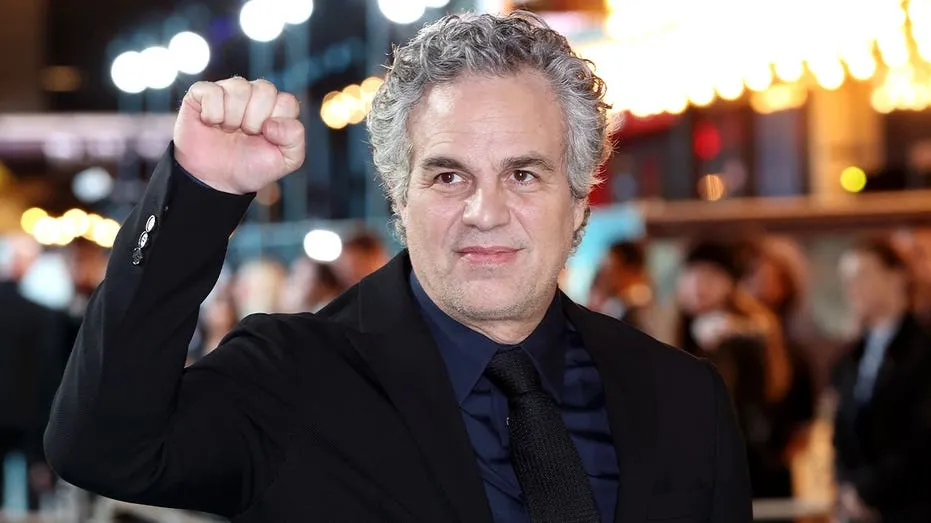
Actor Mark Ruffalo has vehemently rejected accusations that his criticism of the proposed Warner Bros. Discovery merger, linked to the Ellison family, constitutes antisemitism. In a statement released Saturday, Ruffalo described the claim as “appalling and fundamentally dishonest.” He emphasized that his critique targets specific actions and business dealings, not the Jewish people as a whole.
“Criticizing the actions of the Israeli prime minister, a military technology contract, or the executives who supply it is not the same as criticizing Jewish people,” Ruffalo stated. He clarified that his views stem from his personal political convictions and should not be misconstrued as animosity towards Jewish individuals. Ruffalo highlighted the profound influence of his Jewish friends, colleagues, and loved ones, stating they have been integral to his life and have shaped his understanding of acting, activism, and humanism.
Paramount’s Accusation and Ruffalo’s Initial Comments
The controversy ignited after a Paramount spokesperson accused Ruffalo of employing “antisemitic tropes” within the context of a corporate business dispute. This accusation followed Ruffalo’s reposting of remarks made by Safra Catz, a board member at Paramount and CEO of Oracle. Catz had spoken about the “really profoundly scary technologies” utilized by Oracle, a company co-founded by Larry Ellison, to support the Israeli military in the aftermath of the October 7, 2023, Hamas attacks.
Ruffalo had initially commented on Oracle’s involvement, writing, “This is the company that Larry Ellison is using to fund his son David’s Warner Bros acquisition.” He further expressed concern that these advanced technologies could be integrated into a major media conglomerate and potentially used against the public. Ruffalo added, “Look how she revels in what we now have come to see as a genocide, which was built on an apartheid system of oppression powered by Oracle.”
Paramount’s Response and Ruffalo’s Rebuttal
A spokesperson for Paramount, speaking to Variety, conveyed distress over the invocation of “antisemitic tropes” in what they characterized as a business disagreement. The spokesperson argued that employing terms like “genocide” and “apartheid” in relation to a corporate transaction is inappropriate and diminishes the gravity of the suffering those words represent. The company affirmed its stance against all forms of prejudice.
In his Saturday statement, Ruffalo countered by focusing on what he described as the “real consequences” of the proposed merger. He asserted that scrutinizing the Ellison family’s business practices, including Oracle’s work with data, surveillance technology, and government contracts, is both fair and necessary. Ruffalo also raised concerns about the potential impact on editorial freedom and the livelihoods of thousands of families.
Concerns Over Media Conglomerate Control and National Security
Ruffalo elaborated on the potential implications of the deal, noting that it would place control of significant media assets like CNN, HBO, and Warner Bros. in the hands of a single family. He expressed apprehension regarding the influence of foreign funding on editorial decisions, particularly when such influence has not been transparently explained to the public. The actor pointed out that lawmakers from both major political parties have called for a thorough national security review of the merger, and regulators have yet to provide definitive answers.
“Until they do, the merger shouldn’t move forward,” Ruffalo declared. “Now is the time to dive boldly into all these issues, not step back or concede.”
Broader Context of the Merger Dispute
The potential merger is currently facing legal challenges from a coalition of 12 state attorneys general. As a result, the involved companies have agreed to postpone the finalization of the deal. The agreement stipulates that the merger cannot be completed before June 1, 2027, or until a court renders a decision on the states’ legal claims, whichever occurs first. This legal standoff underscores the significant scrutiny the proposed transaction is under, extending beyond the immediate dispute between Ruffalo and Paramount.
Ruffalo’s strong defense reiterates his position that his criticisms are rooted in concerns about corporate power, technology’s role in conflict, and media consolidation, rather than any form of prejudice. His statement aims to draw a clear distinction between political and business critique and the harmful stereotype of antisemitism.


