




Massachusetts Governor Signs Bill Eliminating Abortion Deadlines
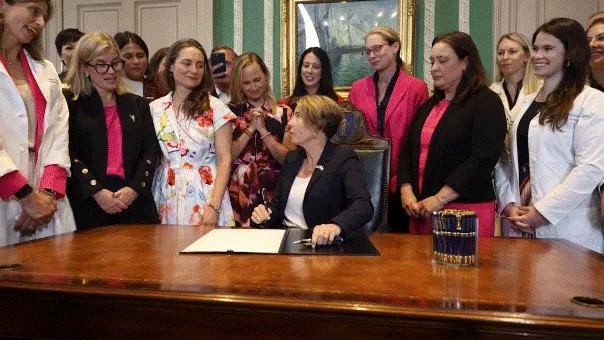

Massachusetts Governor Maura Healey has signed landmark legislation that removes previous gestational limits on abortion, allowing the procedure up to the point of birth. The bill, known as the Prioritizing Patient Access to Care Act, was met with applause during the signing ceremony, positioning Massachusetts as the 10th state, along with the District of Columbia, to permit abortions without a specific gestational deadline.
Expanding Abortion Access in Massachusetts
Under the new law, healthcare providers will have increased latitude in determining when an abortion may be performed later in pregnancy, without facing legal repercussions that were previously in place. Governor Healey emphasized that the legislation aims to support families who encounter severe medical complications late in pregnancy, ensuring they can access necessary care within the state rather than being forced to travel elsewhere.
These critical medical situations can encompass serious maternal health risks or diagnoses indicating a fatal condition for the fetus. During the bill signing, Governor Healey articulated her commitment to maintaining abortion as a safe, legal, and accessible option for residents throughout her tenure as governor.
A Shift from Previous Restrictions
Previously, Massachusetts law generally restricted abortions after 24 weeks of gestation, with only narrow exceptions. The passage of the Prioritizing Patient Access to Care Act marks a significant departure from these restrictions, aligning the state with others such as Alaska, Colorado, Maryland, Michigan, Minnesota, New Jersey, New Mexico, Oregon, and Vermont in eliminating gestational age caps.
Governor Healey stated that the signing of this bill was a deliberate act to “stand with women” and suggested that opposition to the legislation stems from a lack of support for women’s healthcare needs. “The bottom line for people in Massachusetts, if you care about women’s health, if you care about making sure that women are able to access the health care that they need in consultation with their doctors, should be clear,” Healey remarked. “I stand with women. My opponents do not.”
A Shield Against National Trends
Healey also framed the new law as a protective measure against broader national efforts to curtail abortion rights. She referenced actions taken under the Trump administration and by Republicans in Congress, particularly following the Supreme Court’s decision to overturn Roe v. Wade. The governor asserted that states must now take the lead in safeguarding reproductive healthcare access.
“It is up to the states to lead,” Healey declared. “And as governor, I promise that no matter what Donald Trump or Republicans in Congress or the Supreme Court does, we’re going to continue to make sure that women and families have access to the health care that they need, right here in Massachusetts.”
Key Provisions and Future Impact
The legislation is set to become effective 90 days after its signing. Healthcare providers will now operate with greater autonomy in cases involving complex medical circumstances discovered late in pregnancy. The law aims to prevent a situation where individuals must travel out of state for procedures that can now be legally performed in Massachusetts.
Supporters of the bill argue that it ensures patient autonomy and upholds the principle that medical decisions should be made between patients and their doctors, free from political interference. The removal of strict gestational limits is seen as a crucial step in ensuring comprehensive reproductive healthcare is available to all residents.
Broader Context of Reproductive Rights
The move by Massachusetts reflects a continuing national debate over reproductive rights, with several states enacting laws to either restrict or expand access to abortion services. Governor Healey’s administration has positioned itself as a staunch defender of abortion access, viewing this legislation as a vital component of women’s health and autonomy.
The law’s implementation will be closely watched, particularly in light of ongoing legal and political challenges to abortion access at both state and federal levels. The administration’s commitment to ensuring continued access suggests a proactive stance against potential future restrictions.
The Prioritizing Patient Access to Care Act is expected to solidify Massachusetts’s role as a state offering robust reproductive healthcare options. The law underscores a commitment to patient-centered care, particularly for those facing difficult medical decisions during pregnancy.