




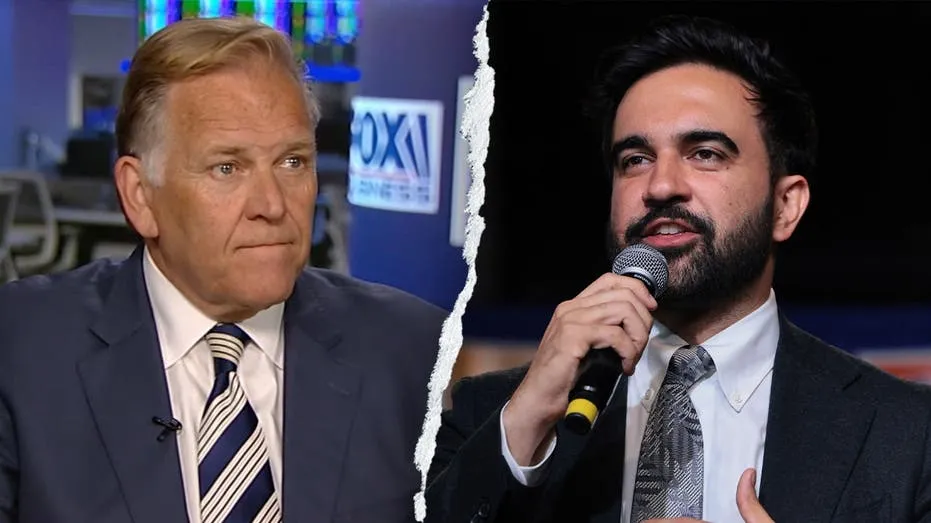
A Republican candidate for the U.S. Senate in Michigan is asserting that the Democratic Party’s increasing embrace of socialist ideologies is prompting a significant number of voters to reconsider their allegiance. Mike Rogers, a former House Representative and current Senate hopeful in Michigan, contends that the party has shifted so far left that mainstream Americans are beginning to “wake up” to the changes.
Shifting Political Landscape
“This is not the Democratic Party of previous generations,” Rogers stated, suggesting a fundamental alteration in its core tenets. He characterized the current iteration as having “veered so far to the left,” with Michigan finding itself “at the epicenter” of this transformation. This observation follows a series of primary election victories by candidates associated with socialist and progressive platforms in New York City. Following Zohran Mamdani’s mayoral primary win, three additional candidates backed by the Democratic Socialists of America and progressive groups secured victories in their respective Democratic primaries. These candidates have notably advocated for policies such as abolishing ICE, implementing universal healthcare, addressing affordability concerns, and criticizing U.S. policy toward Israel.
Concerns for Working Families
The success of these candidates has ignited discussions about the future direction of the Democratic Party. Rogers expressed concern that the party has neglected the interests of working-class and middle-class Americans, leading many in Michigan to question their future prospects within the state. “I think the Democratic Party walked away from working and middle-class Americans a decade ago,” Rogers remarked. “And in Michigan, people are starting to wake up to this notion that we can’t continue to do this and expect our kids to stay.” He further described the ideologies espoused by some far-left figures in Michigan as “a little bit terrifying” and predicted that the upcoming election would present a clear choice between “crazy versus common sense.”
Michigan Senate Race Dynamics
The race for the U.S. Senate seat in Michigan is shaping up to be a key battleground. Republican candidate Mike Rogers is vying for the Republican nomination. On the Democratic side, Abdul El-Sayed, who has received an endorsement from Senator Bernie Sanders, is campaigning on policies similar to those of the newly elected progressive candidates. El-Sayed has faced scrutiny for his stance on the U.S. partnership with Israel concerning humanitarian issues in Gaza and for his association with streamer Hasan Piker, who has made controversial statements regarding Hamas and the 9/11 attacks.
Rogers also pointed to the recent Senate primary victory of Graham Platner in Maine as an example of voters rejecting a perceived shift towards socialist ideals within the Democratic Party. He accused Michigan Democrats of “flirting” with socialism. Platner’s win in Maine, despite facing controversies including inflammatory online posts and allegations of past misconduct, was cited by Rogers as evidence that voters are wary of certain political alignments.
Economic Outlook and Voter Sentiment
Rogers argued that the promotion of “shared misery” by some Democratic candidates is not resonating with voters in Michigan. He predicted that the broader nation would experience confusion regarding the identity and objectives of the Democratic Party. Rogers emphasized Michigan’s reliance on manufacturing jobs, asserting that a socialist framework would hinder job growth and potentially lead to job losses. He cited Senator Sanders’ 2016 presidential primary win in Michigan as an indicator that a segment of Democratic voters are willing to abandon free-market principles.
Furthermore, Rogers indicated that voters he has engaged with express a lack of trust in Democratic promises to lower costs. He believes these voters are “ready for change” after years of Democratic leadership in the state, attributing various negative developments, including declining school rankings, stagnant wage growth, manufacturing job losses, and increased utility bills, to Democratic policies.
Rogers’ Campaign Strategy
Highlighting his own campaign, Rogers emphasized his focus on “optimism,” affordability, job creation, and education. He stated that this positive, issue-centered approach is proving effective, citing recent polling data that shows him leading his Democratic opponents. “Our positive, issue-centered campaign for Michigan is working, and that’s why in the last six polls or so we’ve been ahead of our Democrat opponents,” he said.
The Republican and Democratic primaries in Michigan are scheduled for August 4th to determine the nominees who will compete for the seat currently held by retiring Senator Gary Peters.


