




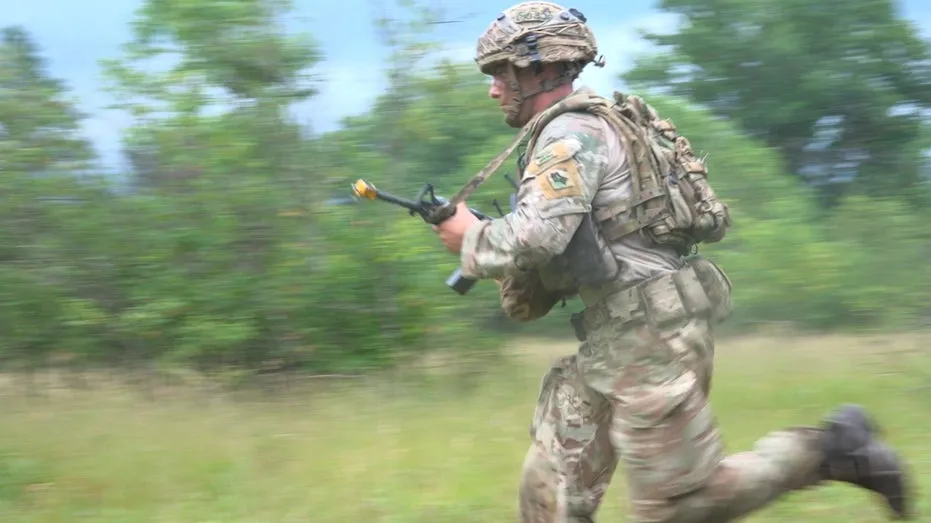
Thousands of service members are descending upon northern Michigan for Northern Strike 26-2, a massive military readiness exercise designed to prepare them for a rapidly changing global battlefield. This year’s iteration, which began on July 26 and runs through August 14, is the largest since the exercise’s inception in 2012, drawing over 9,000 participants from across 36 U.S. states and territories, alongside five international contingents.
Adapting to a Dynamic Global Landscape
Military leaders emphasize that the training scenarios are directly influenced by current global conflicts. Brig. Gen. Ravindra Wagh of the Michigan National Guard highlighted the necessity of adapting training to real-world events. “You see what’s happening in Ukraine right now. You see what’s happening globally with some of our other emerging conflicts that you see,” Wagh stated. “And I think that this is a place where you can test and innovate.” The exercise provides a crucial environment for testing new strategies and technologies before they might be needed in actual combat.
Northern Michigan offers a unique training ground, boasting over 200,000 acres of land, access to the Great Lakes, and integrated air, space, and cyber warfare capabilities. This expansive environment allows for complex, multi-domain operations, bringing together various military branches and international partners to hone their ability to operate cohesively.
“We want to train with the allies and partners we’re going to go to war with,” Wagh explained. “We want our soldiers, sailors, airmen, marines to see it here. Figure it out here.” This philosophy underscores the importance of building interoperability and mutual understanding among forces that may find themselves fighting side-by-side in future conflicts.
Comprehensive Training, From Front Lines to Logistics
The exercise isn’t solely focused on direct combat. Northern Strike meticulously simulates the entire spectrum of military operations, including the vital support functions that keep front-line troops operational. Units like the 445th Quartermaster Company, responsible for essential services such as shower and laundry facilities, are put through rigorous training to ensure they can sustain morale and effectiveness under demanding conditions.
Captain Kelson, Commander of the 445th Quartermaster Company, articulated their role: “Our main goal is to provide, I would say, logistical support and really strengthen the morale of the soldiers that are out there actually doing the big booms in combat.”
For junior enlisted personnel, like Pfc. William Flores from Trenton, New Jersey, the exercise serves as invaluable preparation. “This is like a practice run,” Flores commented. “So when we do get deployed, if we do get deployed, we are ready.” This sentiment highlights the practical, hands-on experience gained that directly translates to combat readiness.
Integrating Cutting-Edge Technology
A significant aspect of Northern Strike 26-2 involves the integration of emerging technologies, with nearly 90 industry partners contributing to the training. This collaboration allows service members to interact with and learn to operate advanced capabilities that are on the horizon for military use.
Among these innovations are autonomous resupply systems and advanced drone technology. Drones are being tested for critical roles such as delivering medical supplies by air and providing real-time battlefield assessments. These systems can hover over a combat zone, analyze casualty data, and relay information to direct medical resources precisely where they are most needed, potentially saving lives.
Furthermore, 3D printing is being incorporated to rapidly produce necessary parts and adapt equipment on the fly. Brig. Gen. Wagh expressed amazement at the pace of technological integration, noting, “If you would have told me a few years ago, that’ll be, you know, on the front lines, but we’re doing it here.”
Driving Innovation and Readiness
The rapid evolution of warfare necessitates constant innovation within the military. Exercises like Northern Strike are critical platforms for testing these new concepts and technologies, allowing the armed forces to adapt quickly to evolving threats. Brig. Gen. Wagh reiterated the objective: “I hope they’re a little bit better, a little bit more capable. We want all of our units to have a higher, more capable state of readiness.”
By simulating complex, real-world scenarios and integrating the latest technological advancements, Northern Strike 26-2 aims to ensure that participating service members are not just trained, but truly prepared for the challenges of modern and future battlefields.


