




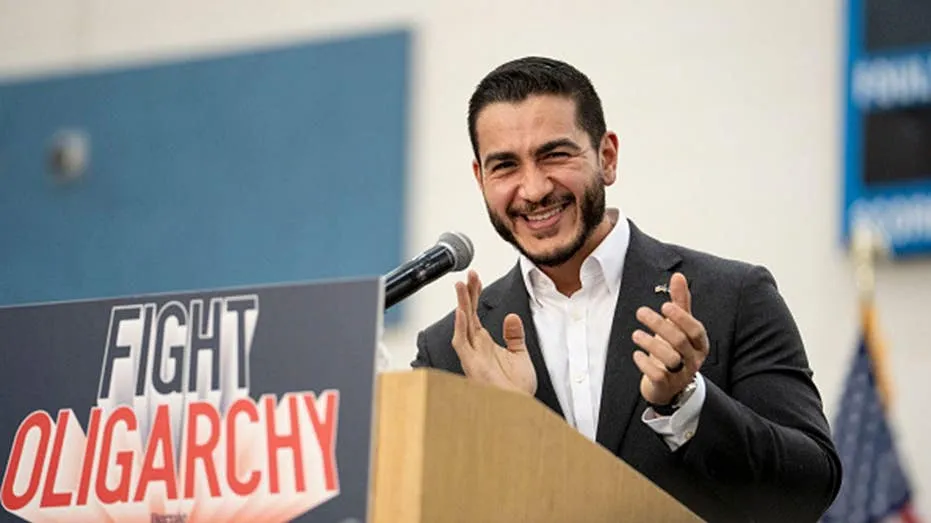
Michigan’s Democratic nominee for the U.S. Senate, Abdul El-Sayed, is currently facing criticism following the resurfacing of blog posts he authored that offer a sharp critique of traditional masculinity and American sports culture. The writings, published in 2021, have drawn attention as they contrast with his campaign’s efforts to connect with a broader electorate.
Critique of Male Sports Culture
In a post on the platform Substack, El-Sayed, a progressive figure who played high school football, delved into what he described as the pervasive nature of “toxic masculinity” within American sports. He argued that this issue runs much deeper than isolated incidents, referencing the resignation of former Las Vegas Raiders coach Jon Gruden due to leaked emails as a starting point for his broader analysis. El-Sayed posited that the core of popular male sports, and the culture surrounding them, harbors a more profound problem.
Drawing from his own experiences as a starting center at Andover High School, El-Sayed suggested that traditional athletic environments can foster prejudice. While he recalled feeling a sense of freedom on the field, he also stated that off the field, particularly in locker rooms, he encountered significant instances of racist taunting. He characterized racism, misogyny, and homophobia as commonplace within men’s sports, suggesting they were part of the “lingua franca” of these spaces. Furthermore, El-Sayed leveled accusations of “deep-rooted racism” directly at the National Football League (NFL).
Contrasting Masculinity Models
Instead of embracing conventional notions of athletic toughness, El-Sayed proposed an alternative model of manhood, one he linked to progressive ideals and even fictional characters. He pointed to Ted Lasso, the protagonist of the popular soccer comedy series, as an example of a more constructive approach to leadership and emotional expression. El-Sayed highlighted Lasso’s willingness to show vulnerability, communicate openly about his struggles, encourage his team, and maintain a positive demeanor, even baking for his boss, as commendable traits. This fictional character, in El-Sayed’s view, offered a stark contrast to the often-macho archetypes found in traditional sports.
Ideological Connections and Campaign Strategy
El-Sayed’s reflections on sports extended beyond American borders, with him also discussing European soccer. In another 2021 Substack entry, he explicitly connected his political leanings to his appreciation for the global sport, noting its perceived egalitarian nature when compared to American professional leagues. He described European soccer as aligning with his political philosophy.
These resurfaced writings present a notable divergence from El-Sayed’s recent campaign tactics. As he faces Republican opponent Mike Rogers in the general election, having recently secured the Democratic nomination over Rep. Haley Stevens, El-Sayed has actively referenced his own athletic background in high school wrestling and football. This strategy appears aimed at building rapport with young male voters, particularly in the working-class Midwest, who may have different expectations regarding political discourse and cultural commentary.
Navigating Voter Perceptions
The contrast between El-Sayed’s academic theories on gender and masculinity, as expressed in his blog posts, and his campaign’s outreach efforts has become a focal point. Critics suggest that his past writings may alienate potential supporters who value traditional sports culture or are wary of what they might perceive as progressive lecturing. The challenge for El-Sayed will be to reconcile these differing aspects of his public persona and articulate a message that resonates across diverse segments of the electorate.
His campaign will need to address how his critiques of sports culture align with his efforts to connect with voters who have grown up with and perhaps cherish these very traditions. The upcoming general election campaign will likely see these themes explored as El-Sayed seeks to build a winning coalition in Michigan.


