




Major League Baseball appears to be orchestrating a significant campaign to convince fans and stakeholders that payroll disparities are a critical issue, potentially paving the way for a salary cap. This effort, heavily promoted through league broadcasts, suggests that the current financial landscape is unacceptable and aims to garner public support for a lockout and a subsequent salary cap. The league’s marketing, under the banner “Level the Playing Field,” even singles out the Los Angeles Dodgers with charts highlighting their substantial payroll and luxury tax payments, framing them as the primary obstacle to competitive balance. This narrative conveniently overlooks the fact that luxury taxes are collected by the league and then redistributed to smaller market teams, a detail that seems to be glossed over in the push for a cap.
Challenging the Competitive Balance Narrative
The core argument presented by the league is that teams in smaller markets or those with lower payrolls face insurmountable odds against big-spending franchises like the Yankees and Dodgers. However, a closer examination reveals a more complex reality that challenges this simplistic portrayal. For instance, the New York Mets, despite having one of the highest payroll obligations in 2026 according to Sportrac, are languishing in last place in the NL East, significantly behind the division leader and trailing well behind the wild card spots. This demonstrates that a high payroll doesn’t automatically translate to on-field success.
Similarly, the Los Angeles Angels, situated in the nation’s second-largest media market, have struggled mightily. Despite their proximity to the Dodgers, they haven’t made the playoffs since 2012 and currently possess the worst record in baseball. Even in a historically large market like San Francisco, the Giants, with a payroll around $200 million, are far from contention, sitting many games out of first place. Philadelphia, often a high-spending club, recently fell out of a playoff position, underscoring that financial investment alone doesn’t guarantee postseason berths.
Success Stories Defying the Payroll Narrative
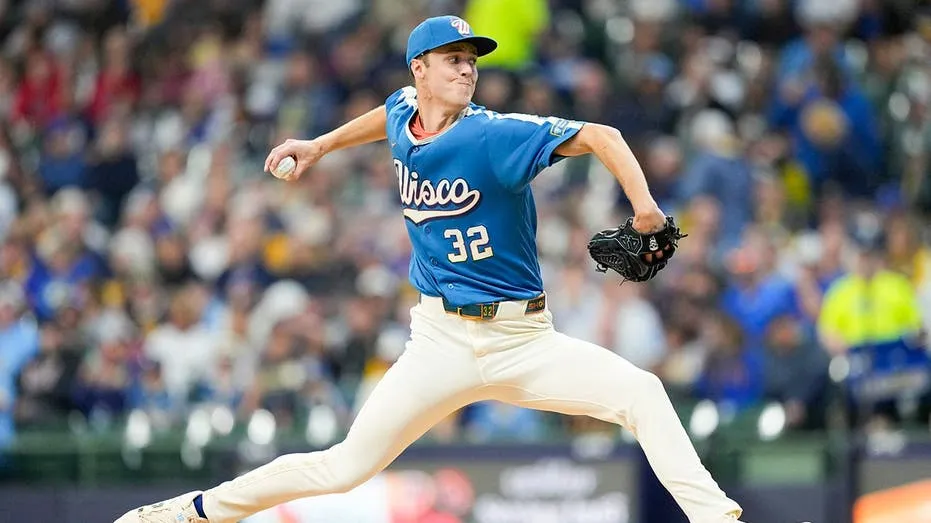
The league’s assertion that fans in many markets lack hope for their team’s chances is further complicated by the success of teams with comparatively modest payrolls. As of late in the season, the Milwaukee Brewers and Tampa Bay Rays have emerged as two of the best teams in baseball. The Brewers, ranked 19th in payroll, and the Rays, 23rd, are both in strong positions for the postseason, with the Rays even on an impressive winning streak. The Chicago White Sox, also performing well, rank 25th in payroll, while the Cleveland Guardians, at the bottom of the payroll rankings, remain in contention for a wild card spot despite a recent slump.
This success from lower-payroll teams directly contradicts the narrative that financial limitations inherently prevent competitiveness. It raises questions about whether the league’s push for a salary cap is truly about competitive balance or about controlling player costs and increasing owner profits. The performance of teams like the Brewers and Rays suggests that smart management, player development, and strategic acquisitions can lead to success regardless of a team’s financial standing.
The October Uncertainty Factor
The league’s argument for a salary cap may ultimately hinge on playoff outcomes rather than regular-season performance. While the regular season offers a 162-game sample size to evaluate team strength, the postseason compresses competition into shorter series, where luck and randomness can play a more significant role. Unlike sports like the NFL, where the best team often prevails, Major League Baseball’s playoff format is notoriously unpredictable. Even teams that build the best rosters and achieve stellar regular-season records, like the Dodgers in recent years, have faced October disappointments. Their failures in multiple postseasons, despite consistent regular-season dominance, highlight that winning 100 games doesn’t guarantee a World Series title.
The success of the Rays and Brewers in the regular season, while commendable, doesn’t automatically translate to playoff glory. Their ability to build competitive teams on lower budgets is a testament to their front office’s capabilities. However, the perception of a salary cap’s necessity might still be tied to whether a perennial contender like the Dodgers ultimately wins the World Series. If a team like Tampa Bay, which reached the World Series in 2020, were to win it all, it could potentially challenge the league’s narrative. Yet, it remains to be seen whether such an outcome would sway public opinion or if the push for a salary cap would continue, regardless of who hoists the Commissioner’s Trophy.
Looking Ahead to the Offseason
As the 2026-2027 offseason approaches, the league’s concerted effort to frame payroll as the central issue is likely to intensify. The success of lower-payroll teams in the regular season presents a counter-narrative that could complicate the owners’ agenda. However, the unpredictable nature of the MLB playoffs means that the ultimate outcome of the World Series could still be used to justify the need for a salary cap, regardless of the broader trends in regular-season competitiveness. Baseball fans may find themselves navigating a contentious debate about the sport’s financial structure, with the league office and owners pushing for change, while the reality on the field offers a more nuanced picture.


