




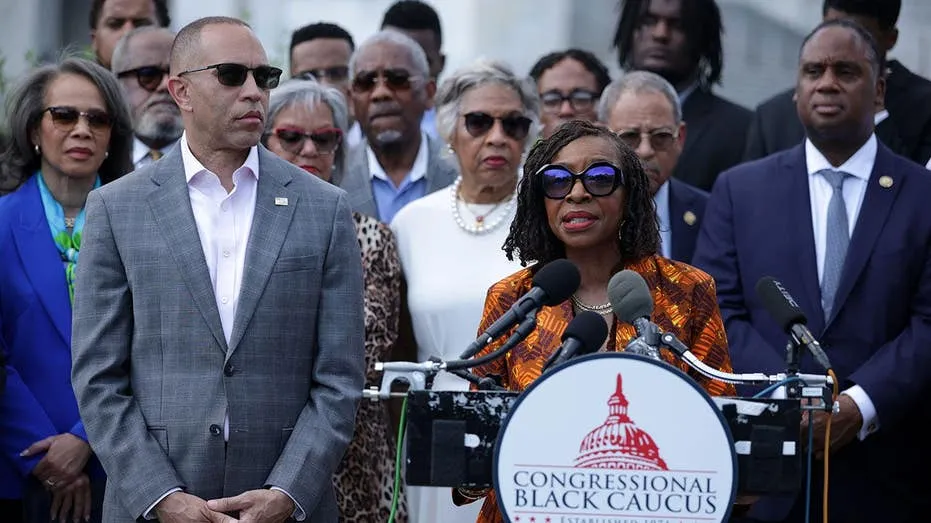
A Republican congresswoman has introduced legislation aimed at dismantling influential racial and ethnic caucuses within the House of Representatives, arguing such groups constitute a form of “federally sanctioned segregation.” Representative Nancy Mace of South Carolina proposed a resolution on Thursday that would prohibit the establishment of House caucuses organized by race, ethnicity, or national origin.
Proposal Targets Key Congressional Groups
If enacted, Mace’s resolution would effectively compel the dissolution of several prominent Democrat-aligned organizations, including the Congressional Black Caucus (CBC), the Congressional Hispanic Caucus (CHC), and the Congressional Asian Pacific American Caucus (CAPAC). The measure could also impact Republican-affiliated groups, such as the Black Republican Congressional Staff Association, the GOP Latino Staff Association, and the Republican Asian American Staff Association.
Mace articulated her stance in a statement, asserting, “Race-based caucuses are not diversity. They are federally sanctioned segregation.” She further criticized the perceived hypocrisy, stating, “You do not get to lecture America about inclusion while running an organization which checks your skin color at the door. The hypocrisy ends now.” The South Carolina Republican emphasized her goal to “end taxpayer-funded discrimination in this institution.”
Challenges and Political Context
The resolution faces significant hurdles in the Republican-controlled House. It is expected to encounter unified opposition from Democrats and potentially some Republican lawmakers, making its passage unlikely. This proposal emerges at a time when recent Republican redistricting efforts in several Southern states have altered congressional maps, potentially diminishing the influence of the CBC by reshaping or eliminating Black-majority districts previously held by its members.
House Minority Leader Hakeem Jeffries, a Democrat from New York and a member of the CBC, could potentially become the first Black Speaker of the House if Democrats regain control of the chamber following the November elections. Representatives from the Congressional Black Caucus, the Congressional Hispanic Caucus, and the Congressional Asian Pacific American Caucus were contacted for comment but had not yet responded at the time of reporting.
It remains uncertain whether Representative Mace, who is scheduled to leave office in January, will pursue a full chamber vote on her resolution. Her final months in Congress have been marked by legislative efforts targeting diversity, equity, and inclusion (DEI) policies, transgender participation in women’s sports, and the concept of birthright citizenship.
Mace’s Legislative Focus and Political Moves
Mace’s legislative agenda in her concluding term has been notably focused on issues related to DEI and cultural policies. Beyond her resolution to dissolve racial caucuses, she has introduced legislation addressing other areas of contention.
In her home state, Mace recently decided against seeking the Senate seat left vacant by the late Senator Lindsey Graham. Instead, she has publicly endorsed Representative Ralph Norman in the competitive Republican primary for that position.
The debate over racial caucuses touches upon broader discussions about representation, identity, and the nature of diversity within legislative bodies. While proponents argue these groups provide essential platforms for marginalized communities to voice concerns and advocate for specific policy needs, opponents like Mace contend they perpetuate division and contradict the ideal of a colorblind society.
Historical Context of Congressional Caucuses
Congressional caucuses, particularly those organized around shared identity, have a long history in American politics. The Congressional Black Caucus, founded in 1971, was established to address the specific needs and concerns of African Americans, who were historically underrepresented and marginalized in Congress. Similarly, the Congressional Hispanic Caucus and the Congressional Asian Pacific American Caucus were formed to give voice to the distinct challenges and perspectives of their respective communities.
These groups have often played a crucial role in shaping legislation and policy debates related to civil rights, economic opportunity, and social justice. They serve as forums for members to collaborate, strategize, and advocate for policies that benefit their constituents and broader communities.
However, the existence of race-based caucuses has also drawn criticism over the years, with some arguing that they are incompatible with the principle of equal representation for all citizens, regardless of race or ethnicity. Mace’s resolution brings this long-standing tension to the forefront of congressional discourse, questioning the continued relevance and appropriateness of such organizations in contemporary American politics.
Looking Ahead
The resolution’s path forward is uncertain, given the political dynamics at play in Washington. The outcome will likely depend on the willingness of lawmakers across the aisle to engage with the underlying issues of representation and inclusivity that Mace’s proposal raises. Regardless of its fate, the resolution has ignited a conversation about the role of identity-based groups in the legislative process and the ongoing pursuit of a more equitable and unified political landscape.


