




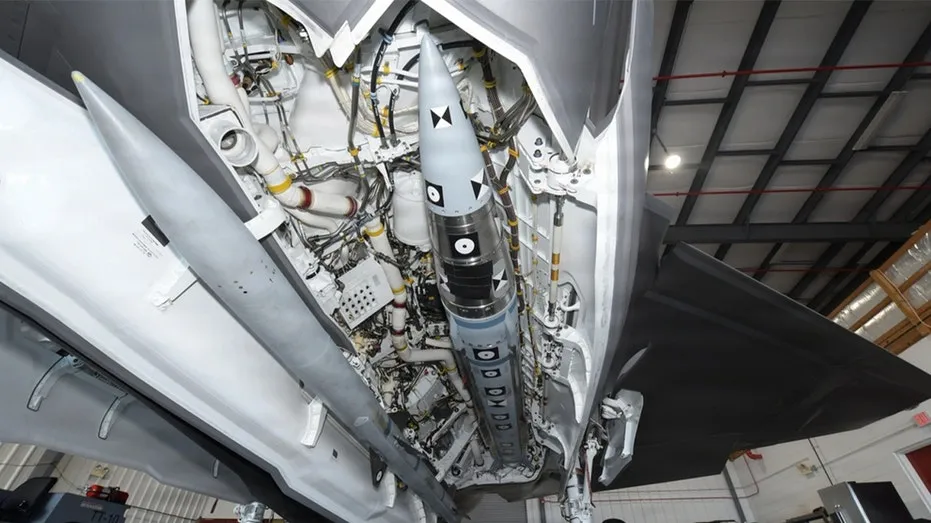
The U.S. Navy is forging ahead with the development of a formidable new air-to-air missile, codenamed “MALICE,” designed to neutralize enemy aircraft from unprecedented distances. Officially designated the AIM-424 Long-Range Air-to-Air Missile (LRAAM), this next-generation weapon aims to give American pilots a decisive “first look, first shot, first kill” advantage, significantly enhancing survivability and tactical flexibility.
Introducing MALICE: A Leap in Air Combat Capability
Unveiled by the Navy on August 22nd, the MALICE missile represents a significant advancement in aerial warfare technology. Its primary mission is to engage and destroy enemy aircraft and drones long before they can pose a threat to U.S. fighter jets or vital assets like aircraft carriers. This extended reach allows American pilots to detect adversaries on radar, launch MALICE from a safe distance, and achieve a kill without ever entering the immediate danger zone.
“LRAAM sustains the Department’s first look, first shot, first kill advantage by providing our aviators greater reach, greater survivability, and greater tactical flexibility in the air-to-air fight,” a Navy spokesperson stated. The development is geared towards bolstering the “range, lethality, and combat effectiveness for Marine and Naval aviation forces,” according to defense officials.
Unmatched Range and Power
The MALICE missile boasts an operational range officially listed as “in excess” of 250 nautical miles, translating to approximately 287 statute miles. This is a truly remarkable distance for an air-to-air weapon, enabling aircraft to establish a protective cordon around an entire fleet from well beyond the horizon. Such capability fundamentally alters the dynamics of air combat, shifting the engagement paradigm to the defender’s advantage.
To achieve this extraordinary range, the MALICE is substantially larger and heavier than its predecessors. Measuring 13.5 feet in length and tipping the scales at 1,500 pounds, it dwarfs conventional missiles like the AIM-120 AMRAAM, which weighs around 335 pounds. This considerable size difference points to a powerful propulsion system engineered to deliver the missile across vast distances.
Advanced Lethality and Versatility
Beyond its impressive range, the MALICE is equipped with a blast-fragmentation warhead. This design means a direct hit isn’t always necessary for mission success. Instead, the warhead detonates in proximity to the target, dispersing a lethal shower of fragments designed to disable or destroy the enemy aircraft. This enhances the missile’s effectiveness against a wider array of targets and under varying engagement conditions.
A key aspect of the MALICE program is its intended compatibility across multiple generations of U.S. naval aircraft. Officials confirmed that the missile will be integrated with existing fourth and fifth-generation fighter jets, as well as future sixth-generation platforms. This forward-thinking design ensures that MALICE will remain a relevant and potent asset for naval aviation for decades to come.
Development and Future Implications
The development of the AIM-424 LRAAM is being spearheaded by Raytheon, a long-standing and prominent defense contractor for the U.S. military. The project underscores a strategic commitment to maintaining technological superiority in aerial combat and protecting naval assets in increasingly complex geopolitical environments.
The introduction of MALICE signals a significant shift in air-to-air combat doctrine. By extending the engagement envelope dramatically, the Navy aims to deter potential adversaries and ensure freedom of movement for its carrier strike groups and other naval formations. The missile’s capabilities promise to redefine long-range air defense, offering a potent blend of reach, power, and advanced targeting technology.


