

NY Civil Liberties Union Demands Reparations for Deep Racial Wealth Gap
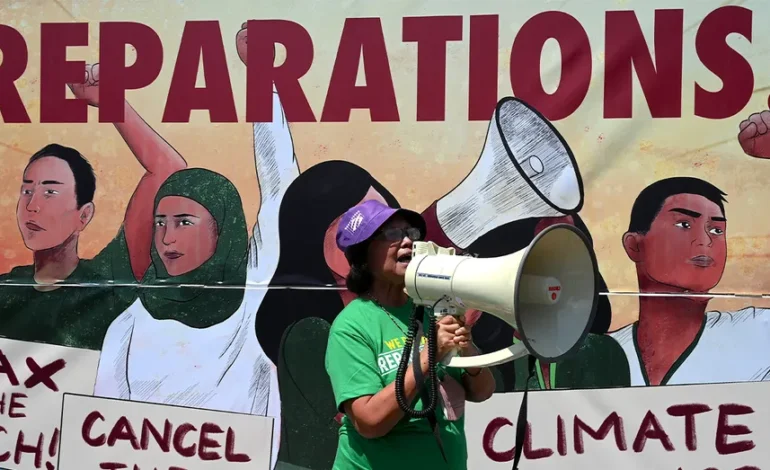

A leading civil rights organization is spearheading a call for statewide reparations in New York, asserting that a historical debt is owed to Black residents due to profound wealth disparities. These gaps, the group argues, are deeply rooted in the state’s historical involvement with slavery and decades of entrenched systemic discrimination.
The Case for Reparations: Historical Debt and Economic Disparity
Lanessa Owens-Chaplin, Director of the Racial Justice Center at the New York Civil Liberties Union (NYCLU), emphasized the moral and economic imperative for reparations. “Reparations are a debt that is owed,” Owens-Chaplin stated. “Enslaved Black people built the foundation of New York’s economy, but Black families in our state still face racism that has been codified into our laws and budgets.” She underscored New York’s active role in perpetuating slavery, noting that “New York State was not a bystander to slavery — it created, enacted, and protected the institution.” Consequently, she believes reparations should extend to all Black New Yorkers descended from those enslaved within the state and those still affected by the systems that slavery established.
This advocacy is detailed in a recent report, “The Other New York: The Legacy of Slavery and the Case for Reparations Now,” jointly published by the NYCLU and the Legal Defense Fund (LDF). The report meticulously outlines the enduring economic consequences of slavery and subsequent Jim Crow-era policies on Black communities throughout New York.
The Stark Reality of New York’s Racial Wealth Gap
The report presents a stark picture of economic inequality. It reveals that the median wealth for Black New Yorkers is approximately $18,870, a figure that is nearly 15 times lower than the median wealth of White New Yorkers, which stands at $276,900. This disparity is more pronounced in New York than the national average, highlighting the unique and severe impact of historical and ongoing discrimination within the state.
Government-sanctioned practices, such as redlining, are identified as significant contributors to the current wealth gap. The report explains how the deliberate exclusion and displacement of Black communities from desirable neighborhoods denied them the opportunity to build stability and generational wealth through homeownership.
“Nearly 90 years after redlining and urban renewal, formerly redlined communities remain some of the highest-poverty neighborhoods in New York,” the report states. It further details how zoning laws, designed to reinforce racial hierarchies, historically confined Black residents to industrial areas. This segregation led to disproportionately high exposure to pollution and, consequently, elevated rates of serious health issues including asthma, cardiovascular disease, premature birth, and early death. Schools in predominantly Black neighborhoods have also suffered from chronic underfunding, environmental hazards, dilapidated infrastructure, and lead poisoning.
Beyond Symbolism: Calls for Tangible Remedies
The NYCLU and LDF argue that any reparations initiative must transcend mere symbolic gestures. They advocate for a dual approach that includes direct financial compensation for historical losses and substantial changes to institutional policies.
“Supporting reparations is about more than compensation; it is about acknowledging harm, restoring dignity, and creating pathways for communities to thrive,” the report’s authors contend. The proposed remedies aim to address tangible losses, such as lost wages and wealth, while also tackling systemic issues in areas like criminal justice, environmental policy, and public education funding.
The report concludes with a strong call to action: “In order to build a thriving economy and a resilient multi-racial democracy, New York must repair past harm and break down barriers to opportunity for Black communities. Reparations benefit all New Yorkers.”
Challenges and Delays in Reparations Efforts
These localized efforts by advocacy groups occur against a backdrop of increasing legal and political challenges to racial redress initiatives nationwide. In Evanston, Illinois, the first U.S. city to implement a reparations program involving cash and housing grants, the initiative is currently facing a significant federal lawsuit. The U.S. Department of Justice has intervened in the case, asserting that race-based distributions of benefits may contravene the Equal Protection Clause of the Fourteenth Amendment.
In New York, progress on state-level recommendations has also encountered significant hurdles. The New York State Community Commission on Reparations Remedies, established by legislation signed by Governor Kathy Hochul in late 2023, was tasked with examining the state’s historical ties to slavery, subsequent discriminatory practices, and current economic disparities to propose policy changes and financial remedies. However, the NYCLU has criticized state officials following the quiet insertion of a budget provision that postponed the commission’s final report deadline by two years, pushing it from 2025 to 2029.
Conclusion: The Ongoing Fight for Economic Justice
The push for reparations in New York highlights a critical ongoing debate about historical accountability and economic justice. The NYCLU and LDF’s comprehensive report lays bare the devastating and persistent impact of slavery and discriminatory policies on Black New Yorkers, presenting a compelling case for redress. While facing national legal scrutiny and internal state delays, the movement for reparations continues, seeking to address deep-seated inequalities and build a more equitable future for all residents.