




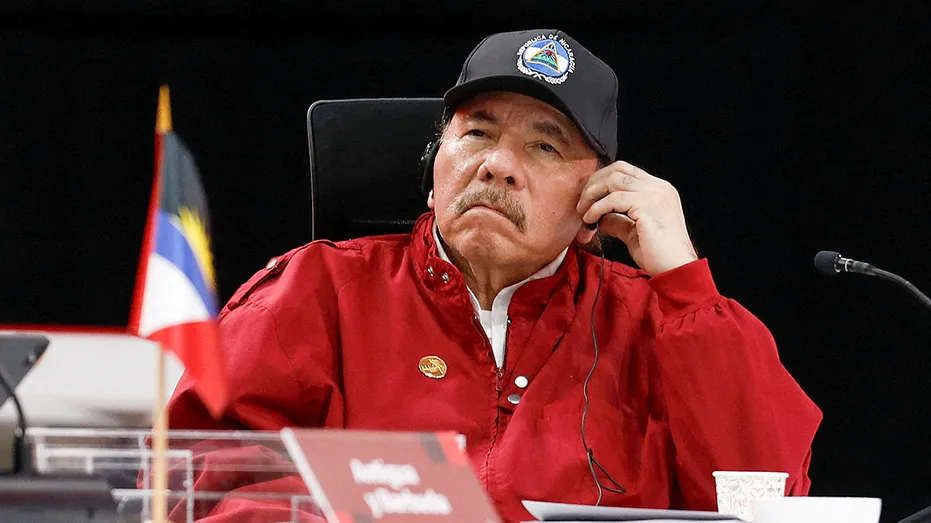
Nicaragua’s legislature has initiated plans to eliminate national elections, moving to formalize President Daniel Ortega’s recent declaration that the country would no longer hold them. This significant political maneuver, revealed by the congress—which is firmly controlled by Ortega and his wife, Vice President Rosario Murillo—aims to cement the government’s grip on power and has drawn sharp criticism from the international community.
Constitutional Overhaul to Ensure ‘Peace and Stability’
Lawmakers stated that a planned overhaul of the constitution is intended to guarantee Nicaragua’s “peace, security and stability.” This move effectively makes good on Ortega’s assertion that “there won’t be any more elections here for them to try to seize the government and seize power.” The president made these remarks on Sunday during a speech commemorating the 1979 Sandinista revolution, an event in which he played a role in ousting the U.S.-backed dictatorship of Anastasio Somoza.
Ortega declared, “The days when parties backed by the Yankees (United States) and the Somocistas would return to power are over — never again.” This statement appears to close the door on any future electoral challenges to his administration, as Ortega and Murillo continue to consolidate their control over the nation’s political institutions. Sweeping constitutional changes enacted in 2025 already expanded their authority, extending the presidential term from five to six years and placing legislative, judicial, and electoral bodies under the executive’s purview. Consequently, Ortega and Murillo now wield significant influence over nearly all branches of government, including the military, police, and judiciary.
Consolidating Power and Silencing Opposition
Ortega, who has served as Nicaragua’s leader for an extended period, was expected to remain in power until early 2028. However, his recent declaration effectively cancels the next scheduled elections, which were slated for November 2027. Critics argue that meaningful electoral competition was already severely curtailed during the elections of 2011, 2016, and 2021. The government has systematically suppressed opposition, with many prominent opposition figures imprisoned, forced into exile, or stripped of their citizenship. Opposition parties and independent civic organizations have also been dismantled or lost their legal standing.
A United Nations group of experts has leveled serious accusations against the Ortega-Murillo government, alleging systematic human rights violations as part of a campaign to stifle dissent and maintain power. Some of these alleged violations have been described as potentially constituting crimes against humanity. The government’s crackdown on anti-government protests in 2018 resulted in the deaths of over 300 people, according to international human rights organizations.
International Condemnation Mounts
The move to abolish elections has triggered widespread condemnation from foreign governments. U.S. Secretary of State Marco Rubio stated that Daniel Ortega’s declaration reveals the “true authoritarian nature” of his family’s rule, adding that Ortega and Murillo have “abandoned even the pretense of popular consent.” Rubio emphasized the Nicaraguan people’s right to choose their leaders democratically and called for international unity to pressure the government.
The United States has previously characterized the Ortega-Murillo government as a dictatorship, implementing sanctions and visa restrictions against government officials and their associates. Volker Türk, the United Nations High Commissioner for Human Rights, also denounced Nicaragua’s legislative intentions, asserting that individuals of all political leanings must have the freedom to vote and run for office. He noted that these developments exacerbate the severe restrictions on fundamental freedoms, the shrinking of civic space, and the ongoing erosion of the rule of law in the country.
Key Developments:
- Nicaragua’s congress announced plans to eliminate national elections.
- The move follows President Daniel Ortega’s declaration that the country would cease holding elections.
- Lawmakers cite the need for “peace, security and stability” as justification for the constitutional overhaul.
- Critics and international bodies accuse the government of authoritarianism and human rights violations.
- The U.S. and UN have condemned the move, calling for the protection of democratic rights.
This latest political development in Nicaragua signals a further departure from democratic processes, deepening concerns about the future of political freedoms and human rights within the Central American nation.


