


NJ Mother’s 911 Call Sparks Debate: Expert Warns Against Hasty Conclusions
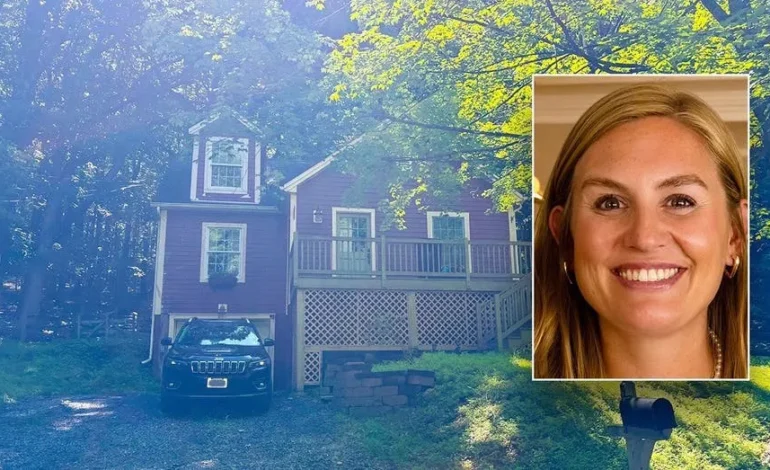

A harrowing 911 call placed by the husband of Brooke Hanlon, a psychotherapist found fatally stabbed in her Chester, New Jersey home, has become a focal point for online speculation. The audio, released following the June 6 discovery of the 35-year-old mother, captures a distressed Conor Hanlon describing the scene. Authorities have not yet filed any charges in connection with Brooke Hanlon’s death, and Conor Hanlon has not been accused of any wrongdoing. Efforts to reach him for comment were not immediately successful.
Analyzing the 911 Call: A Forensic Linguist’s Perspective
The release of the nearly seven-minute 911 recording has fueled intense scrutiny from internet sleuths eager to find clues. They are dissecting Conor Hanlon’s tone of voice and word choices, such as his description of a wound as a “laceration.” However, a leading forensic linguist is cautioning against drawing definitive conclusions based solely on the call.
Dr. Robert Leonard, a forensic linguist and professor at Hofstra University, emphasized the unreliability of interpreting such calls for evidence of guilt. “You can’t tell from a 911 call,” Dr. Leonard stated. “People very often try to.” He explained that the pressure and trauma of such a situation can significantly impact how someone speaks, leading to misinterpretations.
The Perils of Public Speculation in Investigations
Dr. Leonard’s warnings come as social media platforms buzz with theories about the case. He highlighted that this kind of analysis, while well-intentioned, has historically led to significant errors in past investigations, resulting in the public vilification of innocent individuals.
He pointed to the case of Sergio Celis, the father of Isabel Celis, a six-year-old girl who went missing from their Tucson, Arizona home in 2012. For five years, while investigators searched for answers and eventually found her remains, Mr. Celis faced intense public suspicion. “For six years all of the supposed amateur experts said he did it,” Dr. Leonard recalled. Ultimately, the investigation led to the conviction of Christopher Clements, a registered sex offender, for Isabel’s murder and kidnapping, clearing Mr. Celis.
Another case Dr. Leonard cited is that of Marty Tankleff, who spent 17 years in prison for the murders of his parents on Long Island, New York. His conviction was eventually overturned after prosecutors focused on his perceived calm demeanor following the crime. “Everybody is so different,” Dr. Leonard commented. “There are no reliable markers.” He urged the public and investigators alike, “We should not rush to judgment.”
The Limitations of a Single Data Point
Dr. Leonard stressed that a 911 call, by itself, is insufficient for conducting a thorough murder investigation. “You don’t do a murder investigation with one bit of data,” he asserted.
The investigation into Brooke Hanlon’s death remains active and is being led by the Morris County Prosecutor’s Office. Authorities have offered a $1,000 reward for any information that could assist in solving the case.
Understanding Trauma and Communication
The emotional and psychological impact of discovering a loved one in such a horrific state cannot be overstated. Individuals react to extreme stress in vastly different ways. Some may become outwardly emotional, while others might appear more subdued or even analytical as a coping mechanism. This can be particularly true for those with professional backgrounds that involve precise language, such as therapists or individuals trained in emergency response, though even these professional tendencies are not universal indicators.
Forensic linguists like Dr. Leonard study the nuances of language in legal and forensic contexts. Their work often involves analyzing speech patterns, word choice, and linguistic structures to identify authorship, detect deception, or understand the psychological state of a speaker. However, as Dr. Leonard’s cautionary remarks illustrate, applying these analyses to high-stress, real-time events like a 911 call requires extreme care and a deep understanding of human psychology under duress.
Moving Forward with the Investigation
As the investigation into Brooke Hanlon’s tragic death continues, the focus remains on gathering concrete evidence and following established investigative procedures. The Morris County Prosecutor’s Office is appealing to the public for any information that might shed light on the circumstances surrounding her killing. The $1,000 reward underscores the ongoing need for tips that could help bring closure to this devastating case.
The public’s fascination with true crime is undeniable, and the details of such cases often spark widespread discussion. However, as experts like Dr. Leonard advise, it is crucial to allow law enforcement professionals to conduct their work without the interference of premature judgments based on limited or misinterpreted information. The pursuit of justice relies on careful, methodical investigation, not on the often-unreliable conclusions drawn from public speculation.