


NYC Business Owners Fight Back Against Mayor’s Government-Run Grocery Stores
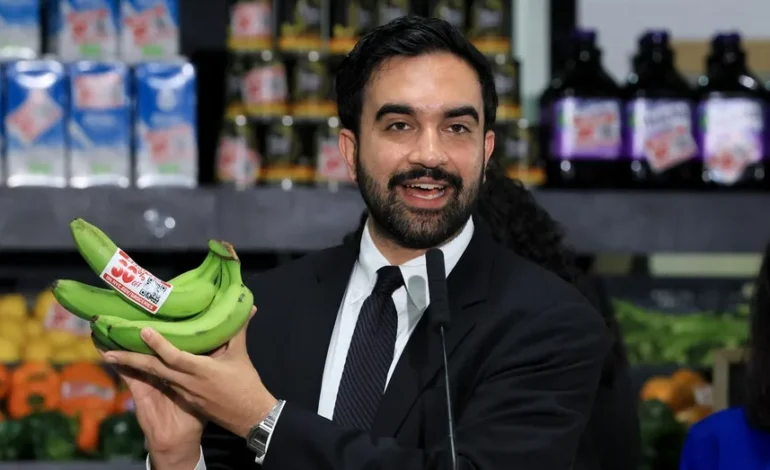

New York City’s small business community is sounding the alarm over Mayor Zohran Mamdani’s ambitious plan to launch a chain of government-owned grocery stores. Business leaders and bodega owners gathered in Harlem this week, just a stone’s throw from one of the planned locations, to voice their strong opposition, arguing the initiative is fundamentally flawed and threatens to shutter local establishments.
Legal Challenges and Civil Rights Concerns
The opposition coalesced under the Multicultural Business Coalition, an alliance of 50 chambers of commerce representing diverse business owners. On Monday, the coalition formally challenged Mamdani’s proposal by filing two lawsuits in state court. The plan, which aims to open five city-run supermarkets offering subsidized groceries, is slated to begin its rollout in late 2027.
One of the lawsuits, a class-action filing on behalf of potentially hundreds of store owners, asserts that the government-backed stores would constitute a violation of civil rights. Mark Jaffe, president and CEO of the Greater New York Chamber of Commerce, articulated this concern, stating, “When you use government money discriminatorily, it could be a civil rights violation.” He expressed disappointment with the administration’s approach, adding, “Shame on the [Mamdani] administration for not working with small businesses, but trying to hurt them and being heartless in their statements.”
The second lawsuit seeks a judicial injunction to permanently halt the operation of the municipal grocery stores. This action is predicated on the argument that the city has failed to conduct necessary impact studies and analyses, a procedural step that has historically been used to prevent large retail chains, such as Walmart, from entering the New York City market.
Unfair Competition and Economic Disruption
At the heart of the business owners’ protest is the proposed pricing model for the city-run stores. Mamdani’s initiative intends to offer a core selection of essential items at prices estimated to be 30% below prevailing retail rates. The city’s plan involves owning the property and covering operational overheads like rent and construction, while a private operator, chosen through a bidding process, would manage daily operations and be contractually obligated to pass cost savings onto consumers.
However, critics argue this model creates an insurmountable competitive disadvantage for existing small businesses. “It’s unfair,” Jaffe emphasized. “[Small business owners] who have to pay their Con Edison bill, their real estate taxes, their fines and full price for food cannot compete.” He further questioned the economic logic, suggesting that the subsidies are not truly helping struggling families if the city is buying goods at full price only to resell them at a discount.
“Our tax dollars are buying groceries at full price, so we can sell them at 30% off up the street — that’s not going to feed enough struggling people,” Jaffe explained. He proposed an alternative solution: the creation of a dedicated task force focused on assisting local businesses affected by the new stores and finding effective ways to support food-insecure residents.
Administration’s Response and Task Forces
In response to concerns about the initiative’s impact, the Mamdani administration highlighted the establishment of the NYC Groceries Task Force. This group is intended to bring together city agencies, industry professionals, and small business representatives to guide the implementation of the grocery stores. Additionally, the city has launched an OPEN Task Force aimed at streamlining regulations and reducing fines and fees for small businesses.
The administration maintains that the five planned stores will not significantly disrupt the existing market, pointing to the vast number of existing food retailers in the city – over 1,000 grocery stores and supermarkets, and more than 10,000 bodegas and corner stores. A statement from Mamdani’s office noted that with over 1.4 million New Yorkers facing food insecurity, the new stores are intended to supplement, not supplant, existing options.
“The administration plans to open one city grocery store in each borough by the end of the Mayor’s first term,” the statement read. “The five city grocery stores will not have a significant impact on the hundreds of grocery stores or the thousands of bodegas across the city.” Mayor Mamdani has expressed confidence in the legality and necessity of the initiative.
Bodega Owners’ Direct Concerns
The anxieties extend directly to the owners of neighborhood bodegas, the ubiquitous small convenience stores that form the backbone of many local communities. Elvis, the owner of American Deli Mini Market Corp, located directly across from one of the proposed store sites in Harlem, shared his stark fears. “If [Mamdani opens this store] in front of [my] business, [I’m] going to go out of business,” he stated through a translator at the press conference. “[I] pay a lot of taxes and this is not fair.”
Jaffe echoed these sentiments, warning of potential historical parallels. “It is doomed to fail. History shows us that communist supermarkets have empty shelves,” he remarked, urging the Mayor to reconsider a plan he believes will harm, rather than help, the city’s residents and entrepreneurs.
Conclusion: A Clash of Visions for Urban Commerce
The conflict over Mamdani’s government-run grocery stores highlights a fundamental disagreement about how best to address food access and support local economies in New York City. While the administration views the initiative as a necessary step to combat food insecurity and provide affordable options, a significant portion of the business community sees it as an ill-conceived government overreach that unfairly targets and endangers small, independent businesses. The legal battles and public outcry suggest this debate is far from over, with the future of both the city’s retail landscape and the Mayor’s flagship policy hanging in the balance.