




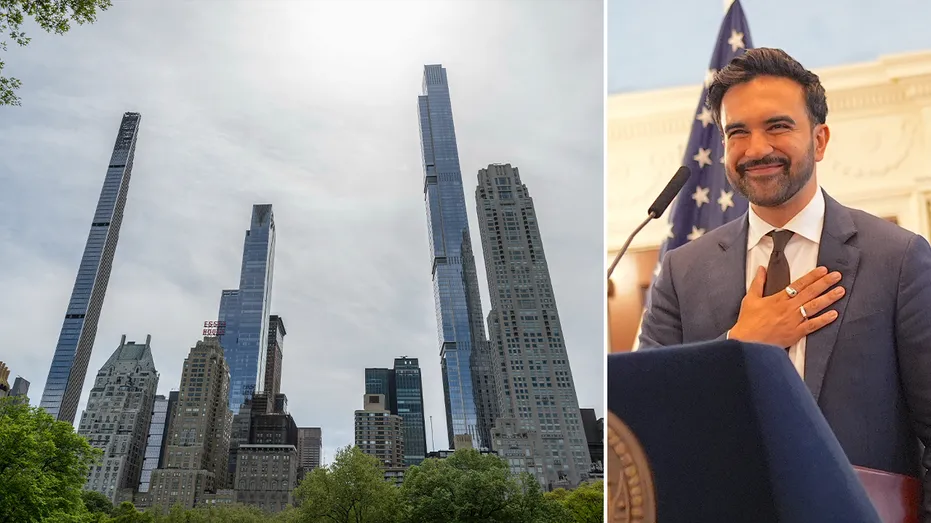
New York City’s controversial “pied-à-terre” tax, championed by Mayor Zohran Mamdani, has received a temporary reprieve, allowing its implementation to proceed after an appeals court intervened. On Thursday, a New York appeals court granted the city’s request to lift a previous order that had halted the rollout of the surcharge on high-value second homes. This decision permits the surcharge process to continue while the broader legal challenge by homeowners plays out.
Homeowners’ Challenge Continues Amid Procedural Win for City
The legal battle centers on how the city has implemented the tax, which targets properties valued at $5 million or more that are not primary residences. Homeowners, represented by attorney Randy Mastro, argue that the administration has mishandled the rollout, placing an undue burden on residents to prove they live in their own homes. Mastro expressed frustration with the city’s approach, stating, “It is a shame that the City can’t own up to its own mistakes and admit that it has badly botched the rollout of this surcharge.” He further criticized the administration for “harassing and threatening New York City homeowners who clearly are permanent residents.”
Mastro contends that the city has issued thousands of surcharge notices that are “blatantly illegal.” He added, “We remain confident that when we are back in court in a mere 18 days, the thousands of New York City homeowners who are now illegally burdened with the responsibility of proving they do indeed live in their own homes will finally get the permanent relief they deserve.”
Thursday’s development was described as procedural, enabling the city to advance its appeal and continue the surcharge process while the temporary restraining order is paused. The homeowners are scheduled to return to court on August 31st, seeking a permanent injunction from the original judge.
Timeline of the Legal Dispute
The appellate court’s order followed a contentious dispute over whether the city’s act of appealing automatically suspended the initial ruling. On August 11th, Mastro had written to Judge Wayne Ozzi, asserting that most of the judge’s restrictions remained in effect and cautioning the city against proceeding with the surcharge. Thursday’s appellate order clarified this uncertainty by staying Judge Ozzi’s temporary restraining order while the city’s appeal is considered.
This latest turn comes just three days after Judge Ozzi had initially halted the surcharge’s rollout. He had ordered the city to remove a disputed supplemental property roll from public view and temporarily barred officials from taking further action based on that roll or the notices sent to homeowners. Crucially, he also suspended the enforcement of deadlines within those notices, including the September 18th deadline for administrative appeals.
The Core of the Homeowners’ Lawsuit
The lawsuit was initiated by New York City residents Rachel O’Brien, Carmine Morano, and Simon Hedley. Their legal challenge is not against the surcharge itself, but rather against the method of its implementation. The plaintiffs argue that the city wrongly shifted the responsibility onto New Yorkers to prove their residency, rather than first identifying which homes actually qualify for the tax.
A significant point of contention is the city’s publication of a supplemental property roll listing over 900,000 homeowners. The plaintiffs claim this publication caused widespread confusion and exposed residents to unwanted public scrutiny. During a recent hearing, Mastro argued that the administration had failed to conduct adequate due diligence before launching the program, urging the court to halt the process and compel the city to redo it correctly, with the burden of proof falling on the city.
City’s Arguments and Financial Projections
In response, city attorneys argued in appellate papers that filing a notice of appeal automatically triggered a stay of the lower court’s order under state law. They contended that Judge Ozzi’s ruling disrupted the established order and jeopardized the Department of Finance’s ability to implement the surcharge within a demanding timeframe.
According to city filings, approximately 17,000 property owners had received initial determination notices. Officials maintain that inclusion on the broader supplemental roll did not automatically mean a property would be subject to the surcharge. The city warned that upholding the lower court’s order could disrupt property tax bills scheduled for November 15th and potentially impact projected revenue. The city comptroller anticipates the tax will generate at least $500 million through fiscal year 2028.
The city also asserted that the administrative appeals process offers a clear avenue for homeowners to establish their property as a primary residence. They argued that without additional documentation from owners, officials might lack the necessary information for accurate determinations. The homeowners dispute this, maintaining that state law required the city to make an initial, individualized determination before issuing notices. One plaintiff, Hedley, eventually had his property approved as a primary residence after submitting documentation, a case Mastro cited as evidence that the city could have made such determinations proactively.
Mayor’s Defense of the Surcharge
Mayor Mamdani’s administration has defended the surcharge, viewing it as a fair contribution from owners of high-value second homes to fund essential city services like schools and public safety. A spokesperson for the mayor, Matt Rauschenbach, stated after the initial ruling, “We disagree with today’s ruling, but we are confident in both the pied-à-terre surcharge and the City’s ability to implement it fairly and effectively.” He emphasized that the tax targets a small fraction of homeowners, approximately 17,000 out of 8.5 million residents, and noted the administration had extended exemption deadlines.
The current appellate decision does not resolve the fundamental legal questions but allows the city’s appeal process to move forward. The City of New York, Mayor Mamdani, the Department of Finance, and Commissioner Richard Lee are listed as appellants challenging the lower court’s order. The city has indicated its readiness to expedite the appeal process.


