


NYC Mayor Explores Arresting Netanyahu Amid UN Visit
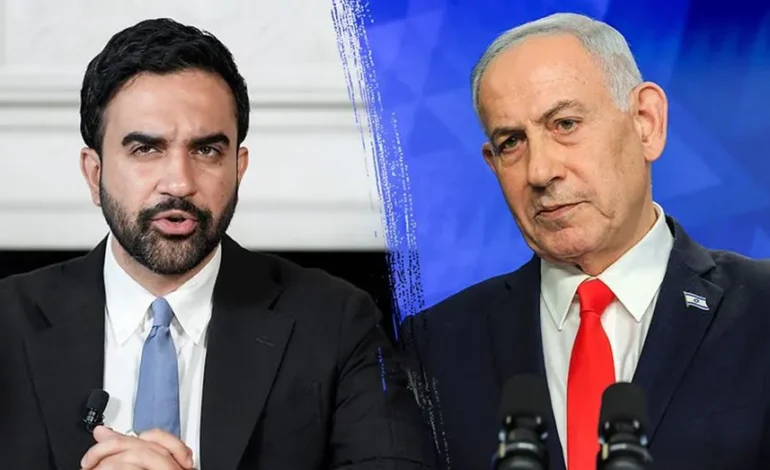

New York City Mayor Zohran Mamdani has stated that his administration is investigating the city’s legal capacity to arrest Israeli Prime Minister Benjamin Netanyahu should he visit for the upcoming United Nations General Assembly (UNGA). This represents a significant escalation in Mamdani’s public criticism of the Israeli leader.
Mayor’s Office Investigates Legal Avenues
In comments initially reported by The New York Times, Mayor Mamdani characterized Netanyahu as a “war criminal” who “belongs in the Hague.” He revealed that his office is engaged in an “active conversation” with the city’s Law Department to determine what legal authority New York City might possess if the Israeli prime minister travels to the city. Mamdani, who identifies as a Democratic socialist, has raised questions about the extent of a mayor’s power in foreign affairs and whether a municipality can pursue legal action against a visiting head of state.
The mayor’s office was approached for comment regarding whether Mamdani stands by his “war criminal” designation, if City Hall is consulting with the Law Department on potential legal actions, and if the mayor would instruct the NYPD to make an arrest if legal authority was confirmed. As of this report, there was no immediate response from the mayor’s office.
Criticism from US Ambassador and Legal Challenges
U.S. Ambassador to the United Nations, Mike Waltz, dismissed Mamdani’s remarks as “pure political theater,” asserting that the mayor lacks any legal standing to arrest Netanyahu. In a statement on X, Waltz outlined several reasons why such an action would be legally untenable. He pointed out that the U.S. is not a signatory to the International Criminal Court’s (ICC) founding treaty, that the U.N. Headquarters Agreement provides protections for visiting heads of government, and that head-of-state immunity would apply. Furthermore, Waltz emphasized that federal authority supersedes any directives from a local mayor.
The International Criminal Court issued arrest warrants in November 2024 for Prime Minister Netanyahu and former Defense Minister Yoav Gallant. These warrants are related to allegations of war crimes and crimes against humanity stemming from Israel’s military operations in Gaza. Israel has vehemently rejected these accusations and contests the court’s jurisdiction. The United States, meanwhile, is not a party to the Rome Statute, the treaty that established the ICC.
International Law and Diplomatic Immunity
The situation highlights the complex intersection of international law, diplomatic immunity, and local jurisdiction. As world leaders prepare to gather in New York for the UNGA, the question of how national and international warrants are handled for visiting dignitaries becomes particularly pertinent. The annual UNGA convenes numerous heads of state and government, presenting unique diplomatic and security challenges for New York City.
Mamdani’s comments are expected to intensify scrutiny of his foreign policy stances, particularly concerning Israel, which was a significant issue during his mayoral campaign. Israeli officials have consistently maintained that their actions are in self-defense, particularly following the Hamas attacks on October 7, 2023, and have denied any commission of war crimes.
Precedent and Federal Authority
Mayor Mamdani’s office has not yet provided specific legal analyses to substantiate the claim that New York City or the NYPD could independently enforce an international arrest warrant against a foreign head of government. Requests for further details on this legal basis have been made.
This is not the first instance of Mamdani’s administration engaging in matters of international affairs. Earlier this year, the U.S. State Department intervened to prevent a planned meeting between a senior official from Mamdani’s administration and Iran’s U.N. ambassador. The State Department underscored the primacy of the federal government in conducting U.S. foreign policy, reinforcing the boundaries between local and national responsibilities in international relations.
Broader Implications for Foreign Policy
The mayor’s exploration of arresting a foreign leader touches upon sensitive issues of sovereignty and international relations. While the ICC has issued warrants, their enforcement relies on the cooperation of member states and their legal systems. The U.S. position, as a non-party to the Rome Statute, further complicates any potential local enforcement actions. The U.N. Headquarters Agreement also grants certain immunities to officials and representatives attending UN functions, designed to facilitate international diplomacy without undue interference.
The annual UN General Assembly serves as a critical forum for global dialogue, bringing together leaders from nearly every nation. New York City, as the host city, plays a vital role in ensuring the security and smooth operation of these high-profile diplomatic events. The mayor’s statements place the city in a unique position, potentially creating friction between local aspirations and established international protocols and federal jurisdiction.
Conclusion
Mayor Mamdani’s inquiry into the city’s authority to arrest Prime Minister Netanyahu signals a bold, albeit legally complex, stance on international justice. The situation underscores the delicate balance between local governance, national sovereignty, and international legal frameworks, particularly when foreign leaders visit U.S. soil for significant diplomatic gatherings like the UN General Assembly.