




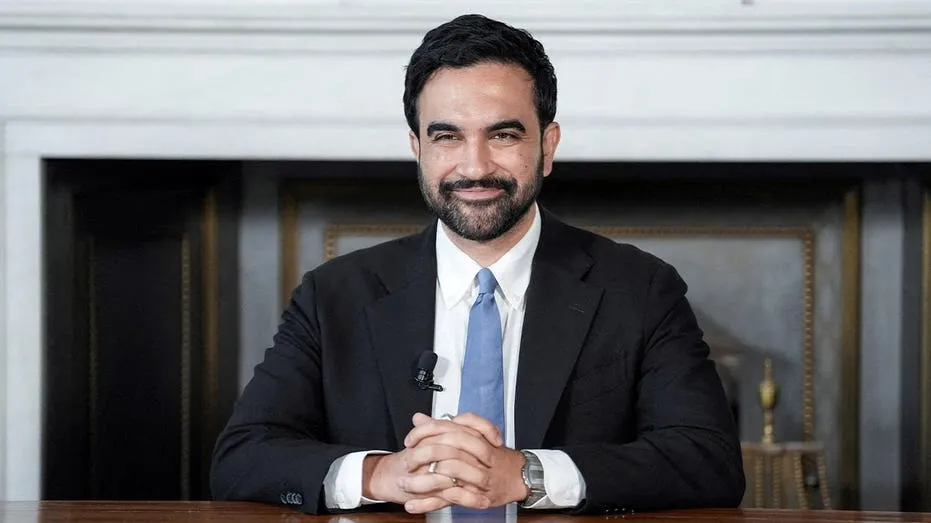
New York City Mayor Zohran Mamdani is firmly embracing his identity as a Democratic Socialist, asserting that the movement represents a revitalization of the Democratic Party’s historical commitment to the New Deal era. In a recent wide-ranging interview, Mamdani pushed back against the idea that his political label could be a hindrance, instead framing Democratic Socialism as a modern interpretation of Franklin D. Roosevelt’s foundational principles for the party.
Reconnecting with Party’s Core Values
Mamdani expressed pride in the Democratic Party’s historical legacy, citing the Four Freedoms and the New Deal as cornerstones of its identity. “So much of what makes me proud to be a Democrat is looking at what our party used to stand for. You think about the Four Freedoms, you think FDR, you think the New Deal,” Mamdani stated. He lamented that these core tenets often feel like historical artifacts rather than lived realities for many citizens. “Those are at the core of what our party’s identity is, and yet it feels like to experience it, you have to read about it. You can’t see it around you anymore. And that isn’t something that I’m willing to accept, and I know that many feel similarly,” he added.
These remarks come at a time when Mamdani has become a significant progressive voice within the Democratic Party, bolstered by a series of successful endorsements of fellow Democratic Socialist candidates who have secured primary victories in House races. Despite his strong stance on Democratic Socialism, Mamdani also emphasized that his administration is open to private investment and collaboration with leaders from Wall Street, the finance sector, and the real estate industry. This approach is maintained even as he advocates for increased taxes on the city’s wealthiest residents.
Collaboration Amidst Policy Differences
“I think it’s important,” Mamdani said regarding the city’s relationship with private business leaders. “And what I have in common with leaders of those sectors — even amid disagreements, because I believe that we can raise taxes a little bit more on the wealthiest New Yorkers — what brings us together is both a belief in the city and a commitment to its continued vitality.”
As evidence that major corporations remain committed to New York City, Mamdani pointed to the recent announcement of American Express establishing its new headquarters at Two World Trade Center. He suggested that business leaders make decisions based not solely on financial returns but also on their investment in the city’s future and its symbolic importance. “These business leaders, they’re not just making decisions on the basis of dollars and cents; they’re also making decisions on the basis of investing in the city and in what the city represents,” he explained.
The mayor also countered the notion that Democratic Socialism is inherently at odds with economic growth, even when his views might align with those of a “capitalist mayor.” “I will always celebrate continued investment in this city,” Mamdani affirmed. “And I’ll also look to ensure that more and more New Yorkers can be a part of those benefits.”
Economic Realities and Tax Policy
However, Mamdani’s push for higher taxes on the affluent comes against a backdrop of shifting economic trends. An analysis by the Citizens Budget Commission revealed a notable decline in New York’s share of the nation’s millionaires, dropping from 12.7% in 2010 to 8.7% in 2022. This represents the most significant decrease among all states and is estimated to have resulted in a loss of approximately $10.7 billion in personal income tax revenue in 2022 alone. The report suggests that New York’s high tax rates and diminished competitiveness compared to states like Florida and Texas are contributing factors to this trend.
Mamdani has consistently made increasing taxes on wealthy New Yorkers a central theme of his economic platform. He argues that the city’s highest earners and most profitable corporations should contribute more to the funding of essential public services. This policy stance is part of a broader debate within the national Democratic Party about its future direction, particularly as the 2028 presidential election cycle approaches.
A Vision for the Future of the Democratic Party
Mamdani believes that the electoral successes of democratic socialist candidates indicate a growing public appetite for his progressive vision. He articulated a desire for the party to move beyond simply defining itself in opposition to the Republican Party. “For too long, it has felt like our party, the Democratic Party, the only answer we have is to say that we are not the Republican Party,” Mamdani observed. “But we also have to have a vision of what comes after this administration.” His emphasis on Democratic Socialism, he suggests, offers that forward-looking vision, aiming to restore and modernize the party’s historical commitment to social and economic progress for all citizens.


