




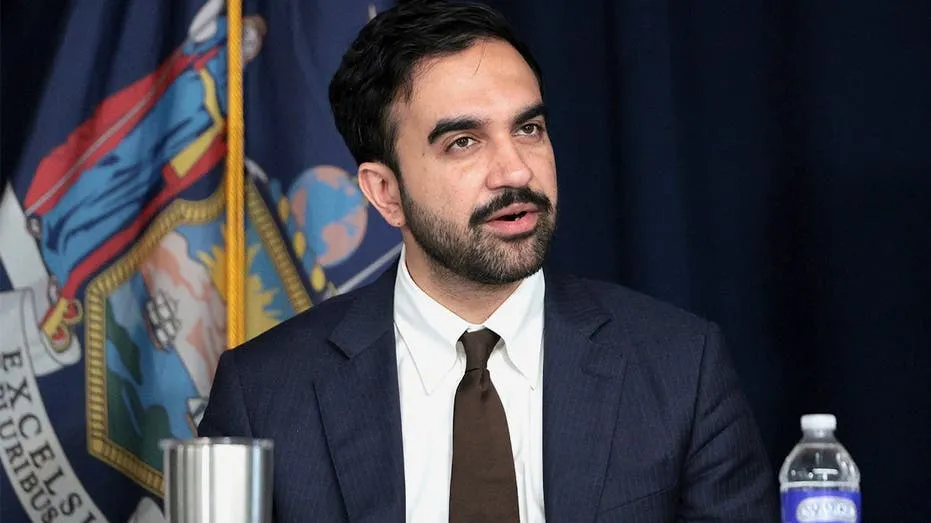
New York City Mayor Zohran Mamdani is facing a legal challenge from the United Federation of Teachers (UFT), the city’s largest educators’ union, over his administration’s move to block a pay raise for education paraprofessionals. This development marks a significant rift between the Mayor and the UFT, which had previously endorsed him for office.
The RESPECT Check Act and Mayor Mamdani’s Opposition
The conflict centers on the “RESPECT Check Act,” a measure unanimously passed by the New York City Council last month. This legislation aims to provide education paraprofessionals with a bonus of up to $10,000. While Mayor Mamdani had previously supported similar initiatives, his administration has now taken a firm stance against the bill, citing concerns that it violates New York State’s Taylor Law. This law is a cornerstone of public employee rights, safeguarding their ability to negotiate terms of employment, including compensation.
In a move that has escalated the dispute, Mamdani’s administration filed a lawsuit intended to prevent the RESPECT Check Act from taking effect on August 19th. This legal action has prompted a strong reaction from the UFT, which has been a key ally of the Mayor.
UFT’s Response and Commitment to Paraprofessionals
In response to the lawsuit, the UFT has filed its own motion to intervene in the legal proceedings, signaling its readiness to fight the Mayor’s challenge in court. UFT President Michael Mulgrew expressed the union’s preparedness, stating, “We knew this lawsuit was a possibility, and we were prepared.”
Mulgrew emphasized the careful drafting of the RESPECT Check Act, asserting that it was designed to comply with the state’s Taylor Law. “The RESPECT check law, which was unanimously passed by City Council on July 16, was carefully drafted to make sure that it did not violate the state’s Taylor Law, which governs collective bargaining,” he explained. He further added that the City Council would not have advanced the bill if it were legally unsound, and the UFT would not have supported legislation that jeopardized their collective bargaining rights.
The UFT president framed the situation as an opportunity for Mayor Mamdani to demonstrate his commitment to the city he aims to lead. “This moment is an opportunity for Mayor Mamdani to create a new, fairer system and build the kind of city he said he wanted to lead. This administration must keep its promises, and we won’t stop until it does,” Mulgrew declared.
City Council’s Defense of the Act
The New York City Council has also voiced its strong support for the RESPECT Check Act and its intention to defend the legislation vigorously. City Council Speaker Julie Menin and Council Member Carmen De La Rosa issued a joint statement addressing the Mayor’s lawsuit.
They highlighted the unanimous, bipartisan support the bill received, underscoring the unacceptable reality of paraprofessionals earning as little as $32,000 annually while supporting some of the city’s most vulnerable students. “Every member of the Council, in a unanimous and bipartisan vote, supported the RESPECT Check Act because it is unacceptable that paraprofessionals who support some of our highest-need students are earning as little as $32,000 a year,” the statement read. The Council members argued that the law is not only morally right but also fiscally prudent, as it could help alleviate staffing shortages that contribute to significant costs for the city.
The statement concluded with a firm commitment: “This law is not only the right thing to do, it is also the fiscally responsible thing to do, helping address the staffing shortages that contribute to the City’s $1.5 billion in Carter case costs. The Council will vigorously defend the law.”
Background and Ongoing Dialogue
The UFT’s endorsement of Mayor Mamdani came after he secured the Democratic nomination for New York City mayor in July 2025. Despite the current legal dispute, Mayor Mamdani has indicated that discussions with the City Council Speaker and the UFT have been constructive.
Speaking at a news conference last week, Mamdani stated that talks have been “productive” and clarified that he does not fundamentally oppose increasing pay for paraprofessionals. “The relationship [with Menin] continues as it’s been, and the talks [with the UFT] have been productive,” Mamdani said. He attributed the progress in discussions to a “shared understanding of the critical role that paraprofessionals play in our public school system and in our city.” This suggests that while the legal battle is ongoing, avenues for resolution and compromise may still exist.
The Role of Paraprofessionals in NYC Schools
Paraprofessionals, often referred to as teacher’s aides or classroom assistants, play a vital role in supporting educators and students within New York City’s public school system. They work closely with teachers to provide individualized attention to students, assist with classroom management, and support students with special needs. Their contributions are particularly crucial in classrooms with high student-to-teacher ratios or for students requiring specialized educational assistance.
The low starting salary of $32,000 mentioned by the City Council highlights a long-standing issue of undercompensation for these essential workers. The RESPECT Check Act was intended to address this disparity, recognizing the demanding nature of their work and its impact on student success. The current legal standoff raises concerns about the future of these support staff and the potential implications for the city’s educational environment.
Looking Ahead: Potential Implications
The lawsuit filed by Mayor Mamdani’s administration against the UFT and the RESPECT Check Act introduces a complex legal and political dynamic. The outcome of this legal battle could set a precedent for future negotiations between city officials and public employee unions regarding compensation and benefits.
For paraprofessionals, the ongoing dispute creates uncertainty about the promised pay increase. The UFT’s commitment to fighting for the legislation suggests a protracted legal process. Meanwhile, the City Council’s determination to defend the act indicates a strong legislative backing for the pay raise. Mayor Mamdani’s administration, despite its legal actions, has also expressed a willingness to engage in dialogue, leaving open the possibility of a negotiated settlement. The situation underscores the ongoing challenges in balancing fiscal responsibility with the need to adequately compensate essential public service workers.


