




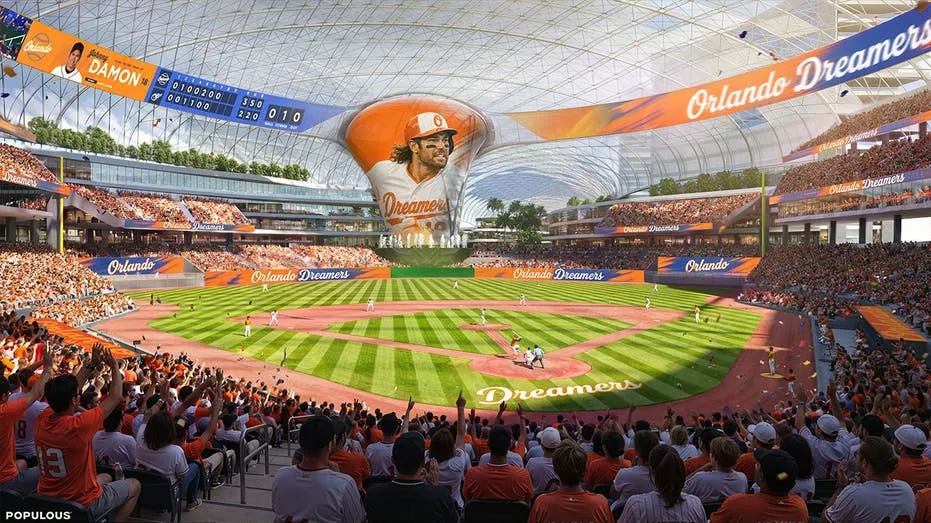
When one thinks of Orlando, Florida, the immediate association is often with its world-famous theme parks, magnets that draw tens of millions of tourists annually and solidify its status as a global travel hub. Yet, beyond the rollercoasters and parades, a different kind of attraction is being pursued: Major League Baseball. The Orlando Dreamers, a group spearheading the effort, believe the vibrant Central Florida city is not just ready but destined for an MLB franchise.
The Case for Orlando Baseball
While cities like Nashville and Charlotte frequently appear in discussions about potential MLB expansion, the Orlando Dreamers’ co-founder and COO, Jim Schnorf, outlines a compelling set of circumstances unique to Orlando. “We have no Major League Baseball here. We don’t have minor league, and we don’t have spring training,” Schnorf explained. He highlighted a significant gap in the professional baseball landscape: “Every other competing city except one has Triple-A, and the one that doesn’t have Triple-A has Double-A. So there’s an anomalous absence of professional baseball from the Orlando market.”
This void is particularly striking given Orlando’s standing as the largest media market in the United States without an MLB presence. Schnorf emphasized that this isn’t just about filling a gap; it’s about capitalizing on immense existing potential.
Leveraging Tourism and Market Size
The sheer volume of tourism in Orlando presents a powerful argument for its viability as an MLB host city. “We’re the most visited destination in the Western Hemisphere, with over 80 million tourists this year,” Schnorf stated. He drew a parallel to the success seen in other markets, noting, “Tourism matters a lot. Anyone who doesn’t believe that merely needs to look at the Las Vegas model.”
Schnorf, who initiated the Dreamers’ endeavor alongside the late Pat Williams, a respected NBA executive instrumental in bringing the Orlando Magic to the city, pointed to Las Vegas as a prime example of how a tourism-centric economy can successfully embrace major professional sports. He cited the rapid ascent of the Vegas Golden Knights in the NHL and the relocation of the NFL’s Raiders as evidence that cities with a strong tourism industry can indeed support and thrive with top-tier sports franchises.
“So tourism matters immensely when it comes to the success of sports,” Schnorf reiterated. This influx of visitors not only provides a built-in potential fan base but also offers a unique avenue for funding, particularly for stadium development.
Stadium Plans and Funding Prospects
The Orlando Dreamers have unveiled ambitious plans for a state-of-the-art baseball stadium, with new renderings showcasing a modern facility envisioned for a site near SeaWorld, conveniently accessible from the major I-4 corridor. A key element of their funding strategy involves tapping into the tourism resort tax generated by Orange County.
“Orlando generates the most tourism resort tax of any metro area in the country, which can be used for tourism, sports facilities, convention centers, and so forth,” Schnorf elaborated. This dedicated funding stream, he believes, is crucial for realizing the stadium project.
However, the path forward has encountered some procedural hurdles. A task force convened to evaluate proposals, including the Dreamers’ stadium project, ultimately did not recommend moving forward at that time. Schnorf acknowledged this outcome was not entirely unexpected, citing the timing amidst an election cycle and the compressed nature of their presentation. “We requested $975 million,” he said. “To put that in perspective, we got only 15 minutes to present that package. Normally, you would spend a minimum of a day, following months and months of work and research on our financial model and metrics.”
Despite this setback, the Dreamers organization reports significant financial backing already in place. “We’ve got well in excess of $2 billion towards stadium financing and team acquisition in place under letters of intent,” Schnorf confirmed, indicating substantial investor confidence.
Addressing Competition and Future Outlook
The question of whether Florida can support a third MLB team, given the presence of the Tampa Bay Rays and Miami Marlins, is a natural one. Critics might point to the often-modest attendance figures for those existing franchises. However, Schnorf countered this concern by referencing historical precedent in baseball.
“People ask about the other two teams in the state, ‘How can Florida possibly support a third team here?’ Well, in 1969, California had five teams with a significantly lower population than the state of Florida has today,” he noted. This historical context suggests that market saturation is not solely determined by population size but also by growth dynamics and market potential.
Furthermore, Orlando’s demographic trajectory is exceptionally strong. “Orlando is the fastest-growing metro area in the fastest-growing state in the country,” Schnorf asserted. This rapid expansion fuels his optimism about the city’s capacity to embrace and sustain a Major League Baseball team.
“We can definitely support Major League Baseball here,” Schnorf concluded, underscoring the Dreamers’ conviction that Orlando is poised to become the next frontier for America’s pastime.


