




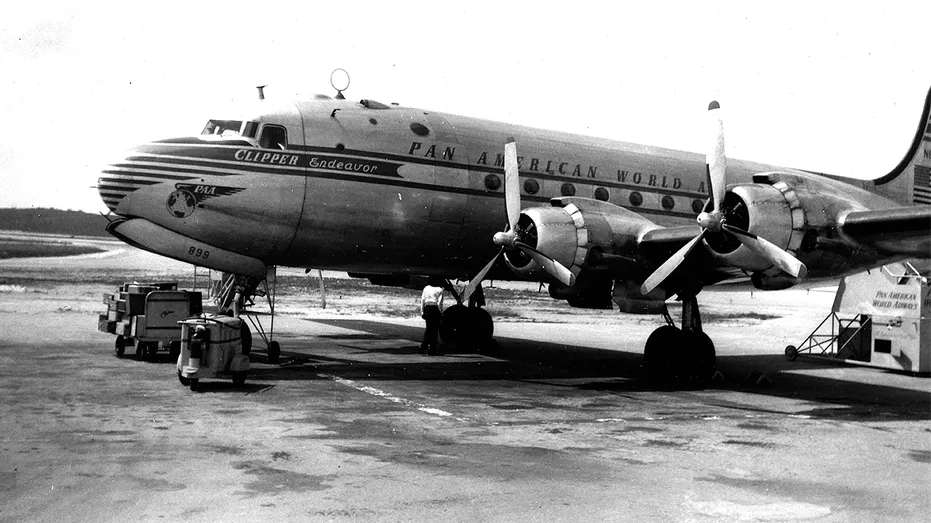
Decades after a harrowing Pan Am flight crashed into the ocean off Puerto Rico, killing 52 people, the wreckage of the ill-fated DC-4 has finally been located. The discovery, made using advanced underwater technology, brings a somber closure to a tragedy that significantly reshaped airline safety protocols, including the introduction of mandatory pre-flight passenger safety briefings.
The aircraft, identified as the Clipper Endeavor, encountered catastrophic engine failure shortly after departing San Juan, Puerto Rico, on a flight bound for New York City in 1952. The ensuing emergency landing on the water, nearly 2,000 feet deep, proved fatal for the majority of its occupants. Survivors recounted a terrifying ordeal where, despite surviving the initial impact, many passengers struggled to access life vests, and the crew faced immense difficulty deploying life rafts as the plane rapidly sank.
A Long Search for Answers
The quest to find the wreckage was spearheaded by Russ Matthews, President of the Air/Sea Heritage Foundation. His interest was piqued in 2019 when a luggage tag from the ill-fated flight washed ashore in Florida. This seemingly small clue ignited years of dedicated research, involving meticulous combing through archives from Pan Am and the Coast Guard, seeking any hint of the aircraft’s final resting place. Reports from the Civil Aeronautics Board, the precursor to the Federal Aviation Administration, also proved invaluable in piecing together the events of that day.
However, a crucial breakthrough came from historical records in Puerto Rico. These included documents from a hearing held on the crash and, significantly, a map created by Air Force pilots who had witnessed the disaster while on a training flight in the vicinity. This map provided an estimated crash site, a vital piece of the puzzle that had eluded previous search efforts.
An earlier attempt to locate the wreckage two years prior was thwarted by adverse weather conditions, which disrupted the operation of a towed sonar array. Matthews and his team were determined to make a second attempt, especially with the upcoming 75th anniversary of the crash looming. They opted for a more sophisticated approach, utilizing a state-of-the-art drone, originally designed for military applications like mine detection.
Technology and Serendipity Converge
The opportunity to deploy this advanced technology arose through a fortunate coincidence. Tony Romeo, CEO of the undersea exploration firm Deep Sea Vision, had been in discussions with Matthews about potentially assisting in the search should one of his company’s vessels be in the region. In April, one of Deep Sea Vision’s ships found itself passing Puerto Rico between other scheduled jobs, conveniently carrying the very type of advanced underwater drone equipped with the necessary high-resolution sonar to detect the sunken aircraft.
“There we were, and everything kind of came together at the moment: good weather, the right team, and the right equipment and ship. So we took a shot at it,” Romeo recounted. His personal connection to aviation, with a father who worked as a mechanic and pilot for Pan Am, added a layer of personal investment to the mission. Deep Sea Vision had previously undertaken a challenging, albeit unsuccessful, six-month expedition searching for Amelia Earhart’s lost aircraft.
Combining Matthews’ extensive research with historical weather data from the time of the crash, the team was able to pinpoint a most probable location and define a search area spanning approximately 10 square nautical miles. The advanced drone was deployed, and remarkably, it located the wreckage on its very first pass over the designated zone. The discovery was confirmed only upon the drone’s return to the surface, presenting clear imagery of the submerged fuselage and separated tail section.
Lessons Learned from Tragedy
The Civil Aeronautics Board’s investigation into the 1952 crash attributed the engine failure to inadequate maintenance practices and cited the captain’s handling of the aircraft after power loss as contributing factors. However, the human element of the disaster—the panic and confusion surrounding the struggle for life vests and rafts—played a pivotal role in driving significant aviation safety reforms.
The harrowing experiences of the survivors underscored the critical need for clear, standardized safety procedures. This led directly to the implementation of mandatory pre-flight passenger briefings, ensuring travelers are informed about emergency equipment and procedures. Furthermore, improvements were mandated for the design and accessibility of flotation devices, aiming to prevent similar tragedies in the future.
The discovery of the Clipper Endeavor’s wreckage serves as a poignant reminder of the dangers inherent in early commercial aviation and the profound impact this specific disaster had on making air travel safer for generations to come. It is a testament to the persistence of those who sought answers and the technological advancements that finally brought a measure of closure to a long-forgotten tragedy.


