




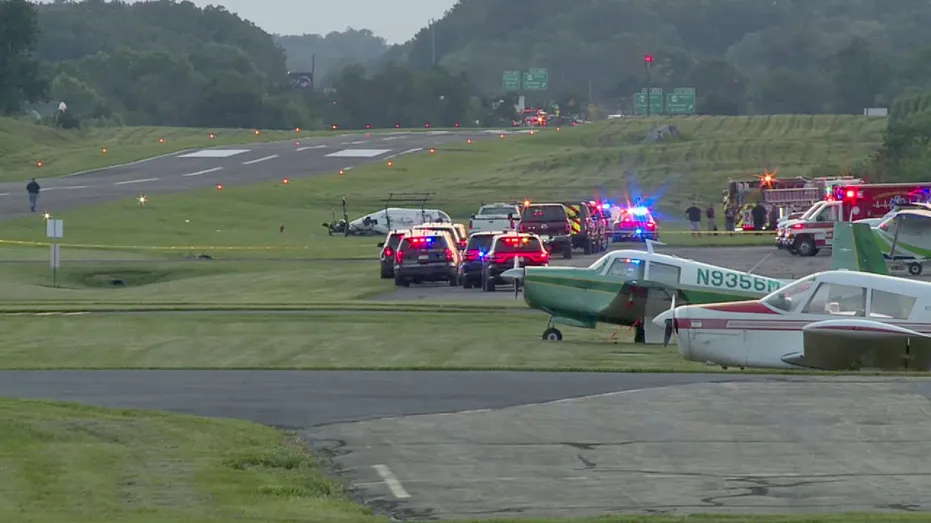
A tragic midair collision occurred Wednesday evening in central Pennsylvania, involving a Pennsylvania State Police helicopter and a small single-engine airplane. The incident, which happened around 7:50 p.m., resulted in the death of the pilot of the small plane and injuries to two state troopers aboard the helicopter. The Federal Aviation Administration confirmed the collision involved a Bell 407 helicopter and a Cessna 150 airplane.
Collision Details Emerge
Pennsylvania State Police Acting Commissioner Lieutenant Colonel George Bivens provided details about the harrowing event during a news briefing. He explained that the state police helicopter was situated in a grassy area near Carlisle, approximately 120 miles west of Philadelphia, engaged in routine training exercises. At that moment, a Cessna aircraft approached and, for reasons yet to be determined, veered sharply to the right just before impact. The small plane struck the helicopter from behind, severely damaging its tail rotor and main rotor system, which precipitated a violent crash.
The sole occupant of the Cessna, believed to be the pilot, tragically did not survive the impact. Bivens stated, “The one known occupant of the Cessna did not survive the crash. We believe only the pilot was in the Cessna.”
Troopers Injured but Expected to Recover
Inside the state police helicopter, two troopers were initially trapped by the wreckage. Fortunately, they were able to extricate themselves and were promptly transported to a local hospital for treatment. Governor Josh Shapiro expressed relief regarding their condition, noting during the briefing, “I’m pleased to say that after an aviation accident, two Pennsylvania State Troopers, while injured, are going to be okay.” He added that both troopers are expected to make a full recovery.
Governor Shapiro, along with his wife Lori, conveyed their thoughts and prayers for those involved. “Lori and I are praying hard and we ask all of our fellow Pennsylvanians to join us,” the governor shared earlier via social media.
Investigation Underway
The National Transportation Safety Board (NTSB) is taking the lead in investigating the cause of this devastating midair collision. The Federal Aviation Administration (FAA) is providing assistance to the NTSB as they work to piece together the events that led to the crash. Investigators will meticulously examine all available data, including flight records, witness accounts, and wreckage analysis, to determine the factors contributing to the incident.
Midair collisions, though rare, are among the most catastrophic types of aviation accidents. They typically occur when aircraft operating in proximity fail to maintain visual separation or when communication breakdowns occur. Factors such as weather conditions, pilot visibility, air traffic control procedures, and aircraft maneuverability are all critical elements that investigators will scrutinize.
The Aircraft Involved
The Bell 407 helicopter is a widely used four-bladed, single-engine light utility helicopter manufactured by Bell Textron Canada. It is known for its speed, range, and multi-mission capability, often employed by law enforcement, emergency medical services, and private operators.
The Cessna 150 is a two-seat, single-engine, high-wing fixed-wing aircraft. Introduced in the 1960s, it has been a popular choice for flight training, personal transportation, and recreational flying due to its affordability and ease of operation. Its relatively small size and maneuverability characteristics are key aspects that investigators will consider in the context of the collision.
Preventing Future Incidents
Aviation safety relies on a multi-layered approach involving pilot training, air traffic control vigilance, robust aircraft maintenance, and adherence to strict operating procedures. For training exercises, especially those involving law enforcement or emergency services, protocols often include specific communication requirements and designated operating areas to minimize risk. The investigation will likely focus on whether these protocols were followed and if any contributing factors, such as unexpected aircraft behavior or environmental conditions, played a role.
The findings from the NTSB investigation will be crucial in understanding the sequence of events and identifying any potential systemic issues or procedural gaps that could be addressed to enhance aviation safety across the board. The goal is always to learn from such tragic events and implement measures to prevent similar accidents from occurring in the future.
The community of Carlisle and the broader Pennsylvania State Police family are undoubtedly grappling with this loss and the injuries sustained. The focus now shifts to supporting the families affected and awaiting the thorough findings of the official investigation.


