




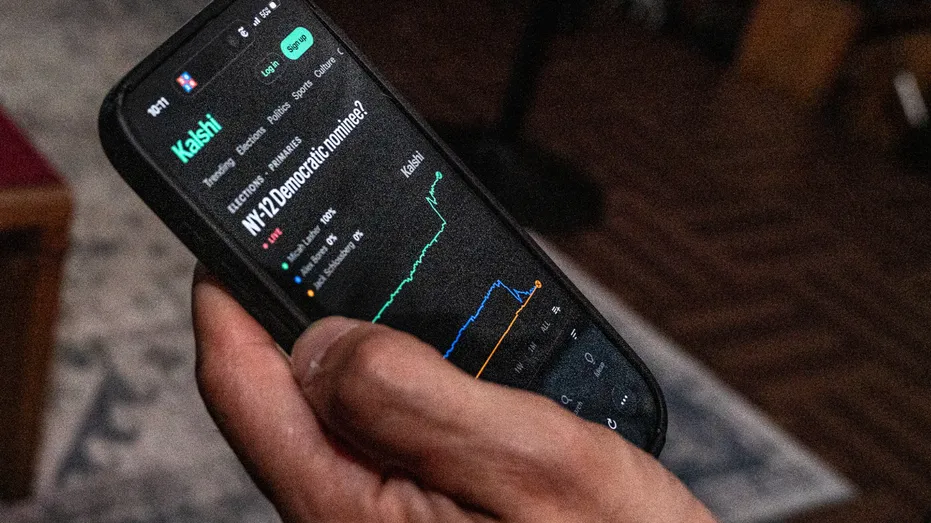
The landscape of betting and information has dramatically shifted since the mid-20th century. Once confined to the familiar realms of casinos in Las Vegas and Atlantic City, or the racetrack, legal wagering has exploded. The advent of online gambling threw the doors wide open, and now, prediction markets are pushing the boundaries even further, allowing individuals to wager on virtually any conceivable event.
Companies like Kalshi and Polymarket are at the forefront of this new wave, creating marketplaces for outcomes ranging from the mundane – like whether a specific bakery will sell more cheesecake than strudel on a given day – to the significant. This proliferation means that more people than ever before are exposed to what can be described as ‘feedbox noise,’ a constant stream of potential information. Echoing Andy Warhol’s famous prediction about fame, it seems that in the future, everyone might have their moment of ‘inside information’ on a prediction market for a brief period.
Consider a market set up to predict the winner of a reality television show like “Big Brother.” While the show’s producers and a select few might know the outcome definitively, a much larger circle, potentially thousands, could possess ‘inside information.’ Even if direct disclosure is legally perilous, the temptation to subtly guide a friend or family member – perhaps with a casual, “Hey, maybe put a few thousand on this contestant” – becomes a real possibility.
The Blurring Lines of Insider Knowledge
This isn’t merely a theoretical concern. Recent events have highlighted the tangible risks. This year alone has seen instances where individuals have allegedly leveraged non-public information for betting gains. One case involved a soldier reportedly using foreknowledge of military action in Venezuela to win a bet. Another involved an individual with access to presidential speech schedules profiting from knowing the content of President Donald Trump’s addresses.
These scenarios diverge sharply from the traditional image of insider trading – the high-finance stereotype of mahogany-paneled offices and expensive suits. While the public often associates insider trading with Wall Street elites, the reality is becoming far more diffuse. The potential for individuals in various roles, from government employees to those involved in media or entertainment, to possess and potentially exploit non-public information is growing.
The ease with which non-public information can influence financial markets is well-established. However, prediction markets introduce a new layer of complexity. Wagers can now be placed on events as varied as the success of a SpaceX launch by a specific date or the release timing of a new Rihanna album relative to a video game. The number of individuals privy to information that could influence such bets is vast and often difficult to ascertain.
This raises ethical questions, particularly for journalists. Could a reporter holding a significant news story that could impact a political candidate’s campaign ethically place a bet on the outcome of that race through a prediction market? Legally, the answer might be yes, but the ethical implications are profound, placing us in uncharted territory.
Prediction Markets in the Political Arena
The influence of prediction markets extends into the political sphere, where they can be manipulated in ways beyond simple betting. In smaller congressional or local races, wagers placed on these platforms can function almost as a form of campaign donation. A surge in betting activity, regardless of its organic basis, can create the appearance of a candidate gaining momentum, potentially influencing public perception and even attracting genuine support.
This dynamic adds another layer to the complex ecosystem of political campaigning and public opinion. The ability to artificially inflate a candidate’s perceived viability through market activity, even temporarily, presents a novel challenge for electoral integrity.
A Dystopian Glimpse?
There’s an undeniably dystopian feel to the prospect of constant online wagering on every facet of life. It risks reducing the world from a place of wonder and human experience to a series of calculable events, governed by algorithms and betting lines. This perspective can overshadow the organic flow of human affairs, elections, and personal choices, replacing them with a cold, mathematical framework.
The danger lies in becoming passive observers, like a ball on a roulette wheel, with our fates determined by forces beyond our control, benefiting unseen players. While regulatory efforts are underway at both state and federal levels, completely shutting down the prediction market industry seems unlikely. The sheer volume of potential markets and participants means that the issue of ‘insider trading’ in this new context is likely to persist.
The 21st century has been characterized by a relentless pace of technological innovation, from smartphones to artificial intelligence. These advancements often arrive before society has had the chance to fully understand their implications, let alone grapple with their potential benefits or harms.
The Future of Prediction Markets
Prediction markets are not just a passing fad; they are rapidly expanding, serving not only as a new avenue for gamblers but also as a significant alternative to traditional polling and focus groups in politics. However, it’s crucial to recognize that the real bet often isn’t on which candidate will ultimately win, but rather on whether a candidate’s popularity will surge, irrespective of whether that surge is genuine or artificially manufactured.
As these markets become more integrated into our economic and political lives, individuals must make informed decisions. If a business you work for, a campaign you advise, or even a reality show a friend participated in becomes the subject of a prediction market, the responsibility falls on you to determine the fairness of placing a wager. With few external checks currently in place, the onus is on individual ethical judgment.


