




In a political strategy echoing tactics long employed by conservatives, several progressive Democratic candidates are weaving their religious beliefs into their campaign narratives to connect with voters. This approach, seen in races across the country, marks a notable shift as these candidates aim to build broader coalitions by highlighting shared values rooted in faith, drawing parallels between their platforms and the teachings of religious figures.
Faith as a Political Touchstone
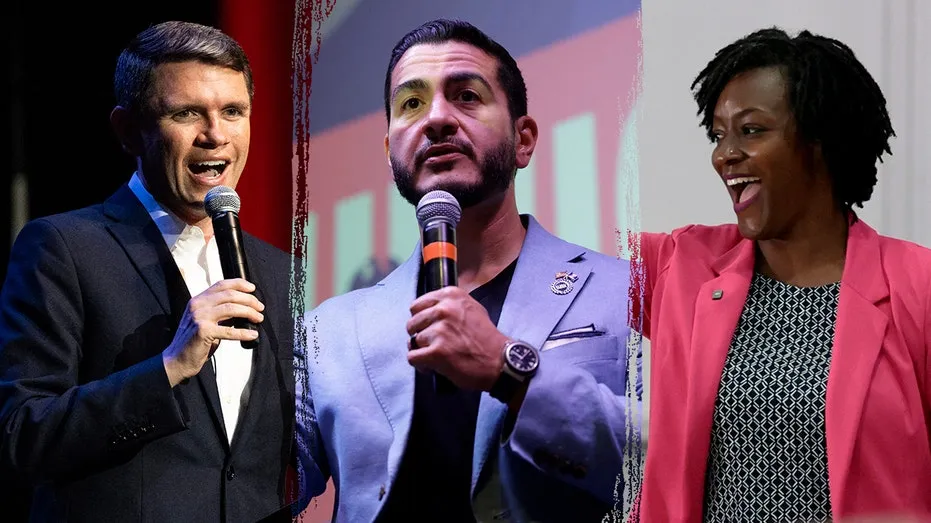
Three prominent progressive Democrats seeking Senate seats have notably integrated their personal faiths into their public messaging. Florida state Representative Angie Nixon, Abdul El-Sayed, and Texas state Representative James Talarico are all making headlines not just for their policy stances, which often challenge the Democratic establishment, but also for their willingness to discuss their religious convictions. This strategy shares similarities with the rise of the “Moral Majority” in the Republican party during the late 1970s, which successfully linked Christian principles with conservative policy goals.
Angie Nixon’s ‘Radical’ Faith
Angie Nixon, who recently secured a significant upset victory in a Democratic Senate primary against a candidate endorsed by the party establishment, has become a focal point for Republican criticism. Her win over Alexander Vindman, a key figure in former President Donald Trump’s first impeachment, has placed her in the national spotlight. Nixon, who faces incumbent Republican Senator Ashley Moody in Florida, has openly embraced her progressive ideals, even drawing comparisons between her policy positions and the actions of Jesus Christ.
During a recent sermon at Saint Paul AME Church in Jacksonville, Florida, Nixon addressed accusations of extremism. “They are trying, y’all. They are trying… to label me as this extremist, this radical. But, you know, Jesus was a radical,” Nixon stated. She elaborated on her perspective, suggesting a strong alignment between her advocacy and Christ’s teachings. “And Jesus fought for — I mean, he pushed for the same things that I’m fighting for today, right? Right now, we’re literally in a civil rights moment,” she asserted, emphasizing her belief that the current era is a critical juncture for civil rights, regardless of differing opinions.
Nixon’s affiliation with the Democratic Socialists of America (DSA), which she joined in June, has drawn immediate fire from the National Republican Senatorial Committee (NRSC). Despite her denials of being a democratic socialist, the NRSC has sought to link her to the label.
Abdul El-Sayed Connects Faith and Policy
The invocation of Jesus as a figure advocating for progressive causes isn’t limited to Nixon. Abdul El-Sayed, running in a closely contested Senate race in Michigan against former Representative Mike Rogers, also drew parallels between his own policy stances and those of Jesus when discussing his views on a podcast. El-Sayed, who is Muslim, appeared on the “Progressive Christians Podcast” in May, where he was asked about the perceived similarities between Islam and Christianity and why their shared values were being characterized as radical.
“Well, you know, Jesus, peace and blessings be upon him, was considered radical in his time, too,” El-Sayed remarked. He continued, “And there is a radical nature to being willing to stand forthright in a time of corruption, and I think it’s important for all of us to realize that popularity and zeitgeist don’t make truth. And we live in a time where people are trying to normalize corruption.” El-Sayed framed his commitment to his principles as a form of radicalism, particularly in the face of societal corruption.
James Talarico’s Theological Journey
James Talarico, campaigning in Texas against Attorney General Ken Paxton, has perhaps the most visibly integrated his faith into his political identity. He is currently pursuing seminary studies with the goal of becoming a Presbyterian minister and has consistently blended his Christian beliefs with his policy platform since launching his campaign.
Talarico has also faced scrutiny from Republicans, particularly concerning his defense of transgender children and his interpretation of religious texts. In response to a 2021 Texas law targeting transgender youth, Talarico argued that proponents were misusing religious justifications. He drew upon the opening verses of Genesis, noting the use of different Hebrew words to describe God. “The first two lines of the Bible, the first two lines in Genesis, use two different Hebrew words to describe God. One is the masculine Hebrew noun for divinity,” Talarico explained. “The second is the feminine Hebrew noun for spirit. God is both masculine and feminine, and everything in between.” He concluded from this interpretation, “God is non-binary.”
A Shifting Political Landscape
The willingness of these progressive candidates to engage with faith-based messaging signals a potential evolution in how religious identity is used in political discourse. While conservatives have historically leveraged religious appeals, this new wave suggests that progressive platforms can also find resonance by grounding their policy goals in spiritual or ethical frameworks. The candidates’ efforts to connect with voters on a personal, values-based level highlight a broader trend of seeking common ground through shared moral or religious understandings, even amidst deeply polarized political environments.
By invoking figures like Jesus, Nixon, El-Sayed, and Talarico are not only defending their progressive platforms but also attempting to reclaim or redefine the narrative around faith in the public square. Their campaigns suggest a belief that deeply held religious convictions can, and should, inform a commitment to social justice, economic equality, and human dignity – principles they argue are central to their respective faiths and their political aspirations.


