




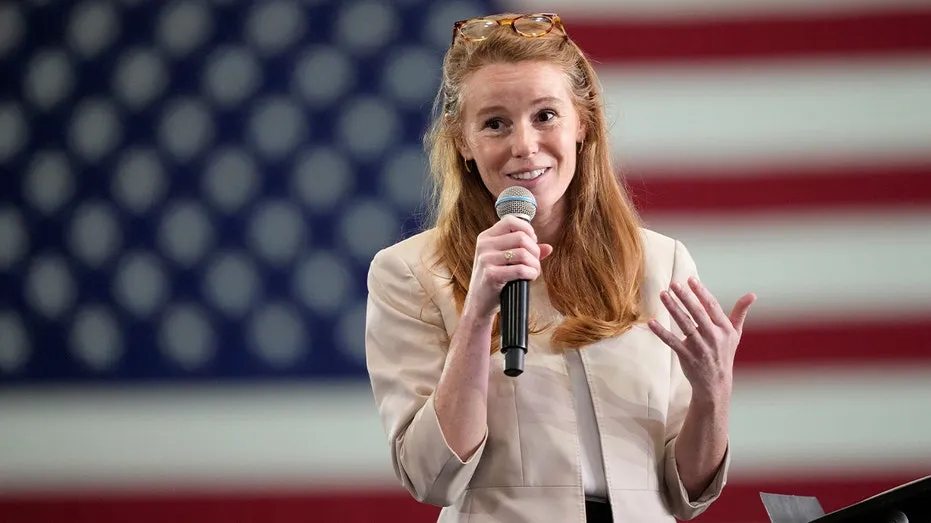
Wisconsin congressional candidate Rebecca Cooke, identifying as a “Blue Dog” Democrat, has voiced strong opinions about her party’s perceived neglect of rural and working-class voters. In a recent interview, Cooke articulated her belief that the Democratic Party needs a significant course correction to reconnect with these crucial demographics, which she feels have been historically overlooked.
Bridging the Divide: A “Blue Dog” Perspective
Appearing on the “Politics War Room” podcast with hosts James Carville and Al Hunt, Cooke, who has previously been critical of the progressive wing of the Democratic Party, explained her political identity. When asked to define what it means to be a “Blue Dog” Democrat, she described them as individuals who are “fiscally conservative, socially liberal” and operate from a “place-based perspective.” She emphasized that this approach involves understanding and engaging with rural and working-class Democrats who feel alienated by the party’s current direction.
“They’re people that understand rural Democrats, working-class Democrats, that are showing up in rural communities and working-class spaces that historically our party has left behind,” Cooke stated. “And that’s like I think why I was connected with them originally or why I — you know what they were doing resonated with me so much.”
Cooke believes she possesses a unique ability to connect with these voters, citing her own background and experiences. She pointed to other moderate Democrats who, in her view, have successfully engaged with rural America, a skill she feels is lacking in many within her own party. “I think we’ve built strong coalitions across this district with farmers, you know, healthcare workers, people in rural communities that feel really left behind,” she added.
Finding the Middle Ground in Washington
Cooke’s critique extends to the perceived ideological extremes in Congress. She has previously stated that both Republicans are too right-wing and Democrats are too left-wing. Addressing this in the interview, she clarified her stance, explaining that her aim is to advocate for a more centrist approach.
“I’m talking just, I think, in general when I talk — I did an ad last cycle where I was standing in the middle of my parents’ farm talking about how folks in DC are either too far left or too far right, and we need more people in the middle that want to work across the aisle to get things done,” Cooke said. She stressed her commitment to bipartisan cooperation, prioritizing “party before people or politics before people.”
The Importance of Lived Experience
A cornerstone of Cooke’s platform is the need for more candidates with working-class backgrounds in Congress. Drawing from her own life, she highlighted her extensive experience as a waitress since the age of 16 and her role in running a small business, often juggling both to make ends meet. She also mentioned participating in fellowships focused on encouraging more working-class individuals to run for office.
“I’m proud of that work because I think there’s this disconnect in the party and when we run working-class people, folks come out to vote because people trust those people, right? Folks trust me because I have some of the same lived experience that they they’ve had, right?,” Cooke explained.
She contrasted her experiences with those of many current lawmakers, suggesting a significant disconnect between policymakers and the realities faced by ordinary families. Cooke shared personal struggles, such as having to sell cows due to low milk prices and facing challenges competing with large online retailers as a small business owner. “I know what it’s like to sign the front of a paycheck as well as the back of a paycheck, right? And I know what it’s like to do hourly wage work,” she stated. “There’s a lot of members of Congress that have never done those sorts of things. So when they’re making policy that’s impacting working families, they’re out of touch with that.”
Campaign Strategy and Core Issues
Cooke’s campaign has actively sought to engage with voters across her district, regardless of their political affiliation. A spokesperson for her campaign emphasized her commitment to earning support from all Wisconsinites, including Republicans and those who supported Donald Trump.
The campaign highlighted Cooke’s willingness to engage with individuals holding different political views, noting her statement that she would shake hands with anyone wearing a MAGA hat. Her platform includes a focus on fighting for working people and a willingness to diverge from mainstream Democratic positions on certain issues. Specifically, she has voiced support for a secure border, full funding for the police, and skepticism about universal student loan forgiveness, viewing it as a temporary fix for deeper systemic problems.
“She’s running to fight for working people and has no problem disagreeing with other Democrats, like when she said she’d ‘stand up to Democrats to fight for a secure border,’ she ‘support[s] funding the police fully, and doesn’t believe in universal student loan forgiveness because it only sticks a bandaid on a structural problem,’” the spokesperson added.
Cooke’s campaign aims to present a pragmatic alternative, emphasizing common ground and practical solutions over partisan divides, particularly for the benefit of rural and working-class communities that she believes have been underserved by the national party.


