




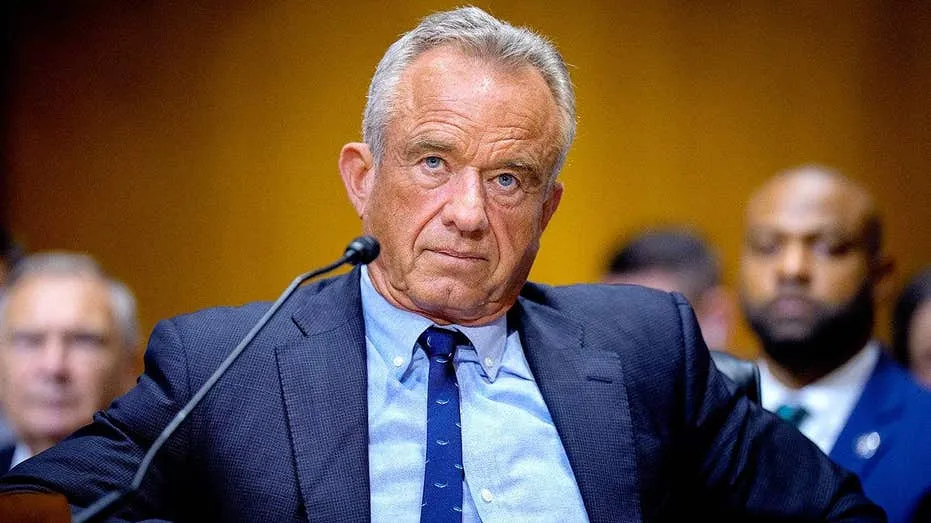
Robert F. Kennedy Jr., the Secretary of Health and Human Services, confronted CNN anchor Dana Bash on Sunday, asserting that the network engaged in “press malpractice” during the COVID-19 pandemic. Kennedy argued that CNN failed to adequately challenge public health authorities and, in doing so, contributed to the marginalization of dissenting voices.
Clash Over Pandemic Response
The heated exchange occurred during an appearance on CNN’s “State of the Union.” Kennedy directly told Bash, “You were part of the problem. There was absolute press malpractice. Your job — your job — is a fierce skepticism toward authority, and you weren’t doing that.” He further contended, “You were beating up on people who were dissenting.”
Kennedy’s sharp critique followed Bash’s attempt to steer the conversation toward future pandemic preparedness. She inquired about the HHS’s strategy for the next public health crisis, seeking to move beyond a rehashing of the federal government’s prior response. Bash pushed back against Kennedy’s accusations, stating her intention was to focus on preventing future crises rather than allowing him to make what she deemed inaccurate statements.
“I also don’t want to use this interview to allow you to say things that aren’t entirely true,” Bash stated. She defended the efficacy of COVID-19 vaccines, asserting, “It is also factually true that the COVID vaccine worked. The COVID vaccine prevented deaths. There is data, upon data, upon data.” To underscore her point, Bash referenced a 2023 estimate by CDC and Harvard researchers, which suggested that primary vaccination could have averted at least 232,000 deaths among unvaccinated U.S. adults.
Accusations of Fear-Mongering
While Bash acknowledged the challenging nature of the pandemic and conceded that officials likely made mistakes, Kennedy maintained that CNN’s coverage amplified public fear. “You were scaring people,” Kennedy declared. When prompted by Bash to explain why he believed the network contributed to public anxiety, Kennedy pointed to the on-screen graphics, or chyrons, used by CNN during the pandemic.
Bash countered that the network was simply reporting on government officials, including former President Trump’s daily White House briefings. “We were listening to the leaders in this country, including the president, who had a daily press conference explaining what was going on,” she explained.
Criticism of Fauci and Expert Trust
Kennedy further accused Bash and CNN of penalizing individuals who questioned the established narrative surrounding Dr. Anthony Fauci. He alleged that Fauci had been dishonest regarding various aspects of the pandemic, including information about masks, natural immunity, vaccine transmission, and the origins of COVID-19. “We know that Anthony Fauci, who was the expert, was lying about everything,” Kennedy asserted. “He was lying. And you were punishing people for not trusting the experts.”
This interview came shortly after reports surfaced that Dr. Fauci invoked his Fifth Amendment right against self-incrimination multiple times during a Senate hearing concerning the pandemic response and its origins. According to reports, Fauci cited his attorney’s advice when declining to answer questions on 111 occasions.
Measles Vaccine Discussion
The conversation also touched upon public health concerns beyond COVID-19. Bash noted that the United States was experiencing its highest number of measles cases in 35 years, with confirmed cases exceeding those of previous years. She highlighted a decline in kindergarten vaccination rates for the measles, mumps, and rubella (MMR) vaccine.
When Bash directly asked Kennedy to encourage parents to vaccinate their children against measles, he expressed his support for the MMR vaccine. “Parents should get their children vaccinated for measles,” Kennedy stated. “Measles vaccine is effective. It stops measles in about 97% of the cases. People should get vaccinated.”
Bash’s Stance on Objective Reporting
The interview also provided a platform for Bash to reiterate her views on journalistic responsibility. Earlier in the year, she had expressed that reporters should actively identify and address false or misleading claims, rather than simply presenting opposing viewpoints as equal. “Objective reporting doesn’t mean just giving all sides of the issue,” Bash had said. “Objective reporting now, rightly so, means explaining what somebody says when it’s false or when it’s not right or when it’s misleading.”


