




Ricky Gervais Defends Controversial Comedy: ‘Be Offended If You Want’
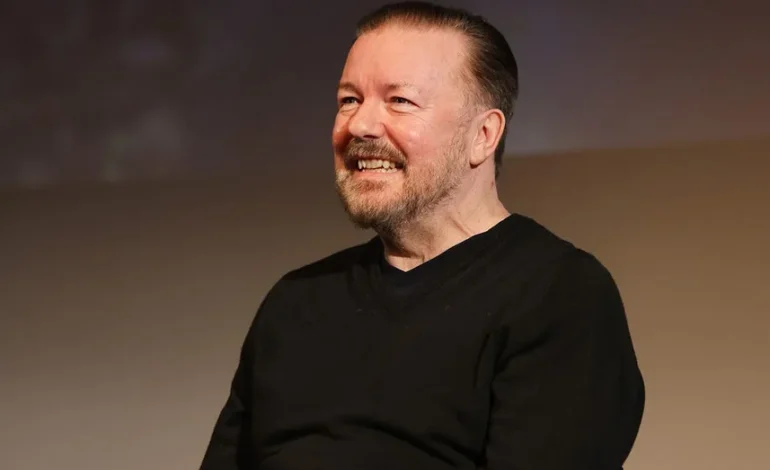

Ricky Gervais, the acclaimed comedian known for pushing boundaries, has reaffirmed his commitment to free speech, stating he has no intention of altering his material to appease those who might be offended. In a recent radio interview, Gervais elaborated on his long-standing philosophy, suggesting that audience reactions, even negative ones, can enhance the comedic experience for him.
“I don’t tell people not to be offended; I tell them I don’t care if they are. Be offended if you want, it makes it funnier for me,” Gervais remarked during his appearance on BBC Radio 2. The 65-year-old performer, whose stand-up specials have often courted controversy with jokes touching on politics, gender identity, religion, and celebrities, pushed back against the notion that he deliberately aims to provoke.
“You can’t help by what you’re offended by, but… don’t expect me to care… It’s a myth that I go out to offend. I never go out to offend,” he explained. “I just know that it’s probably going to happen because everyone’s different.”
Gervais posited that nearly any statement or viewpoint carries the potential to offend someone. “There’s nothing you can say, particularly anything that’s mildly interesting or contentious or your viewpoint, that someone somewhere won’t find offensive,” he stated.
Reflecting on the changing landscape of comedy reception, Gervais observed that audiences today appear more readily offended than they were two decades ago. “And times have changed. Twenty years ago, if someone said I was offended by that, I probably would go, ‘Why?’ Now I go… ‘I know you are. Everyone is.'”
While Gervais has frequently incorporated themes of cancel culture and free speech into his recent stand-up routines, he indicated a desire to move beyond these topics. “I’ve dealt with it too much, actually. I think the last couple of tours, I have dealt with cancel culture and free speech because I felt I had to. Now I don’t have to,” he said. “I’m ignoring it all, I shouldn’t even bring it into the room. Those people there who’ve paid hundreds of pounds — they’re not offended. I can play to a million people, not one complaint.”
Gervais insisted that the significant outrage surrounding his comedy often emerges not from live audiences but from the broader viewership his specials attract online. “As soon as it goes on Netflix, 50 million people. Of course, there’s going to be someone who doesn’t like it. What am I going to do? It’s too late. I’ve been paid.”
A History of Provocative Humor
The comedian has a well-established pattern of dismissing calls to moderate his material, consistently championing free speech and advocating for comedians to tackle controversial subjects without hesitation. Earlier this year, Gervais reignited discussions by sharing a notable line from his 2020 Golden Globes opening monologue, once again critiquing celebrities who leverage awards ceremonies for political statements.
In that monologue, Gervais famously advised the audience: “If you do win an award tonight, don’t use it as a platform to make a political speech. You’re in no position to lecture the public about anything. You know nothing about the real world. Most of you spent less time in school than Greta Thunberg.”
Upon reposting the quote on X (formerly Twitter), Gervais added his characteristic commentary: “They’re still not listening.” This sentiment underscores his ongoing belief that certain figures fail to grasp the public’s perspective, even when given a prominent platform.
The Nature of Offense
Gervais’s perspective on offense is rooted in the idea that subjective interpretation is inherent in human interaction. He argues that what one person finds humorous or acceptable, another might find deeply offensive, and this variability is not a flaw in the comedian’s intent but a reflection of diverse human experiences and sensitivities.
His stance suggests a belief that attempting to sanitize comedy to avoid all potential offense would result in bland, uninspired material that fails to engage with the complexities of life. By embracing the possibility of offense, Gervais seems to argue, comedians can explore more challenging themes and provoke genuine thought, rather than simply aiming for universal, inoffensive agreement.
The comedian’s willingness to stand by his material, even in the face of criticism, highlights a dedication to artistic freedom. He suggests that the ultimate arbiter of a comedian’s success should be the laughter and engagement of the audience they choose to perform for, rather than the potential outcry from those who may never even witness the performance.
Gervais’s comments serve as a reminder of the ongoing debate surrounding artistic expression, censorship, and the evolving boundaries of public discourse. His unapologetic approach suggests that for him, the pursuit of laughter and the exploration of uncomfortable truths often go hand-in-hand, and he remains unfazed by the prospect of alienating some in his audience along the way.