




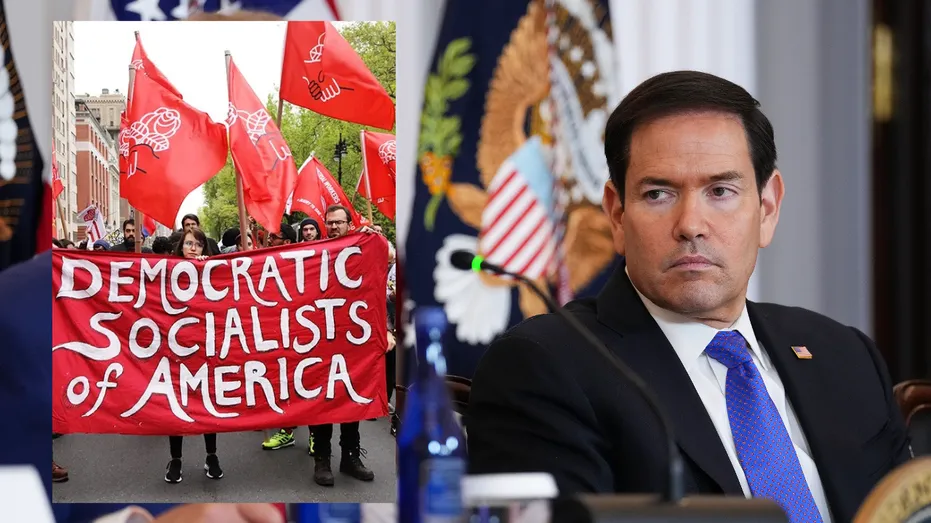
The Republican National Committee (RNC) has issued a stark warning to the Democratic Party, asserting that recent online tributes to Fidel Castro by the Democratic Socialists of America (DSA) represent a dangerous misstep that could prove disastrous in the upcoming November elections. The controversy erupted after the DSA lauded the late Cuban dictator and called for the prosecution of U.S. Secretary of State Marco Rubio.
RNC Slams Embrace of ‘Poisonous Ideology’
Natalie Baldassarre, national press secretary for the RNC, articulated the committee’s strong disapproval, stating that Democrats are aligning themselves with policies that have historically led to severe hardship in socialist states. “Democrats are openly embracing the same policies that left the people of Venezuela, Cuba, and China with empty shelves, no electricity, and their freedoms stripped away,” Baldassarre declared. She characterized the DSA’s stance as a form of “political suicide” that would ultimately lead to the party’s downfall.
Rubio’s Condemnation of Castro’s Legacy
Senator Marco Rubio, whose parents emigrated from Cuba, has been a vocal critic of Fidel Castro’s regime. On the centenary of Castro’s death, Rubio took to social media platform X to condemn the former Cuban leader’s legacy. “Fidel Castro was a complete failure at everything except destroying Cuba and impoverishing, jailing and murdering his own people,” Rubio stated. He further advised those who might be tempted to emulate Castro’s path to reconsider, warning that such a course would inevitably lead to failure.
DSA’s Defense of Castro and Accusations Against Rubio
In contrast, the DSA’s statement painted Fidel Castro as a significant figure in anti-imperialist movements and a symbol of self-determination for the Global South. The organization described him as “an organizer, a fighter, and endures as a stalwart symbol of anti-imperialist struggle and self-determination for the Global South.”
The DSA went further, accusing the United States of imposing restrictions that have hindered essential resources from reaching Cuban civilians. The group controversially alleged that these U.S. policies, particularly under Rubio’s leadership, constituted genocide. “By intentionally imposing conditions calculated to kill a civilian population, Marco Rubio is leading a genocide,” the DSA asserted. They demanded an end to the U.S. blockade, a cessation of military threats, the normalization of relations, reparations for alleged damages, and the prosecution of Rubio for crimes against humanity.
White House Rejects DSA’s Claims, Defends Rubio
The White House officially rejected the DSA’s characterization of Rubio’s Cuba policy and placed the blame for the island’s economic struggles and human rights issues squarely on Cuba’s communist government. White House spokeswoman Anna Kelly emphasized the administration’s openness to a new relationship with Havana, stating, “The Cuban regime exemplifies everything that’s wrong with Communism as its population suffers from food shortages, blackouts, poor standards of living, and egregious human rights abuses.” Kelly added, “Secretary Rubio wants a better future for the Cuban people, and the United States is ready to open a new chapter in the relationship between our two countries. The only thing standing in the way are those who control Cuba for their own gain.”
U.S. Policy and Cuba’s International Standing
The U.S. administration has intensified its pressure campaign against Cuba. In June, Rubio sanctioned five entities accused of generating revenue for Havana, including entities linked to the military conglomerate GAESA and a relative of Fidel Castro. This action followed an executive order authorizing sanctions against individuals and entities deemed responsible for repression in Cuba or threats to U.S. security.
A recent State Department report identified Cuba as the “capital of 21st century communism” and named the DSA among organizations allegedly supporting pro-Cuba activism within the United States. The DSA, prior to its tribute to Castro, had refuted the report’s findings, asserting its independence from the Cuban government and accusing the administration of attempting to suppress its movement.
Fidel Castro, who ruled Cuba for nearly five decades after the 1959 revolution, died in 2016 at the age of 90. He had transferred power to his brother, Raúl Castro, ten years earlier due to illness.
Attempts to reach the DSA for further comment were not immediately successful.


