




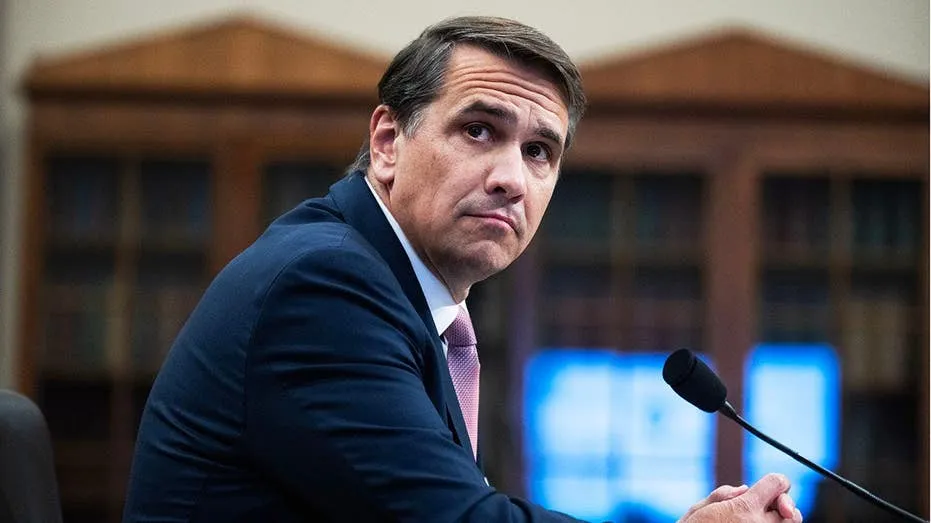
In a move believed to be unprecedented, a newly appointed U.S. Attorney, Roger Rogoff, has filed a lawsuit challenging his dismissal just 54 minutes after being sworn into office. Rogoff was selected for the role of U.S. Attorney for the Western District of Washington by a unanimous vote of a panel of district court judges, comprising both Democratic and Republican appointees. His swift termination by the Trump administration has ignited a legal battle over presidential authority to remove judicially appointed prosecutors.
A Rapid Rise and Even Faster Fall
Rogoff’s tenure began last week when he took the oath of office. However, his time as the federal government’s chief prosecutor in the Western District of Washington was extraordinarily brief. The Trump administration moved to remove him within an hour, prompting Rogoff to take legal action. His lawsuit contends that the administration overstepped its bounds, asserting that federal law prevents his removal until a Senate-confirmed successor is in place.
Testing Presidential Removal Powers
This legal confrontation presents a significant test of the President’s power over U.S. Attorneys who are not nominated by the President and confirmed by the Senate. Rogoff’s argument hinges on a federal statute that he claims allows him to serve until a permanent replacement is officially appointed. The administration, conversely, maintains that the President possesses broad authority to dismiss such appointees.
The core of the dispute lies in the interpretation of the law governing interim U.S. Attorneys. Rogoff asserts that while the Department of Justice can appoint an interim U.S. Attorney for a period of 120 days, the authority to appoint a replacement after that initial period reverts to the local district court. This court-appointed role, he argues, lasts until a Senate-confirmed nominee takes over, meaning he cannot be arbitrarily removed before that point.
Rogoff’s legal team suggests that allowing a President to immediately dismiss any judicially selected U.S. Attorney would create a loophole, enabling administrations to bypass the Senate confirmation process indefinitely for key prosecutor positions.
Administration’s Stance and Precedents
A spokesperson for the Department of Justice commented on the situation, stating that the district court did not consult with the DOJ regarding Rogoff’s selection. The spokesperson affirmed that the firing was “wholly within the President’s authority,” drawing a parallel to other dismissals of a similar nature.
Rogoff’s case is not the first instance of the Trump administration removing U.S. Attorneys early in their appointments. Similar dismissals have occurred in states like New Jersey, New York, and Virginia. However, Rogoff’s decision to challenge his termination through a lawsuit marks a distinct and novel approach.
U.S. Attorneys play a critical role in the federal justice system. They lead the prosecution of federal crimes, represent the United States in civil litigation, manage their respective offices, and help set federal law enforcement priorities within their districts.
Acting Attorney General Todd Blanche, in a statement on social media platform X, indicated that while district court judges can appoint temporary U.S. Attorneys, the President retains the power to fire them. He also suggested that the judges in the Western District of Washington had deviated from the customary practice of consulting with the administration to ensure the selected U.S. Attorney was suitable for the role within the administration’s framework.
Rogoff’s Background and Broader Context
Before his brief stint as U.S. Attorney, Roger Rogoff had a notable career in public service and private practice. He was appointed as a King County Superior Court judge in Washington by Governor Jay Inslee in 2013 and later transitioned to private law practice after leaving the bench.
Rogoff’s lawsuit highlights a pattern where the current administration has expressed intentions to remove court-appointed U.S. Attorneys who do not have the President’s backing. This situation occurs against a backdrop of numerous experienced federal attorneys departing government service, with many moving to roles in states led by Democratic governors, taking with them years of legal expertise.
The White House directed inquiries regarding Rogoff’s firing to the Department of Justice. Rogoff’s attorneys have not yet responded to requests for comment.
The Stakes of the Legal Battle
The outcome of Rogoff’s lawsuit could have significant implications for the balance of power between the executive branch and the judiciary concerning the leadership of U.S. Attorney’s offices. It raises fundamental questions about whether presidents can unilaterally dismiss prosecutors appointed by federal judges, potentially impacting the independence and continuity of these crucial legal offices.


