


Teammate Defends Coach’s ‘Protected Species’ Remark, Cites Caitlin Clark
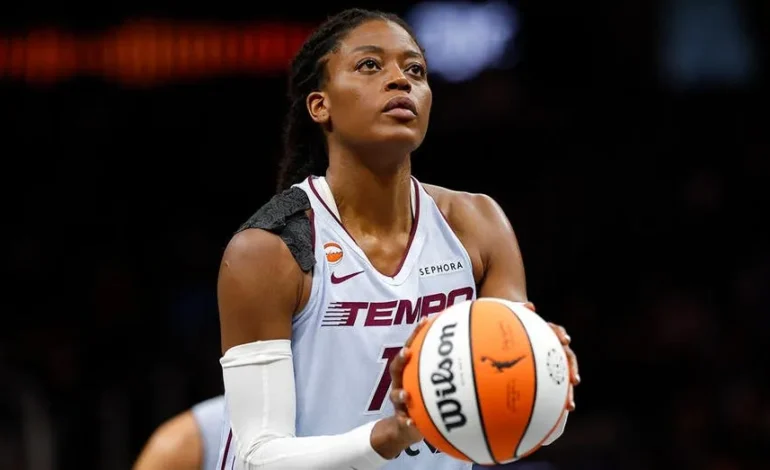

Toronto Tempo center Temi Fagbenle has publicly defended head coach Sandy Brondello following her one-game suspension by the WNBA. The suspension stems from a comment Brondello made during the Tempo’s recent 111-92 loss to the Atlanta Dream, where she referred to rookie sensation Angel Reese as a “protected species.” The incident occurred Friday night after a foul was called on Toronto’s Nyara Sabally during an offensive rebound involving Reese. As the referees reviewed the play, Brondello was overheard on a live microphone exclaiming, “Angel, she’s a protected species!”
Fagbenle’s Stance on the Remark
Fagbenle, who previously played alongside Caitlin Clark with the Indiana Fever, took to her Threads account to voice her disagreement with the league’s decision. She argued that Brondello’s comment was a figure of speech and did not warrant a suspension. “‘Protected species’ is a figure of speech and I see nothing suspension-worthy with what @brondellosandy said,” Fagbenle posted. She further elaborated, suggesting that the word “species” was unfortunate and sensitive, particularly within the current racial climate in the United States. Fagbenle posited that if a similar remark had been made about Caitlin Clark, given her immense popularity, the reaction likely would have been far less severe, questioning the disparity in outrage. She concluded her statement by calling the suspension “laughable.”
Angel Reese’s Reaction and the WNBA’s Response
Angel Reese herself reacted to the news of the suspension on X (formerly Twitter), posting, “ARE WE SURPRISED?!” The WNBA subsequently issued the one-game ban for Brondello’s comment. The league’s decision underscores the sensitivity surrounding language used in professional sports, especially when it pertains to race and perceived favoritism towards certain players.
Brondello’s Apology and Context
Prior to Fagbenle’s defense, Coach Brondello issued a sincere apology for her remark. She explained that the comment was made in the heat of the moment, immediately following an injury to her player, Nyara Sabally. “Angel, I’m sorry. Last night, in the emotion of the moment after Nyara’s injury, I used a phrase that I shouldn’t have used, and I take full responsibility for that,” Brondello stated. She clarified that her frustration was directed at the officiating, not at Reese personally, but acknowledged that her words had an unintended impact, particularly on Black women in the league.
Brondello emphasized her deep respect for the Black women in the WNBA, noting her career has been spent competing with, coaching, and learning from them. “I also understand that my words carried an impact beyond what I intended, particularly for Black women in our league, and I’m deeply sorry for that,” she continued. “I’ve spent my career competing with, coaching and learning from incredible Black women. I regret that my words caused hurt to a community I respect so deeply.” She concluded her apology by reiterating her respect for Reese as both a player and a person, extending apologies to Reese, her teammates, and the entire Atlanta Dream organization.
The Broader Conversation
The incident highlights a recurring theme in professional sports: the intense scrutiny of player and coach interactions, especially concerning race and perceived preferential treatment. Fagbenle’s comparison to Caitlin Clark brings to the forefront discussions about how different players’ actions and comments are perceived and penalized. While Brondello’s comment was made in a moment of high emotion and directed at officiating, its interpretation and the subsequent suspension reflect the league’s efforts to navigate complex social dynamics and maintain a respectful environment for all its athletes. The debate continues over whether the suspension was a necessary measure to uphold league standards or an overreaction to a poorly chosen phrase in a high-pressure situation.
The WNBA’s decision to suspend Brondello underscores the league’s commitment to addressing potentially harmful language. However, Fagbenle’s public defense, drawing parallels to how other popular players might be treated, invites further dialogue about consistency in disciplinary actions and the nuances of public perception in the sports world. As the league progresses, such incidents serve as potent reminders of the delicate balance between competitive intensity and the imperative for respectful discourse.