Scottie Scheffler on Golf Rivalries: ‘It’s the Golf Course’
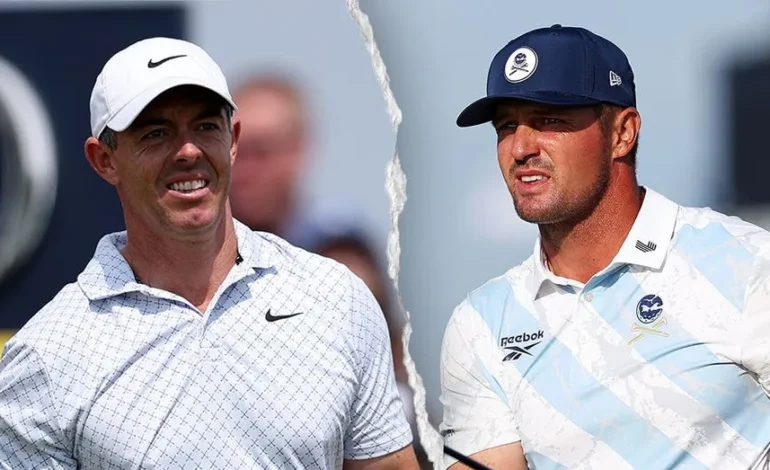

The dust has settled on The Open Championship, concluding the 2026 major season, but the most talked-about figure isn’t the unexpected champion, Ryan Fox. Instead, the spotlight remains firmly on Bryson DeChambeau, whose performance and subsequent controversies have ignited debate within the golf world.
DeChambeau Under Fire, Responds with Strong Play
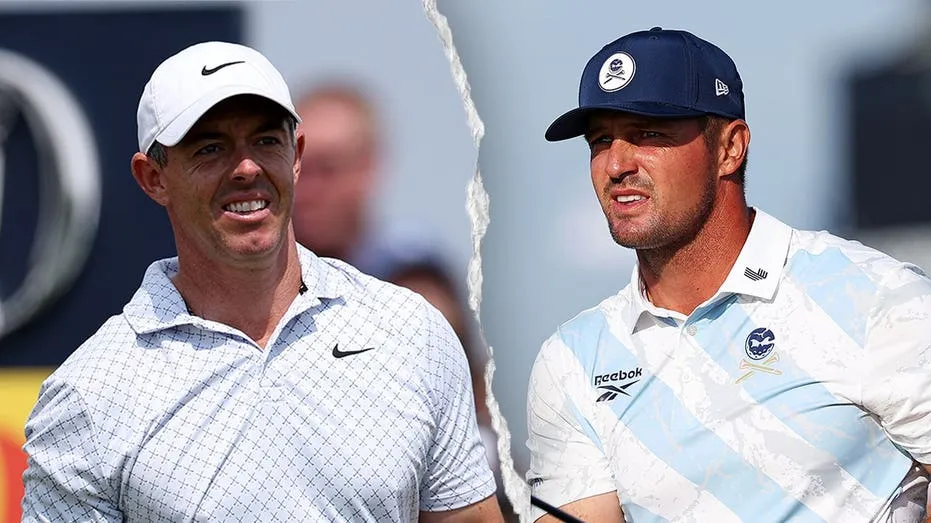
DeChambeau entered The Open facing considerable scrutiny. Golf analysts Nick Faldo and Brandel Chamblee had publicly questioned his playing style. Faldo suggested DeChambeau lacked the strategic acumen for links golf, arguing his approach of hitting the ball as far as possible and hoping for the best, rather than carefully navigating fairways, was a strategic deficit. Chamblee broadened the criticism, implying DeChambeau’s focus had shifted from competing at the highest level against players like Rory McIlroy and Scottie Scheffler towards his popular YouTube channel and collaborations with golf personality Grant Horvat.
DeChambeau, characteristically, responded on the course. He posted an impressive opening round of 3-under 67 at Royal Birkdale, a performance he described as “incredibly strategic” in his post-round media availability, directly addressing Faldo’s critique. However, his second round proved even more dramatic.
Penalty, Protest, and Player Reactions
Following a round that appeared to be a 4-under 66, rules officials reviewed DeChambeau’s play on the fifth hole. They assessed him a two-stroke penalty for improving the area around his backswing, a decision that visibly angered the golfer. Reports indicated DeChambeau was so incensed that he considered withdrawing from the tournament in protest.
The incident drew varied reactions from fellow players. Xander Schauffele, among others, voiced support for DeChambeau. World number one Scottie Scheffler also weighed in, firmly stating that he did not believe the 32-year-old DeChambeau was a “cheater.”
Rory McIlroy, however, offered a starkly different perspective. He made it clear he harbored no fondness for DeChambeau and felt the penalty was warranted. “I won’t pretend to be up here and defend Bryson,” McIlroy told reporters during the tournament. “I’m not particularly fond of him. I think a lot of it is performative. I think a lot of it’s for attention.” He further criticized DeChambeau’s actions after the penalty was issued, stating, “To hold the tournament hostage like that and to have all of us — players, volunteers, everyone — waiting on him to depart, I didn’t feel like it was a great look.” McIlroy affirmed his belief that DeChambeau had indeed improved the line of his backswing, adding, “Again, it’s like, whether it was careless or whether it was intentional, I don’t think it matters. Hopefully, it was careless, but I think the two-shot penalty was justified, for sure.”
A Budding Rivalry and Differing Views
This exchange underscored the growing, albeit complex, rivalry between DeChambeau and McIlroy, two prominent figures with contrasting personalities and career paths. Their differences are evident in various aspects of the sport: they have been on opposing sides in Ryder Cup competitions, and DeChambeau was an early high-profile defector to LIV Golf, while McIlroy became a vocal defender of the PGA Tour.
Their approaches to content creation also diverge significantly. McIlroy has not engaged in the 18-hole YouTube match format that DeChambeau has popularized, turning his channel into a major platform with appearances from figures like former President Donald Trump.
Scheffler’s Perspective on Golf Rivalries
Speaking ahead of the 3M Open at TPC Twin Cities, Scottie Scheffler was asked about the perceived rivalry between McIlroy and DeChambeau and whether it benefits the sport. Scheffler offered a thoughtful, characteristically direct response, emphasizing the unique nature of golf.
“I think golf’s different in a sense of a lot of other sports because my biggest rival week in and week out is the golf course that we’re playing,” Scheffler explained. “I mean, I could never stop somebody from doing anything in golf. I felt like when I played basketball there would always be rivalries in basketball because you’re going to play defense against a person and that is much more personal in a sense like because I’m actively trying to stop…like if you and I were going to go out and play one-on-one, it would turn into a rivalry because I’m actively trying to stop what you’re doing.”
He continued, “But in golf, we’re always competing against ourselves on the golf course. I’ve never been a big fan of personal jabs. I don’t think that rivalry is a big thing in golf just because, like I said, my biggest rivalry week in and week out is the golf course.”
The Nature of the McIlroy-DeChambeau Dynamic
While McIlroy and DeChambeau have occasionally found themselves in contention during the same tournaments, their rivalry appears less about direct competitive duels and more about personal and ideological differences. McIlroy’s apparent disapproval stems from DeChambeau’s personality and his move to LIV Golf. DeChambeau, conversely, seems to embrace the dynamic, often stating that “rivalries are good” for golf.
This contrast makes their feud particularly intriguing: it’s less about on-course battles and more about personal friction. In contrast, the relationship between Scheffler and McIlroy, despite their Ryder Cup encounters, is marked by mutual respect.
Looking Ahead
As the golf landscape continues to evolve, with potential shifts in LIV Golf’s structure and a full slate of major championships and Ryder Cups on the horizon, the dynamic between players like McIlroy and DeChambeau will undoubtedly remain a focal point. The 2027 season, with a Ryder Cup returning to Europe, promises further opportunities for these contrasting personalities to share the stage, even if Scheffler maintains that the ultimate opponent in golf is always the course itself.