




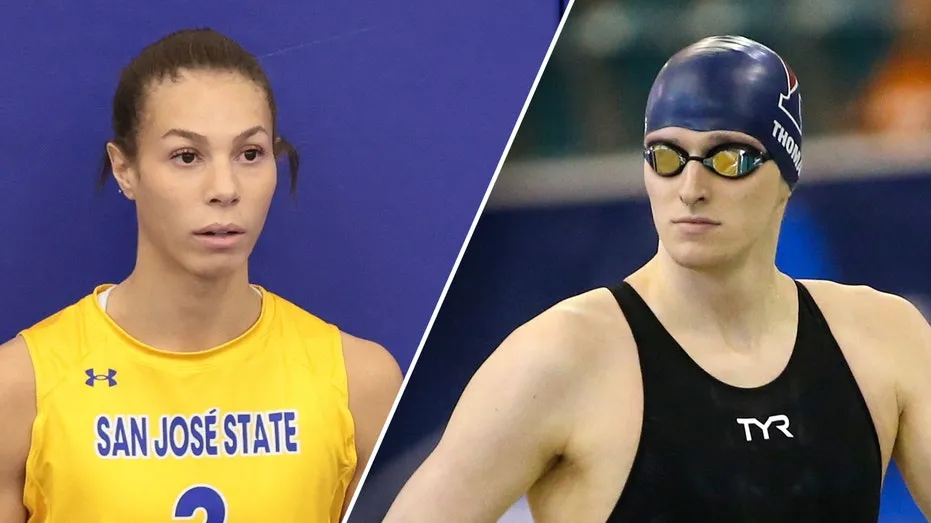
A recent Supreme Court decision on transgender athletes in women’s sports, while not awarding damages directly, has significantly bolstered legal challenges brought by female athletes seeking compensation for perceived harms. The ruling clarifies that federal law permits the separation of athletic teams by biological sex, potentially dismantling a key defense used by athletic organizations against claims that they violated Title IX by allowing transgender women to compete in women’s categories.
Supreme Court Clarifies Title IX Application in Sports
The Supreme Court’s unanimous agreement that Title IX and its regulations allow federally funded institutions to segregate athletic teams based on biological sex marks a pivotal moment for lawsuits alleging unfair competition. This decision directly challenges the long-held argument by entities like the NCAA and various athletic conferences that they were compelled by Title IX to permit transgender women to participate in women’s sports.
Bill Bock, an attorney representing plaintiffs in two prominent cases, hailed the ruling as a major victory. He stated that the Court’s decision effectively “shredded” the legal reasoning lower courts and athletic bodies had employed to justify their policies. “In all of their arguments, they said, ‘We had to, we had to do this because Title IX required us to do this,'” Bock explained. He asserted that organizations like the NCAA have historically relied on two primary defenses: that Title IX does not apply to them, or that they were obligated by Title IX to allow transgender athletes in women’s categories. According to Bock, the Supreme Court’s ruling refutes both of these positions.
Key Lawsuits Gain New Momentum
Two significant lawsuits are now poised to benefit from this clarified legal landscape. One, spearheaded by former University of Pennsylvania swimmer Riley Gaines, targets the NCAA. This case centers on the 2022 NCAA Division I Women’s Swimming and Diving Championships, where transgender swimmer Lia Thomas competed. The plaintiffs, including Gaines and other female athletes, are seeking compensatory and punitive damages, alleging they lost opportunities, privacy, and fair competition due to policies allowing transgender women to compete. While some claims against other defendants in this case have been dismissed, the core Title IX claims against the NCAA remain, pending a determination on the NCAA’s federal funding ties.
The second case involves Brooke Slusser and other female volleyball players suing San Jose State University and the Mountain West Conference. Their lawsuit alleges that policies permitting a transgender player on San Jose State’s women’s volleyball team infringed upon their rights. A federal judge had previously dismissed most claims and defendants, but left pending Title IX damages claims against the California State University Board, which oversees San Jose State. The judge had specifically delayed a ruling on these damages claims, awaiting the Supreme Court’s decision in the current case, recognizing that the outcome could impact the interpretation of Title IX in relation to prior rulings like Bostock v. Clayton County.
The Bostock v. Clayton County Distinction
In March, the federal judge overseeing the Slusser case, S. Kato Crews, noted that his earlier legal reasoning, which had partly relied on the Supreme Court’s 2020 Bostock decision (concerning employment discrimination based on sexual orientation and gender identity), might be called into question by the new ruling. The Supreme Court has now explicitly stated that the context of Title IX sports is “vastly different” from Title VII employment law addressed in Bostock. The Court affirmed that Title IX authorizes the establishment of separate men’s and women’s teams, a crucial distinction for the ongoing litigation.
Accountability and Future Legal Battles
Marshi Smith, co-founder of the Independent Council on Women’s Sports (ICONS) and a former University of Arizona swimmer, described the Supreme Court’s decision as a “huge battle won” but emphasized that the fight for accountability is far from over. She highlighted the tangible losses experienced by women and girls, including missed championships, broken records, lost roster spots, and scholarships. “We’re lacking accountability still,” Smith stated.
The California State University system, in response to inquiries, issued a statement affirming its commitment to inclusivity and compliance with federal and state laws. They noted that the Supreme Court’s decision clarifies federal law going forward and that San Jose State University acted in accordance with the laws in effect at the time. The statement read, in part, “The ruling establishes the legal standard going forward and does not change the law that applied previously. The CSU remains unwavering in its commitment to fostering an inclusive, respectful, and safe environment for all students, faculty, and staff.”
Kaitlynn Wheeler, a plaintiff in the Gaines lawsuit and former teammate of Gaines at the University of Kentucky, called the ruling a “super validating moment” for female athletes who have sought fairness for years. Similarly, Kaylie Ray, involved in the Mountain West case, found the decision “incredibly validating,” expressing that it affirmed the importance of women, their athletic spaces, and their right to equal opportunities.
The Path Forward for Damages Claims
While the Supreme Court’s ruling does not automatically guarantee victory for female athletes seeking damages, it significantly strengthens their position. It provides a direct rebuttal to the long-standing defense that athletic organizations had no alternative but to permit transgender women in women’s sports due to Title IX mandates. The critical next step in these legal battles will be for the courts to determine whether this clarified understanding of the law is sufficient to hold organizations like the NCAA and various universities financially accountable for past policies and their alleged consequences.
The implications of this ruling extend beyond these specific cases, potentially reshaping how Title IX is interpreted and applied in collegiate and school athletics nationwide. It underscores a legal framework that permits sex-based distinctions in sports, offering a renewed avenue for athletes who believe their opportunities have been compromised.


