




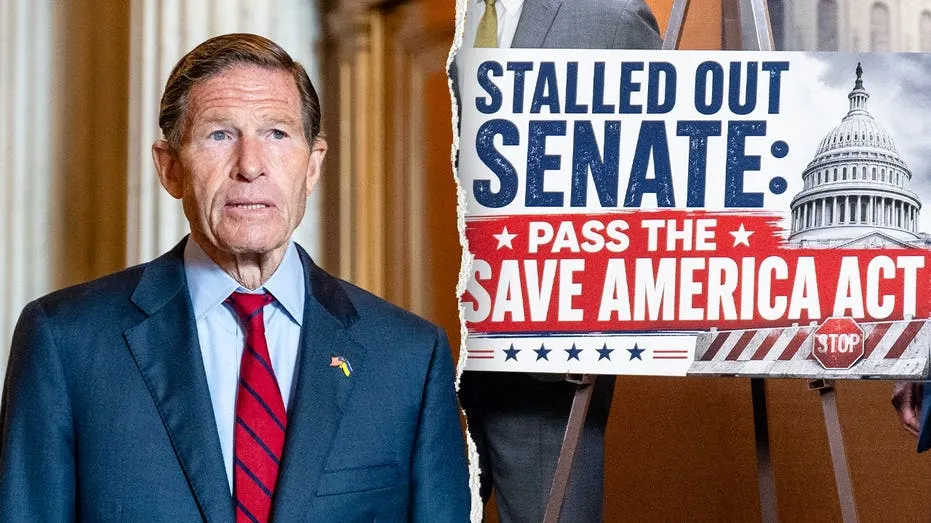
The long-standing debate over the U.S. Senate filibuster has resurfaced with renewed intensity as former President Donald Trump champions the SAVE America Act. Trump is urging Senate Republicans to abolish the chamber’s 60-vote rule to clear the path for his signature election integrity legislation. This push has exposed deep divisions among lawmakers regarding the filibuster’s appropriate application, with some Democrats indicating a willingness to consider its elimination under specific circumstances, while many Republicans argue for its preservation.
Democrats Draw Lines on Filibuster Exceptions
While outright elimination of the filibuster is not a universally embraced stance among Democrats, some senators have suggested that exceptions could be warranted for particular types of legislation. Senator Maria Cantwell of Washington stated that her willingness to consider filibuster reform is contingent on the nature of the legislation at hand. “It depends on constitutional issues,” Cantwell explained. “If there are people that are overriding the Constitution and not following the Constitution, that would be an area where I would think about [eliminating the filibuster.]” She recalled being open to ending the filibuster previously to advance the Voting Rights Act, a measure that faced significant Republican opposition.
This position echoes past Democratic efforts to carve out exceptions to the filibuster, particularly for voting rights legislation. During President Joe Biden’s administration, Democrats repeatedly sought to pass such bills, only to see them blocked by Republican filibusters. Now, as the SAVE Act encounters similar procedural hurdles in the Senate, the conversation around the filibuster’s utility is reignited.
Senator Richard Blumenthal of Connecticut expressed a nuanced view, telling Fox News Digital, “I would want to know what specific measure it covered. I’m in favor of eliminating the filibuster for specific measures, not across the board.” This suggests a preference for targeted reforms rather than a wholesale dismantling of the rule.
Trump’s Pressure Campaign on the SAVE Act
Donald Trump has been a vocal proponent of the SAVE Act, actively campaigning for its passage. He has repeatedly called upon Senate Majority Leader John Thune and other Republican leaders to eliminate the filibuster to ensure the bill’s enactment. Trump took to his social media platform, Truth Social, to implore Thune not to allow the Senate to adjourn for its August recess until the SAVE Act is passed or the filibuster is terminated.
Trump also asserted that Senate Democrats would readily eliminate the filibuster if they were in the majority and seeking to advance their own legislative agenda. “I think that the Democrats would absolutely eliminate the filibuster,” commented Senator Roger Marshall. “Every Democrat senator that’s here now, that was here when they had the chance, voted to end it.”
Senator Marshall, who has shifted his stance on the filibuster, now expresses support for its elimination, citing a perceived lack of cooperation from the Democratic party. “Democrats don’t want to cooperate,” Marshall stated. “They want to do everything they can to make life miserable in America, thinking that it’s going to help them politically. Always putting their political goals ahead of what’s best for America.”
Procedural Hurdles and Reconciliation Strategies
Despite the pressure from Trump and some Republican senators, the path forward for the SAVE Act remains complicated by the Senate’s rules. Senator John Kennedy of Louisiana acknowledged that the necessary votes to eliminate the filibuster are currently absent. “[Trump] knows the votes aren’t there to do what he wants to do, in the way he wants to do it,” Kennedy remarked.
However, Kennedy also pointed to alternative legislative strategies. “The House has passed a budget resolution to get reconciliation started. We can pass the SAVE Act with the right… the correctly crafted bill.” This suggests that the SAVE Act, or at least key components of it, might be advanced through the budget reconciliation process. This procedural tool allows certain legislation to pass the Senate with a simple majority, bypassing the need for the 60 votes typically required to overcome a filibuster.
Speaker of the House Mike Johnson is reportedly working on structuring parts of the SAVE Act to fit within the budget reconciliation framework. This approach could potentially circumvent the need for Democratic support in the Senate, presenting a different avenue for the bill’s consideration.
The Filibuster: A Persistent Point of Contention
The filibuster, a tactic that allows a minority of senators to delay or block a vote on a bill or other measure, has been a recurring source of political friction. Its use has been debated for decades, with proponents arguing it protects minority rights and encourages compromise, while critics contend it leads to legislative gridlock and obstructs the will of the majority.
As the SAVE Act saga unfolds, the underlying debate over the filibuster’s role in modern governance continues. The differing perspectives highlight the fundamental disagreements about how the Senate should function and the balance between protecting minority viewpoints and enabling decisive action on pressing national issues. Senator Kennedy concluded, “There comes a time when you got to stop talking and just vote. I’m ready to vote, and I’m gonna vote yes. And I’ll stay here as long into August or September as I need to for us to get our work done.” His sentiment underscores the frustration some lawmakers feel with the current legislative pace and the procedural obstacles that impede progress.


