


Lawmaker Presses Smithsonian Chief on ‘America First’ Remark
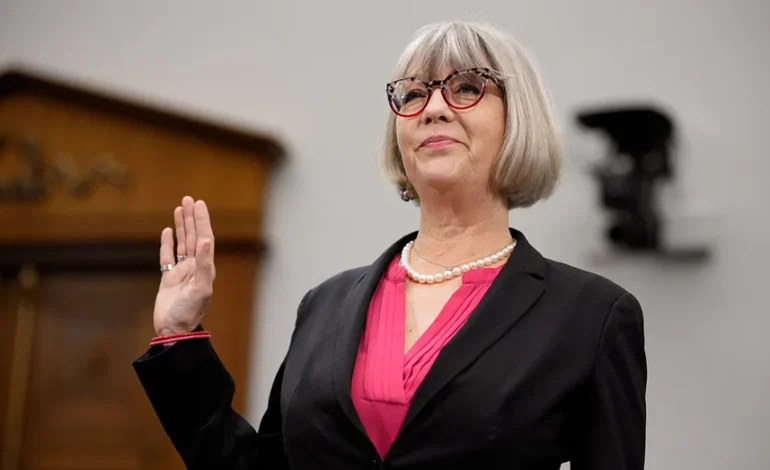

A Republican congressman has demanded clarification from the head of the Smithsonian’s National Museum of American History regarding comments suggesting a move away from an “America First mentality.” Representative Mike Carey of Ohio pressed Anthea Hartig, the museum’s administrator, during a House Administration Committee hearing on Wednesday, questioning the rationale behind removing the phrase “American history” from the museum’s mission statement.
Questioning the Mission Statement Shift
Carey directly quoted Hartig, stating, “You explained that the museum removed the phrase ‘American history’ from the mission statement in order to help people ‘to get out of the America-first mentality.’” He then asked Hartig to elaborate on what she meant by “America First.” This line of inquiry stems from a broader effort by some Republican lawmakers to frame the preservation of national heritage as central to debates about American identity and cultural values.
The exchange touches upon a larger national conversation about how American history should be interpreted and presented. Progressive viewpoints, exemplified by Hartig, suggest that acknowledging the more difficult aspects of the nation’s past, including oppression and slavery, is crucial for a comprehensive understanding and for informing present-day policy. Conversely, many conservatives express concern over narratives that characterize the U.S. primarily through the lens of its historical shortcomings, citing initiatives like The New York Times’ 1619 Project as examples. These critics often emphasize that foundational American ideals, as articulated in documents like the Declaration of Independence, represent a more definitive aspect of the American experience, even in light of the nation’s struggles to fully realize them.
Hartig’s Past Statements and the “Saving America’s Story” Report
The focus on the museum’s mission statement gained particular attention during the Trump administration, which championed a “Make America Great Again” and “America First” agenda. A report issued by the administration, titled “Saving America’s Story,” specifically highlighted the National Museum of American History’s mission statement change and referenced Hartig’s remarks. The report characterized this shift as a move “from history to activism,” citing Hartig’s own descriptions of history as a “prime tool of social justice” and her role in connecting “research and scholarship to activism and advocacy.”
The report detailed Hartig’s explanation of the mission statement change during a 2024 presentation to history students. She reportedly stated, “It’s hard to get out of the ‘America First’ mentality… I think it’s a big challenge, especially going into 2026, which will be the 250th anniversary of the signing of the Declaration of Independence, the 25th year since 9/11, the fifth year since January 6th.” Her comments suggested that moving beyond an “America First” mindset was a deliberate objective for the museum, particularly as the nation approached significant anniversaries.
Defending the Museum’s Approach
During the hearing, Hartig defended her leadership and the museum’s practices, asserting that the institution does not engage in political partisanship. “The museum does not take sides in America’s political debates,” she stated. “We preserve and document the evidence of American life in all its breadth, so that the public can encounter the past and draw their own conclusions.”
Hartig clarified that when historians discuss “reframing a traditional narrative,” it does not equate to erasure. Instead, she explained, it involves incorporating additional evidence, voices, and objects that may have been overlooked in earlier historical accounts. This process, she argued, allows more Americans to see themselves reflected in the national story. “Examining the harder chapters of our history is not the same as hostility toward America,” Hartig added, seeking to assuage concerns that a focus on difficult historical aspects signifies a negative view of the country.
Skepticism and a Cautionary Quote
Despite Hartig’s defense, Representative Carey and other Republicans remained unconvinced. Carey concluded his questioning by invoking a quote from George Orwell’s dystopian novel, *Nineteen Eighty-Four*: “The most effective way to destroy people is to deny and their own understanding of their history.” He reiterated his core question, asking directly why “American history” should be removed from the name and mission of the American History museum.
Pressed for a direct answer regarding the removal of the phrase “American history,” Hartig, due to time constraints, was unable to provide a response before the hearing concluded. The exchange underscores the ongoing tensions surrounding historical interpretation and national identity in the United States, particularly as the nation prepares to commemorate major anniversaries.