




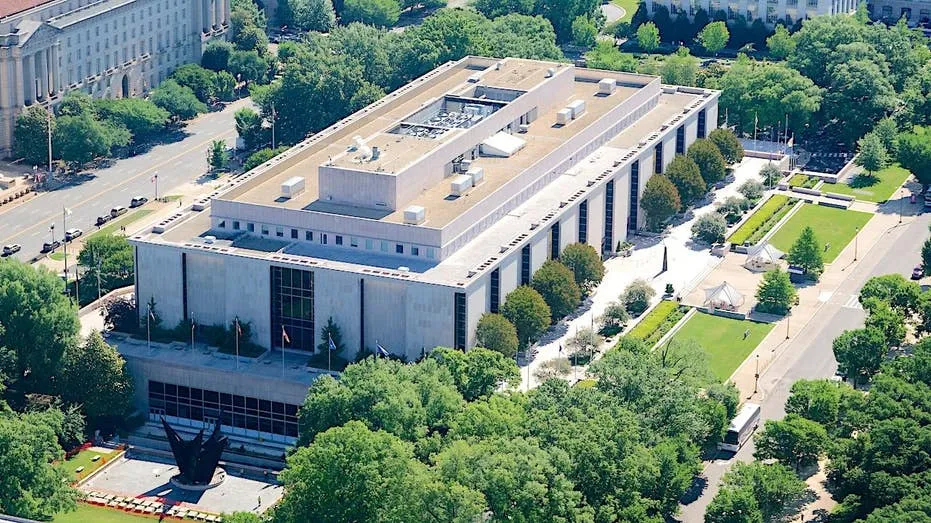
The Smithsonian Institution, a sprawling network of museums and research centers, has become a focal point of criticism from conservatives and President Donald Trump, who contend its messaging has increasingly leaned left. As the world’s largest museum complex, the Smithsonian influences millions annually through its extensive operations, which began with a bequest from British scientist James Smithson in 1846. Smithson, who never set foot in the United States, left his fortune to establish an institution dedicated to the “increase and diffusion of knowledge.” Over more than 170 years, it has evolved from a single museum into a vast educational and research enterprise.
An Unprecedented Scale of Knowledge and Artifacts
The sheer scope of the Smithsonian is staggering. The institution operates or leases nearly 700 facilities spread across eight states, the District of Columbia, and even Panama. These sites encompass approximately 13.6 million square feet, housing not only public museums but also laboratories, archives, storage facilities, research stations, and essential support infrastructure. Its collections are immense, holding over 157 million artifacts and specimens. While the public experiences 21 distinct museums and the National Zoo, along with 14 education and research centers, the vast majority of its holdings—roughly 99%—remain in secure storage. These stored items are crucial for ongoing research and preservation efforts.
Annually, the Smithsonian welcomes over 30 million visitors to its physical locations. Its reach, however, extends far beyond these in-person encounters. Through digital platforms and educational resources, the institution connects with millions more. With an annual budget exceeding $1 billion, the Smithsonian functions as more than just a custodian of history; it is a significant national entity in education and research. Its influence is felt deeply within school systems across the country, playing a role in shaping the educational experiences of countless students.
Extensive Educational Outreach
The Smithsonian’s commitment to education is evident in initiatives like the Smithsonian Learning Lab and the Smithsonian Science Education Center. These programs provide millions of free lesson plans, classroom activities, and virtual field trips, resources that are widely utilized by educators and students nationwide. Furthermore, the institution invests in professional development for teachers and offers educational programming that extends well beyond the walls of its museums. On college campuses, the Smithsonian actively engages in partnerships, offering internships, fellowships, research collaborations, and joint academic programs. These collaborations connect the institution with thousands of undergraduate, graduate, and postdoctoral students each year, fostering the next generation of scholars and researchers.
Controversy Over Messaging and Historical Interpretation
Recent months have seen the Smithsonian become the subject of intense scrutiny from the Trump administration and conservative critics. A White House report alleged an infiltration of leftist politics within the institution, a concern echoed by some who view it as a symptom of a broader trend. The report specifically cited comments from Anthea Hartig, director of the National Museum of American History since 2019, who has reportedly described history as a “prime tool of social justice” and her role as connecting “research and scholarship to activism and advocacy.”
In response to these concerns, President Trump directed his administration to place signs outside the National Museum of American History. The White House stated these signs would direct visitors to what they consider “accurate” information about American history. This directive has intensified the debate surrounding the Smithsonian’s role and its interpretation of the nation’s past, ensuring the controversy will likely continue to be a prominent topic of discussion.
A Legacy of Knowledge and a Modern Challenge
Founded on the principle of advancing knowledge, the Smithsonian Institution has grown into a monumental complex with an unparalleled collection and a profound educational mission. Its vast network of museums, research facilities, and educational programs serves a critical role in American cultural and intellectual life. However, the recent criticisms highlight a growing tension over how historical institutions should present narratives and engage with contemporary social and political issues. The debate over the Smithsonian’s messaging underscores broader discussions about the role of museums in society and the interpretation of national history in an increasingly polarized environment.


