




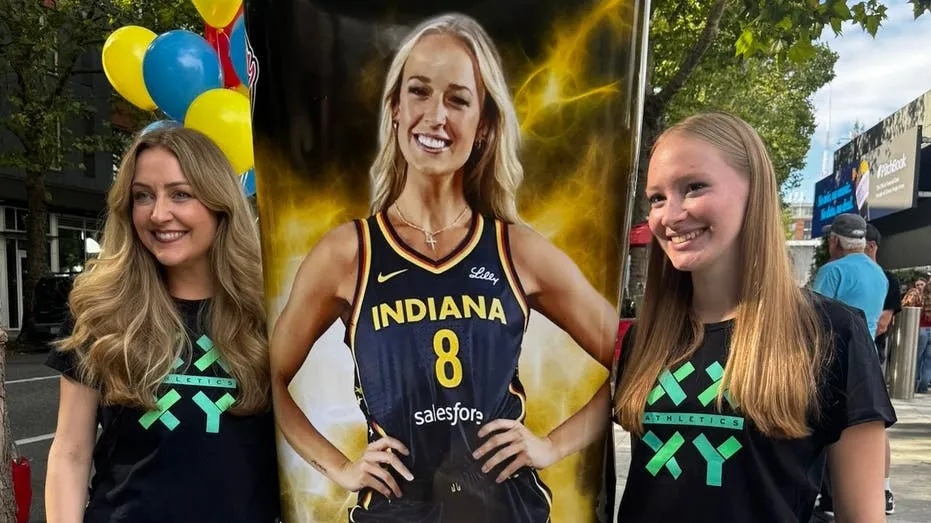
A spirited rally in support of Indiana Fever star Sophie Cunningham took place outside her team’s game against the Seattle Storm on Tuesday, drawing both enthusiastic fans and opposing voices. The event celebrated Cunningham’s recent public stance on issues surrounding women’s sports, sparking a notable public discussion.
Supporters Rally for Sophie Cunningham’s Stance
Attendees gathered, holding signs that echoed Cunningham’s now-familiar phrases, “I said what I said” and “with love is truth.” These slogans reflect her recent public comments regarding her beliefs about female athletes and participation in women’s sports. A life-size cutout of Cunningham was also a popular spot for photos, symbolizing the widespread admiration from her supporters.
Activist Jean Chadbourne remarked on the significance of the gathering, stating, “We proved to the world that women can gather publicly and support female athletes.” The rally, organized by Washington-based podcast host Brandi Kruse, activist Amy E. Sousa, and the activist group Women Are Real, had been a topic of considerable online debate in the days leading up to the event. Organizer Julie Lane shared that she and other organizers had received online threats but remained undeterred. “Despite the online threats we showed up and had a great time,” Lane reported. “It’s clear that the tide is turning. People are slowly coming around. I think Sophie really helped push this issue.”
Counterprotesters Express Opposition
The scene outside the arena was not solely one of unified support. Footage and photographs from the event also captured multiple counterprotesters present, displaying LGBTQ flags and signs. Their presence indicated a clear opposition to the sentiments expressed by Cunningham and her supporters.
Despite the presence of counterprotesters, one rally attendee, Romy Mancini, described the atmosphere positively, noting, “We outnumbered the TRAs 10 to 1 and a very positive vibe. Everyone wanted their picture taken with the giant Sophie poster.”
Cunningham’s Statements Spark National Conversation
Cunningham’s comments, which touched upon the ongoing cultural discussions surrounding the WNBA and the inclusion of transgender athletes in women’s sports, first gained widespread attention the previous Tuesday. In an interview with ESPN, she addressed the perception that her views were anti-transgender.
“I got a lot of negative feedback about me hating trans. And I’m like, ‘I never once said that,'” Cunningham explained. “I think that I am here to extend love. But I also think with that love is truth, being honest. And I want to protect young girls in a locker room, or young girls in sport who shouldn’t have to go against biological men.”
She further elaborated on her position when speaking with reporters the following Wednesday, prior to the Fever’s victory over the Connecticut Sun. “I think I said what I said. I think it’s kind of common sense,” Cunningham stated. “I’ll always believe in that. It’s really important to protect children, and that’s little girls who are also involved in that category… I’m not a very political person, but I do have beliefs. I have morals, and I’ll always stand on those… I extend love, and I don’t dislike anyone. I think there is room for absolutely everyone here.”
Wider Reactions and Support
Cunningham’s outspokenness has resonated beyond the immediate fan base, drawing commentary from various public figures and political entities. Activists such as Riley Gaines and Jennifer Sey, along with several Republican lawmakers, have voiced their support. Even the White House has weighed in on the matter.
During a press briefing, White House Press Secretary Karoline Leavitt affirmed a stance against biological males competing in women’s sports. “Men should not be playing in women’s sports. It’s completely ludicrous that anyone could support that,” Leavitt stated. She added, “It’s even more ludicrous that you do have Sophie Cunningham, a female athlete herself, very accomplished in her own right, coming forth and speaking that truth that men should not play in women’s sports. The backlash she is receiving from Democrats and left-wing figures across the country is astonishing. They are clearly very out of touch with the American public on this issue, which again, is an 80/20 issue. It’s common sense.”
Conclusion
The rally and the surrounding public discourse highlight the ongoing and often passionate debate surrounding gender identity and athletic competition. Sophie Cunningham’s willingness to share her perspective has undeniably amplified these conversations, bringing her stance to the forefront of national attention and sparking varied reactions from supporters, critics, and public officials alike.


