


Special Ops Veterans Seek Concealed Carry Parity with Retired Police
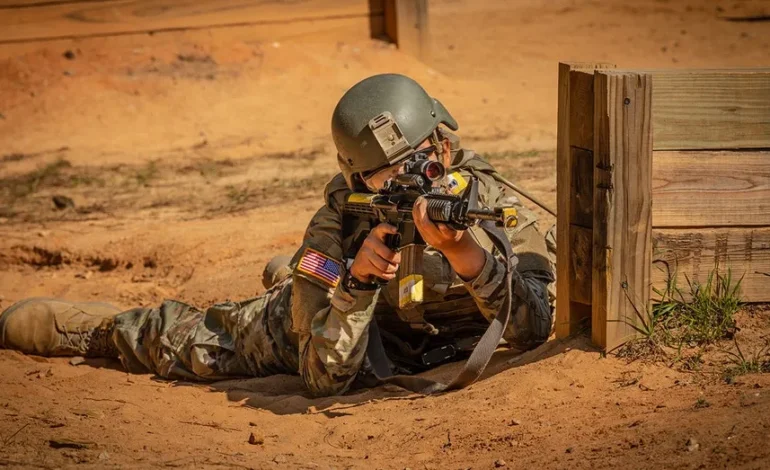

A push is underway in Congress to grant retired special operations veterans the same nationwide concealed carry privileges currently afforded to retired law enforcement officers. Proponents argue that these elite service members, with their rigorous selection and extensive training, are exceptionally qualified to carry firearms for self-defense and the protection of others.
Championing the Cause: A Veteran’s Plea
Gavin Glasenapp, a 20-year Army veteran with 12 combat deployments and now the training operations manager at Delta Defense for the U.S. Concealed Carry Association (USCCA), is a leading voice in this effort. He asserts that the time is right for such a change, stating emphatically, “It needs to happen.” Glasenapp highlights the unique qualifications of special operators, noting they are “specially selected, uniquely trained” individuals.
“I can think of no better group of people to be equipped to defend themselves and others around them,” Glasenapp commented. “We believe every American has the inalienable right to self-defense, and I can think of no better group that to really emulate that and really show you what that looks like.” This sentiment aligns with the views of many Second Amendment advocates who believe that increasing the number of trained individuals capable of stopping violent acts can enhance public safety.
Legislative Efforts Underway
The legislative push is gaining momentum with two key bills introduced in Congress. Senator Tim Sheehy, R-Mont., has put forward the Special Operations Forces Concealed Carry Act in the Senate. A companion bill with the same name was introduced in the House in April by Representative Pat Harrigan, R-N.C.
While both bills aim to extend concealed carry rights, they differ in their requirements. Senator Sheehy’s version includes a provision for annual firearms qualification at the individual’s expense, meeting state-standard, active-duty levels, along with a Justice Department-certified course on the use of force in civilian contexts. Sheehy emphasized in a statement, “Our Special Operations Forces spend their careers protecting the American people with unmatched discipline, judgment, and professionalism. This bill honors that reality by giving qualified special operators the same nationwide concealed carry privileges already afforded to retired law enforcement officers.”
Representative Harrigan’s bill, conversely, seeks to expand the existing Law Enforcement Officers Safety Act (LEOSA) standards to special operations veterans without mandating separate firearms training certifications. Glasenapp expressed his preference, stating, “I don’t believe the annual recertification requirement should be required for either the proposed special operations forces concealed carry act or the current HR 218/LEOSA.” He maintains that special operators are already deeply familiar with firearms through their extensive military careers.
The Rationale: Training, Judgment, and Adaptability
The core argument for extending these privileges rests on the exceptional training and experience of special operations personnel. Glasenapp points out that these individuals are not only proficient with firearms but also possess a high degree of situational awareness and decision-making skills. He references the “observe, orient, decide and act” (OODA) loop, a concept often taught in military and tactical training, as a framework for understanding how these operators assess and respond to threats.
“The big thing with that OODA loop is it’s just that: It’s a loop. You should constantly be observing, orienting on things, deciding, acting, and then redoing it over and over again,” Glasenapp explained. This continuous cycle of awareness and action is a hallmark of their operational readiness.
Furthermore, special operators are accustomed to navigating complex and changing environments. Their experience extends beyond domestic scenarios to international operations, where they must adhere to diverse rules of engagement and varying regulations. This adaptability, Glasenapp argues, makes them uniquely suited to exercise concealed carry responsibly.
“These are folks that have not only dealt with changing state lines, but different rules and different regulations in different countries,” he noted. “We’re talking international travel and dealing with rules of engagement that are constantly changing depending on what theater you’re in. They can definitely adapt on the fly.”
Addressing Concerns and Civilian Responsibilities
Glasenapp also directly addressed concerns that military experience might lead special operators to treat civilian concealed carry as a combat operation. He clarified that carrying a firearm as a civilian involves distinct legal responsibilities and requires different decision-making processes than operating in a combat zone. Having held a Tennessee concealed carry permit himself while on active duty, Glasenapp stressed the importance of understanding and adhering to local, state, and federal laws.
“What you’re doing as a civilian carrying every day… is going to be different than when you’re in a combat zone,” he stated. “Get familiar with local, state and federal law as far as what you can and can’t do. You’ve got to make different decisions and act in different ways.”
Broader Implications and the Path Forward
The proposed legislation is seen by some as a potential stepping stone toward broader nationwide concealed carry reciprocity, a long-standing goal for many gun-rights advocates. The current system, with its complex patchwork of state laws, can be challenging for gun owners who travel frequently. Glasenapp noted the convenience of LEOSA for retired law enforcement, allowing them to avoid the need to constantly check reciprocity laws when traveling across state lines.
The USCCA Concealed Carry app, for instance, provides tools to help users navigate these varying regulations. The debate highlights the differing perspectives on gun control and Second Amendment rights, with advocates emphasizing the role of trained individuals in deterring and responding to crime.
Ultimately, the proponents of the Special Operations Forces Concealed Carry Act believe that extending concealed carry privileges to qualified special operations veterans is a logical and warranted recognition of their service, training, and inherent capability to protect themselves and the public. As Glasenapp concluded, “I certainly hope this passes and becomes U.S. code. I think it needs to happen.”