




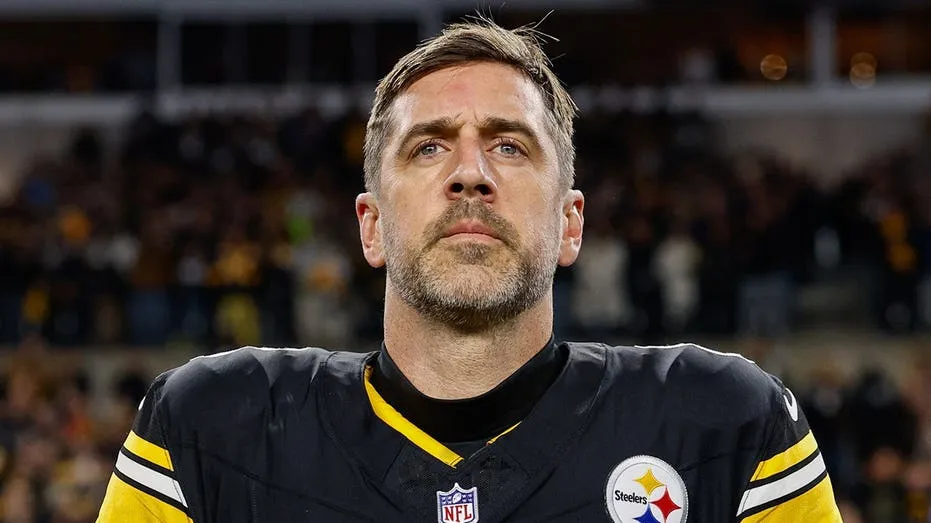
The Pittsburgh Steelers organization has publicly affirmed the right of their players, including quarterback Aaron Rodgers, to express personal opinions, even when those views spark controversy. This stance comes in the wake of Rodgers’ appearance on ESPN’s “The Pat McAfee Show,” where his comments regarding Dr. Anthony Fauci and the Fifth Amendment drew significant public reaction.
Rodgers’ Comments Ignite Debate
During his appearance, Rodgers criticized Dr. Fauci’s invocation of the Fifth Amendment 111 times during recent U.S. Senate hearings, labeling the former Director of the National Institute of Allergy and Infectious Diseases an “absolute criminal.” This segment, broadcast on a Monday, quickly became a focal point of online discussion, eliciting strong responses from various factions. Some viewers expressed anger that Rodgers was given a platform to discuss such topics, while others were displeased that he was reportedly steered away from discussing other news items, such as a scandal involving ESPN’s Dianna Russini and former coach Mike Vrabel. Conversely, many defended Rodgers’ right to voice his criticisms, particularly concerning Fauci’s legal strategy during the hearings. Others, however, attacked Rodgers, citing past disagreements over his stance on COVID-19 vaccines or simply objecting to his viewpoint.
Steelers’ Consistent Stance on Player Expression
The intensity of the public discourse prompted a statement from the Pittsburgh Steelers, articulated by spokesman Burt Lauten. “Discussions around culture and politics can bring differing perspectives, and our players are entitled to their own personal views,” Lauten stated. “With respect to that, I am certain there are a variety of opinions on many topics within our locker room.” This statement underscores a consistent organizational philosophy that aligns with principles of free expression, seemingly rooted in the understanding of American values and constitutional rights.
This is not the first time the Steelers have navigated public opinion regarding their players’ individual expressions. In May 2025, quarterback Mason Rudolph faced a similar mix of online approval and backlash for participating in a rally at the U.S. Steel’s Irvin Works plant in West Mifflin, Pennsylvania. The event featured Vietnam War veteran and former Steelers running back Rocky Bleier and then-President Donald Trump. Trump’s appearance on stage with Rudolph garnered significant attention, particularly within political circles, leading to a surge in jersey sales among supporters. Simultaneously, the appearance drew criticism from those who viewed it as a political statement potentially at odds with the team’s identity.
At that time, the Steelers organization responded with a measured approach, emphasizing that individual players’ decisions do not necessarily represent the views of the entire club. An email to concerned fans stated, “Our alumni and current players make their own individual decisions and these do not necessarily reflect the views of the Pittsburgh Steelers organization.” This historical context highlights a pattern of the team acknowledging public reactions while upholding the autonomy of its players to engage with public matters.
Balancing Player Rights and Organizational Harmony
The Steelers’ current defense of Rodgers’ right to voice his opinions reflects a strategic approach to managing a diverse locker room. The organization appears to recognize that its players come from varied backgrounds and hold a wide array of beliefs. By not taking an official side in controversial public debates, the Steelers aim to maintain internal harmony and avoid alienating any segment of their team or fanbase. This policy allows prominent voices like Rodgers to express themselves without official sanction, while simultaneously preventing the organization from being perceived as endorsing any single viewpoint.
This approach is seen not just as good public relations but as a sound operational policy for a professional sports team. The Steelers understand that attempting to silence or control the public expressions of their star players could be counterproductive, potentially stifling valuable communication channels or creating resentment. However, fully endorsing every player’s public statement could alienate others within the team or among the fanbase. The chosen path, therefore, prioritizes internal peace and club cohesion, which coincidentally aligns with the principle of protecting individual freedom of speech.
Conclusion: A Commitment to Diverse Perspectives
In essence, the Pittsburgh Steelers are demonstrating a commitment to fostering an environment where diverse opinions can coexist. By defending Aaron Rodgers’ right to express his views, the team reinforces its long-standing practice of allowing individual players the latitude to engage with public discourse, while the organization itself remains neutral. This strategy allows the team to navigate the complexities of modern media and public opinion, upholding player autonomy without necessarily endorsing every statement made.


