



Stephen A. Smith Faces Scrutiny Over ‘Racist’ Remarks on White Players
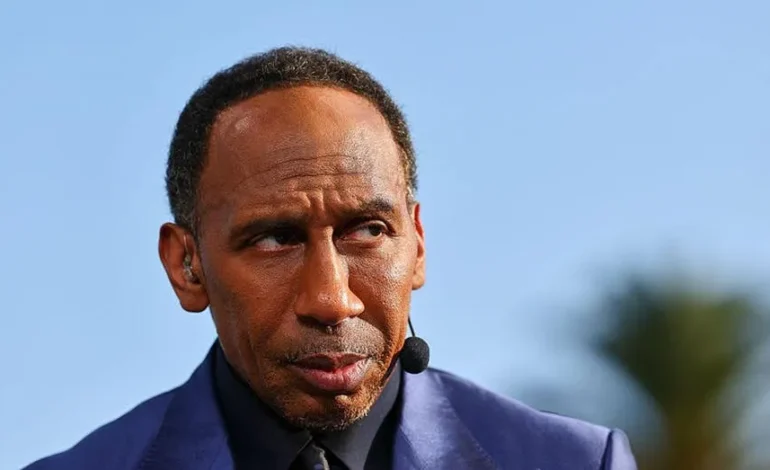

Sports commentator Stephen A. Smith has ignited a firestorm with recent remarks suggesting that the Los Angeles Lakers cannot achieve ultimate success if their top players are White. His comments, made on his podcast and later defended on social media, have drawn sharp criticism and accusations of racism, prompting calls for accountability from his employer, ESPN.
Smith’s Controversial Statements
During a discussion about potential Lakers trades, Smith expressed skepticism about the team’s prospects with a roster featuring predominantly White players. He specifically questioned the team’s strategy after a hypothetical trade involving Walker Kessler, Luka Doncic, and Austin Reaves, asking, “Where the hell the Los Angeles Lakers think they are going with a bunch of White dudes?” He further elaborated, “Your three top players are White dudes. Really? This is basketball.” Smith then posed a rhetorical question about the historical success of teams led by three White players, implying such a scenario has rarely, if ever, led to championship glory.
Following an immediate backlash, Smith appeared to double down on his stance. In a response on Thursday, he declared he was “ain’t backing down” and asserted that his comments were based on “just facts.” He argued that championship-caliber teams require the presence of Black players to help “White dudes” achieve victory.
Critiques and Counterarguments
Critics argue that Smith’s remarks are not only divisive but also logically flawed, especially given his acknowledgment of the greatness of numerous White basketball legends. Players like Larry Bird, Dirk Nowitzki, Luka Doncic, Nikola Jokic, Steve Nash, and the highly touted Cooper Flagg have all achieved significant success, demonstrating the elite capabilities of White athletes. Critics contend that if Smith recognizes the individual talent of these players, then a trio of top-tier White players should theoretically be capable of winning, provided they are the right combination of talent and chemistry.
The argument presented is that Smith’s reasoning, if applied consistently, would lead to absurd conclusions. For instance, by his logic, one might argue that no NFL team could win a Super Bowl with a Black quarterback, Black head coach, and Black general manager, simply because such a combination hasn’t yet achieved that pinnacle. This parallel highlights the perceived double standard and the potential for discriminatory reasoning.
Furthermore, comparisons have been drawn to other media commentary. For example, when Colin Cowherd reported that teams viewed new 76ers forward Jaylen Brown as “arrogant,” potentially affecting his trade value, the reaction was different. Smith’s comments, however, are seen as a direct assertion of inherent inferiority based on race, rather than a relay of reported team perceptions.
Accountability and Employer Responsibility
The article raises significant questions about ESPN’s role and responsibility in addressing such comments from its prominent personalities. Despite Smith’s position as a leading figure at the network, there is skepticism about whether ESPN will take decisive action. Past instances involving other commentators, such as Mark Jones and Kendrick Perkins, who allegedly made unsubstantiated claims related to race and law enforcement or NBA awards voting, are cited as examples where ESPN leadership, particularly Chairman Jimmy Pitaro, has reportedly defended or failed to address controversial remarks adequately.
The piece suggests a pattern of perceived inaction or “cowardice” from ESPN’s leadership when it comes to confronting racially charged commentary directed at White individuals. This, it is argued, fosters an environment where some commentators may feel emboldened to make inflammatory statements, while others feel compelled to tread carefully to avoid repercussions. The broader societal trend of normalizing or even incentivizing hostile racial commentary about White people is also highlighted as a contributing factor.
The Audience and the Point of Sports Talk
A central question posed is the target audience and purpose of sports commentary that emphasizes racial dynamics. The article questions who tunes into sports talk expecting discussions about the racial makeup of teams or athletes, or assertions about racial aptitudes in sports like golf. It points to past failures of sports talk shows that heavily focused on racial lenses, citing examples like Bomani Jones, Jemele Hill, and Dan Le Batard, whose programs reportedly struggled with ratings or audience engagement when adopting such an approach.
The underlying sentiment is that the average sports fan is more interested in the game itself, the performance of athletes, and the competition, rather than a constant racial analysis. The piece argues that media figures, rather than fans, are often the ones driving these racial narratives. Without accountability for commentators making overtly hostile remarks about White people, the cycle is expected to continue, with discussions shifting to other perceived racial tensions, such as those involving athletes like Josh Allen and Lamar Jackson.
Ratings and Workplace Dynamics
The article also touches upon internal dynamics at ESPN, noting that Stephen A. Smith’s show, “First Take,” reportedly faces sluggish ratings compared to adjacent programs hosted by White commentators like Mike Greenberg and Pat McAfee. It’s suggested that Smith has even expressed concerns about guests appearing on multiple shows, potentially indicating workplace friction or strategic maneuvering related to viewership and network positioning.
Ultimately, the piece calls for a clear stance from ESPN, suggesting that acknowledging Smith’s comments as racially inappropriate would send a strong message throughout the organization, potentially deterring similar remarks from other commentators and fostering a more respectful discourse. The absence of such action, it is argued, perpetuates a culture where certain types of racial commentary are seemingly permitted, while others face stricter scrutiny.