




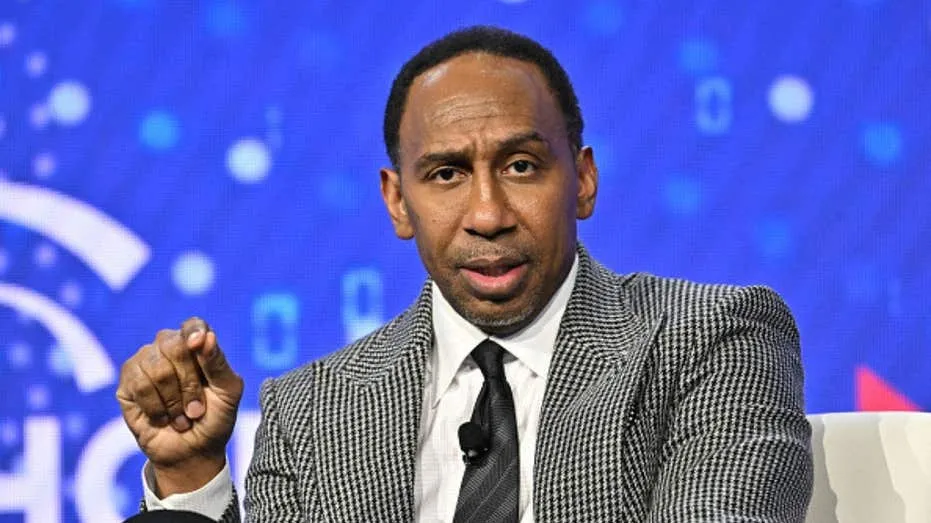
Sports commentator Stephen A. Smith has issued a stark warning to the Democratic Party, suggesting that an embrace of socialism could significantly jeopardize their chances of winning the presidency in 2028. His remarks came in response to comments made by New York City Mayor Zohran Mamdani, a proponent of democratic socialism, who expressed confidence that such a political stance could win elections anywhere in the United States.
Smith’s Concerns Over Democratic Socialism
During his “Straight Shooter” program on Monday, Smith addressed Mamdani’s assertion on ABC News that a democratic socialist could be elected to any office across the nation. While Smith conceded that Mamdani raises valid points regarding the widening wealth gap and the struggles of the working class, he expressed strong reservations about the Democratic Party moving towards socialist ideologies.
“I am not a socialist, nor do I aspire to see socialism in the United States of America,” Smith stated emphatically. “I don’t know anywhere in the world where true socialism has worked. I don’t see it. I don’t know where communism has worked.”
Questioning Broad Appeal and Electoral Viability
Smith articulated his skepticism about whether socialist policies championed by figures like Mamdani could gain traction beyond the urban centers of New York City. He questioned the broader electoral strategy, asking, “If he’s coming, what does that mean for the rest of America? Because I got questions. Where has socialism ever succeeded? If so, tell us where that is. How is it going to succeed in New York? How are you going to sell that in a capitalistic society? You might do it in New York with young voters. What about the people in the suburbs? What about them? You really, really think this kind of message is going to resonate with them?”
The potential for internal party division was a central theme in Smith’s critique. He argued that if socialist platforms energize the Democratic base but fail to connect with a wider electorate in a general election, the consequence would be a gift to the Republican Party. “If it resonates within the Democratic Party, but it doesn’t have a snowball’s chance of resonating in a general election, then you’re basically handing the presidency to the GOP as well,” Smith explained. “That’s what you’re doing because the party, the Democratic Party, will have been perceived as being fragmented. That’s what I’m seeing when I see Zohran Mamdani. That’s what I’m looking at, and that’s what I see when I see his ascension taking fold before our very eyes.”
Acknowledging the Wealth Gap
Despite his criticisms of socialist ideology as a national electoral strategy, Smith acknowledged the reality and significance of the wealth disparity in the United States. He recognized that the growing divide between the affluent and the economically disadvantaged is a legitimate concern that fuels the relevance of figures like Mamdani. “That wealth gap is real, y’all. It’s very, very real. There are two Americas in this country, no matter what way we slice it. The haves and the have-nots. And there’s a lot more have-nots than haves, which is why Zohran Mamdani is relevant, if not more so. So think about that,” Smith concluded.
Context of Mamdani’s Rise
Mamdani’s recent prominence follows a series of electoral successes for candidates he supported in New York. Notably, candidates backed by Mamdani, including Brad Lander, Claire Valdez, and Darializa Avila Chevalier, secured victories in Democratic congressional primaries. Lander and Chevalier even unseated incumbent Democrats, signaling a growing influence of progressive and socialist-aligned candidates within the party in New York. This trend is not isolated to New York, as other candidates identifying with socialist platforms have also initiated primary challenges across the country.
Interestingly, Mamdani was reportedly scheduled to appear on Smith’s show to discuss these very issues but had not yet done so at the time of the broadcast. Smith emphasized the importance of observing Mamdani’s increasing visibility and the underlying issues he represents, even as he voiced concerns about the broader political implications for the Democratic Party’s national ambitions.


