




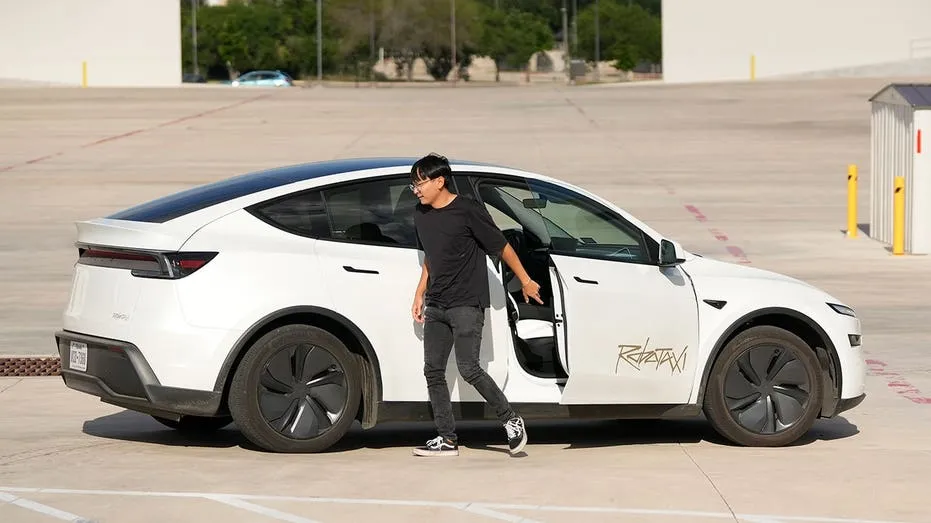
Tesla’s much-anticipated robotaxi service has officially arrived in Miami, Florida, marking a significant expansion for the company’s autonomous driving ambitions. However, early adopters will find the service is currently restricted to specific zones within the sprawling South Florida metropolis, rather than a full citywide rollout. This cautious approach places Tesla into a competitive landscape already populated by established players like Waymo and Amazon’s Zoox, all vying for dominance in the burgeoning autonomous ride-hailing market.
Miami’s Robotaxi Service Area: A Closer Look
For those in Miami hoping to ditch the steering wheel, the reality of Tesla’s Robotaxi service is currently confined to a relatively small geofenced area. The service map primarily covers parts of West Miami, with extensions towards Doral and Sweetwater. Crucially, key areas such as downtown Miami, Miami Beach, Miami International Airport, and the majority of Miami-Dade County are not yet included. This means that while the service bears the “Miami” name, its practical utility is heavily dependent on your precise location and destination. A trip from Miami Beach to the Brickell financial district, for instance, may still require traditional transportation for the foreseeable future.
The app provides a visual representation of available ride zones, and users are advised to check this map before attempting to book a ride. This limited launch underscores the inherent challenges of deploying autonomous vehicles in a complex urban environment like Miami. The region is known for its fast-paced traffic, sudden, heavy rainfall, and unpredictable driver behavior, all of which present significant hurdles for even the most advanced driving software.
Tesla’s Robotaxi Journey: Expansion and Competition
Tesla has been steadily working towards its robotaxi vision for years. While the company has showcased concepts like the steering-wheel-free Cybercab, the current Miami deployment utilizes existing Model Y vehicles. This phased rollout strategy has seen the service first launch in Austin, followed by Dallas and Houston, with Miami representing the first market outside of Texas. Prior testing and preparation in regions like Nevada suggest Tesla is strategically building its operational capacity before wider public access.
The company has also indicated future expansion plans to cities such as Orlando, Tampa, and Phoenix. However, Tesla is far from alone in this race. Waymo, a subsidiary of Alphabet (Google’s parent company), has been operating its driverless service in several cities for some time, and Amazon’s Zoox is also making significant strides. Waymo is reportedly working on more affordable autonomous technology, potentially accelerating its expansion. Zoox, meanwhile, has focused on developing a purpose-built, steering-wheel-free vehicle designed from the ground up for autonomy, recently unveiling design upgrades focused on passenger comfort, including larger cupholders and a more serene cabin environment.
This intense competition could ultimately benefit consumers. As more companies vie for market share, we may see improvements in service coverage, more convenient pickup locations, and faster technological advancements across the board.
Safety Considerations and User Experience
Despite the technological advancements, safety remains a paramount concern for autonomous vehicles. Federal crash data, reviewed in relation to Tesla’s autonomous driving systems, has indicated instances where crashes were associated with the Robotaxi program. While not all reported incidents necessarily point to a system failure, they highlight the ongoing need for rigorous testing and public trust-building. The nuances of everyday driving—from abrupt stops to unexpected maneuvers—can quickly erode passenger confidence.
The autonomous vehicle industry as a whole has faced safety-related scrutiny. For example, Waymo previously issued a recall related to risks in construction zones, demonstrating how dynamic and unpredictable environments can challenge autonomous systems. Tesla’s own Full Self-Driving (FSD) software has also been a subject of debate, with discussions around its speed, supervision requirements, and overall safety.
How to Use Tesla Robotaxi in Miami
For those within the designated service area, hailing a Tesla Robotaxi is done through the dedicated Robotaxi app. A mobile device is required to book a ride, and rides are currently booked for the individual user. Before confirming a booking, it is essential to verify the service area on the app, as pickups and drop-offs must fall within the operational zone.
The app will provide an estimated fare before you commit to the ride. Once inside the vehicle, passengers can control various features, such as climate settings, seat adjustments, and media playback, via the app or the car’s central touchscreen. Maintaining a charged phone is crucial, as it serves as the primary interface for booking, managing, and completing the journey. While the car drives itself, passengers are encouraged to remain aware of their surroundings and how the vehicle navigates the route.
Key Takeaways on Miami’s Robotaxi Debut
The arrival of Tesla Robotaxi in Miami is undoubtedly a headline-grabbing event, but the practical details are key. At present, it should not be considered a comprehensive transportation solution for the entire city. The restricted service area, exclusion of major hubs, and lingering safety questions mean that Tesla still has significant ground to cover to prove its robotaxi’s viability beyond a limited operational map.
The expansion beyond Texas is a positive step, and the allure of trying autonomous technology is understandable. However, this launch represents a substantial milestone that requires further validation. Whether consumers will embrace this limited service or opt to wait for broader coverage and more extensive real-world data remains to be seen.


