




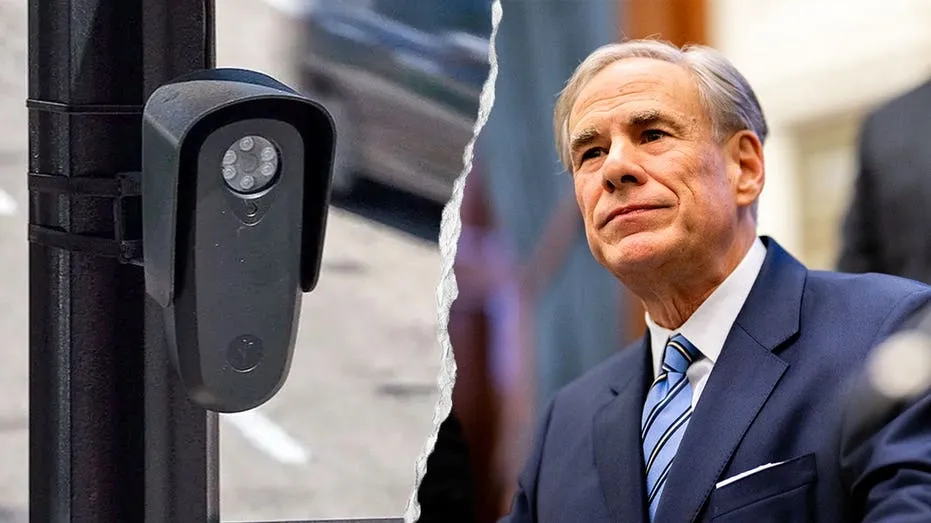
Texas Governor Greg Abbott has directed state agencies to immediately cease funding for AI-powered Flock cameras, citing growing privacy concerns that have prompted a national debate. The move signals a significant shift in the state’s approach to surveillance technology, even as the company behind the cameras maintains their critical role in public safety.
State Funding Freeze on AI Surveillance
In a directive issued Thursday, Governor Abbott’s office instructed state agencies to halt any allocation of funds towards Flock camera systems. While acknowledging that the majority of funding for these automated license plate readers (ALPRs) originates from federal sources, the state is making a clear statement by cutting off its own financial contributions. Andrew Mahaleris, a spokesperson for Governor Abbott, clarified that most Flock cameras in Texas are deployed by local municipalities, many of which are already reconsidering their contracts with the company.
“To the extent that cities get any funding for those cameras, most of it comes from the federal government,” Mahaleris stated. “To the extent any funding comes from Texas agencies, those agencies are clarifying that those funds cannot be used for Flock cameras.”
What Are Flock Cameras and Why the Controversy?
Flock Safety is a prominent provider of ALPR technology, with its cameras installed across numerous Texas cities. These devices capture images of passing vehicles, recording identifying details. The integrated artificial intelligence can identify vehicle characteristics like make, model, and color, and even note distinctive features such as bumper stickers or damage. Law enforcement agencies can then query these vast databases to track down criminal suspects, locate stolen vehicles, or identify cars linked to criminal activity.
Proponents argue that Flock cameras are invaluable tools for law enforcement, enabling rapid identification and apprehension of individuals involved in serious crimes. They highlight instances where the technology has aided in recovering stolen property and solving cases. However, the rapid expansion of this surveillance network has ignited significant opposition from privacy advocates and concerned citizens.
Critics voice serious reservations about the potential for misuse of the collected data, the implications for personal privacy, and the broad scope of data sharing. The sheer volume of information gathered raises questions about who has access to it and how it might be used beyond its stated law enforcement purposes. Concerns have been amplified by the technology’s reach, with reports indicating Flock operates a national network of over 120,000 cameras across 49 states, processing more than 20 billion vehicle scans monthly.
Local Repercussions and Shifting Alliances
Governor Abbott’s decision reflects a broader trend of apprehension within Texas. Several cities and counties have recently moved to terminate their contracts with Flock Safety, citing the same privacy and data security issues that have drawn national attention. The Pflugerville City Council, for example, voted unanimously earlier this week to end its agreement, leading to the deactivation of all 28 cameras under its contract. Similarly, the Hood County Commissioners Court voted to sever ties with Flock, directing that its three cameras be disconnected and covered pending removal.
During a radio interview on Friday, Governor Abbott noted that this wave of local contract cancellations is largely driven by constituent pressure. This groundswell of public concern appears to be influencing policy decisions at both the local and state levels.
Flock Safety Defends Technology, Emphasizes Public Safety Role
Flock Safety, through its spokesperson Paris Lewbel, has defended its technology as an essential component of modern public safety efforts. “Flock’s technology is an important public safety tool for law enforcement agencies across Texas, helping officers solve serious crimes, find missing people, recover stolen vehicles, and support safer communities,” Lewbel stated. The company expressed support for “thoughtful legislation and strong privacy, transparency, and accountability guardrails” to ensure responsible use while maintaining law enforcement’s ability to protect the public.
The Motor Vehicle Crime Prevention Authority, a state agency tasked with combating vehicle-related crimes, has been instrumental in the deployment of these cameras. Since 2023, it has facilitated the installation of over 3,000 Flock cameras across Texas. Funding for these installations originated from a 2023 state law that increased vehicle insurance policies by $1, intended to address the rise in catalytic converter theft. Notably, discussions surrounding the use of these funds for Flock cameras were reportedly absent during the legislative process for that law.
Broader Scrutiny Beyond Texas
The debate over Flock’s surveillance capabilities is not confined to Texas. On the federal level, Senator Josh Hawley (R-Mo.) has been actively investigating the company, expressing concerns about the vast surveillance network it has created. Hawley has publicly questioned the extent of data access and the potential implications of such widespread vehicle tracking.
The pushback against Flock cameras highlights a growing tension between the perceived benefits of advanced surveillance technology for crime prevention and fundamental rights to privacy. As more municipalities and now state leadership take action, the future of widespread ALPR deployment remains a subject of intense public and legislative scrutiny.
Texas Agriculture Commissioner Sid Miller also recently urged Governor Abbott to halt further acquisitions of surveillance technology, adding his voice to the growing chorus of concern. The situation underscores a national conversation about balancing security needs with civil liberties in an increasingly digitized world.
The directive from Governor Abbott signifies a critical juncture, prompting a re-evaluation of how such technologies are funded and deployed within the state, and potentially influencing similar discussions in other states grappling with the implications of mass surveillance.


