




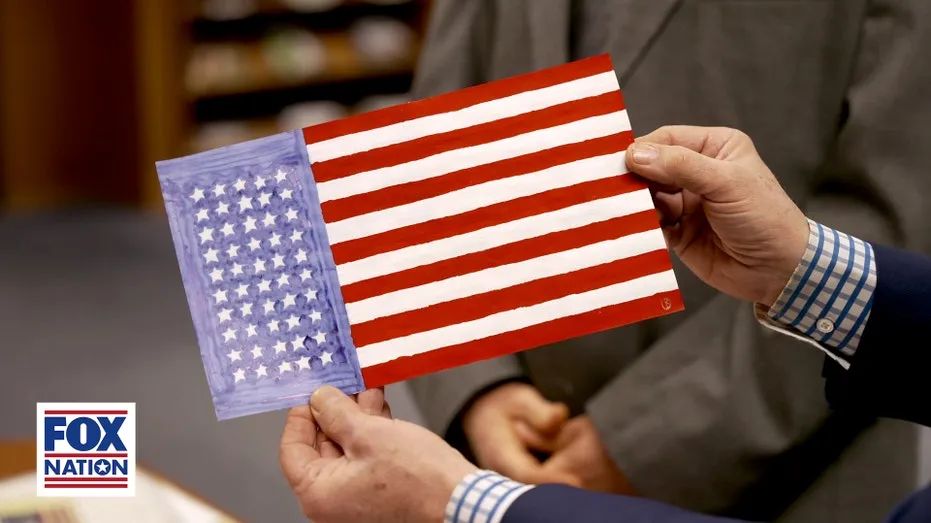
The Stars and Stripes, a symbol instantly recognizable worldwide, has graced American life for generations. Yet, the familiar 50-star design we know today was far from the only possibility. In the late 1950s, as Alaska and Hawaii prepared for statehood, President Dwight D. Eisenhower’s administration found itself inundated with proposals for a new American flag, showcasing a surprising breadth of public creativity and imagination.
A Nation’s Call for a New Flag
The prospect of adding two new stars to the flag sparked a nationwide surge of interest in its design. Beginning in July 1958, the White House and the Army’s Quartermaster Corps received a deluge of submissions from citizens across the United States and even from abroad. Dr. Jim Ginther, Supervisory Archivist at the Dwight D. Eisenhower Presidential Library and Museum in Abilene, Kansas, noted the immense public engagement. “People begin sending in ideas for how the new flag should look,” he explained. “Suddenly there’s a massive public interest again in the design of the flag.”
The submissions varied dramatically in their presentation. Some were simple pencil sketches, while others were elaborate drafts, and many were actual sewn flags. Crayon drawings from schoolchildren, often part of lessons from publications like “My Weekly Reader,” mingled with more sophisticated artistic renditions. The sheer volume and diversity of these proposals underscored a deep connection Americans felt to their national symbol.
The Eisenhower Administration’s Response
Recognizing the public’s enthusiasm, the Eisenhower administration embarked on an effort to engage citizens and educate them about the flag’s significance. Every submission received a response, typically a letter from a high-ranking White House official, thanking the individual for their contribution. Furthermore, the government produced informational materials detailing the history of the flag, proper flag etiquette, and other related aspects, which were distributed along with these letters.
This initiative served not only to acknowledge the public’s input but also to foster a greater understanding and appreciation for the flag’s heritage. It was a period when the nation collectively contemplated its evolving identity and how best to represent it visually.
A Glimpse at the Unchosen Designs
While the historical record credits Betsy Ross with designing the first flag featuring 13 stars for the original colonies, the specific arrangement of stars was never rigidly defined in early guidelines. This ambiguity allowed for a wide array of creative interpretations among the nearly 2,000 designs submitted during the 1958-1960 period. Some proposals offered radical departures from the traditional layout, presenting unique patterns and arrangements of the stars within the blue field.
These submissions ranged from the conventional to the truly unconventional, reflecting a spectrum of artistic styles and conceptual approaches. The archivists at the Eisenhower Library have preserved these fascinating glimpses into alternative visions for the nation’s banner, showcasing a period of intense national reflection on symbolism and identity.
The Weight of Tradition and Sentiment
Despite the outpouring of creative designs, a radical overhaul of the flag was ultimately deemed impractical and undesirable. Dr. Ginther highlighted several key considerations that influenced the final decision. “Radical change in it, is going to be difficult. People are used to that symbol,” he stated, emphasizing the deep-seated familiarity and comfort associated with the existing design.
Beyond public sentiment, practical concerns also played a role. “Radically changing the flag is going to be expensive, so we have to take that into consideration as well,” Ginther noted. Moreover, the profound connection the military felt to the flag, having served and sacrificed under it, represented a significant emotional and symbolic anchor. “Particularly, our military, has a vested sentimental interest, in that they have fought and bled under that flag,” he added.
The argument for maintaining continuity was strong. While public interest in redesigning was high, the potential disruption and cost of a radical change, coupled with the deep emotional resonance of the current flag, particularly for service members, weighed heavily in the deliberations. The flag, as a symbol, carries immense historical and emotional baggage that is not easily discarded.
The Final Choice: A Familiar Future
In the end, President Eisenhower opted for a design that honored tradition while accommodating the new states. The chosen arrangement featured the 50 stars arranged in alternating rows of six and five stars on the familiar blue field. This design, officially adopted, was first raised on July 4, 1960, at Fort McHenry in Baltimore—a site steeped in American history, famously inspiring “The Star-Spangled Banner” during the War of 1812.
The addition of Alaska as the 49th state in January 1959 and Hawaii as the 50th state necessitated this update. The resulting 50-star flag has since become the enduring symbol of American freedoms and ideals, representing the nation as it approaches its 250th anniversary.
A Legacy of Symbolism
The story of the 50-star flag’s design process is a compelling chapter in American history, revealing a moment when the nation collectively engaged with its most potent symbol. While many creative and unconventional designs were submitted, the final choice underscored the enduring power of tradition and the deep emotional ties Americans have to their flag. It stands as a testament to the idea that while a nation evolves, some symbols possess a timeless quality that resonates across generations.


