




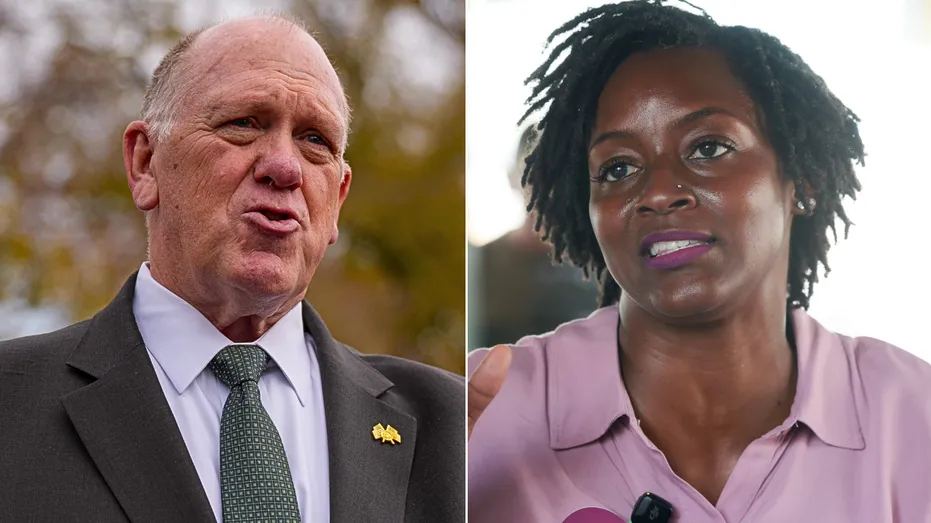
Former acting Director of U.S. Immigration and Customs Enforcement (ICE) Tom Homan has forcefully refuted claims made by Florida Democratic Senate nominee Angie Nixon, who alleged that ICE agents engage in racial profiling against Black Americans. Homan characterized Nixon’s assertion as “ridiculous,” emphasizing that immigration enforcement is not based on a person’s skin color.
ICE Enforcement Principles
Speaking on “Saturday in America,” Homan stated, “We don’t arrest people based on the color of their skin. I’m actually an equal opportunity deporter. I deported people to 180 countries last year.” He elaborated that the agency’s focus is on immigration status, not ethnicity. “I don’t care if you’re from Asia, you’re from Europe or you’re from other countries. If you’re in the country illegally, you will be deported, regardless of the color of your skin,” Homan asserted.
Nixon, who recently secured the Democratic nomination in Florida, has publicly advocated for significant reforms, including the termination of detention centers and the abolition of ICE. Her campaign platform describes mass incarceration and deportation as “moral failures” and contends that ICE “cannot be trusted with the power it has,” labeling its methods as “terror tactics” that should be dismantled.
Homan Defends ICE Operations
Homan countered these criticisms, stating on the podcast “QNA: Questions Need Answers,” “It’s just lie, after lie, after lie, to try to vilify the men and women of ICE.” Nixon had described the agency as a “weaponized paramilitary force designed to terrorize us,” alleging state-sanctioned violence, particularly within the Black community.
Defending the federal immigration agency, Homan maintained that ICE agents operate strictly within legal parameters. “That’s a ridiculous statement,” he reiterated. “We don’t racially profile. Everybody we talk to, we have reasonable suspicion of aliens to talk to them and to arrest them we need probable cause. That’s what the law says. And that’s what we do.” He stressed that agents require legal justification, such as reasonable suspicion or probable cause, before engaging with individuals or making arrests.
The Impact of Sanctuary Policies
The former ICE director also pointed to the role of “sanctuary policies” in complicating immigration enforcement and potentially increasing risks. He cited the case of Lorenzo Salgado Araujo, who was fatally shot in July during an attempted arrest by agents in Houston. Homan argued that these policies, which limit cooperation between local law enforcement and federal immigration authorities, prevent agents from taking individuals into custody while they are already incarcerated. This forces agents to conduct arrests in community settings, which he believes heightens dangers for both the public and law enforcement officers.
“What sanctuary cities do is not only… give sanctuaries to criminals, it makes the community less safe because they’re releasing public safety threats back into the public,” Homan explained. He added, “It puts our officers at greater risk. It puts the alien at greater risk because anything can happen during a street arrest.”
Department of Homeland Security Response
The Department of Homeland Security (DHS) echoed Homan’s sentiments, issuing a statement that described Nixon’s allegations as “disgusting, reckless and categorically FALSE.” A DHS spokesperson clarified that immigration status, not race or ethnicity, is the determining factor for enforcement actions.
Nixon’s policy proposals, which include ending detention centers and abolishing ICE, align with a broader movement within some progressive circles critical of current immigration enforcement practices. Critics of ICE often cite concerns about human rights, due process, and the impact of immigration policies on communities of color. They argue that the agency’s broad powers can lead to overreach and contribute to a climate of fear.
Conversely, supporters of ICE, like Homan, emphasize the agency’s role in maintaining national security and public safety by enforcing immigration laws and deporting individuals who have violated them. They often highlight cases where ICE operations have led to the apprehension of individuals with criminal records, including those accused of violent crimes or other serious offenses. The debate underscores the deep divisions in the United States regarding immigration policy, enforcement, and the role of federal agencies like ICE.
Legal Standards for Enforcement
Homan’s defense hinges on the legal standards governing immigration stops and arrests. Reasonable suspicion is a lower legal standard than probable cause, allowing law enforcement officers to briefly detain an individual to investigate if they have a reasonable belief that the person has committed, is committing, or is about to commit a crime. In the context of immigration, this can involve questioning individuals about their legal status if there are grounds to suspect they are not in the country lawfully.
Probable cause, a higher standard, is required for an arrest. It means that law enforcement has sufficient credible information to believe that a crime has been committed and that the person to be arrested committed it. Homan’s assertion is that ICE agents adhere to these legal requirements, ensuring that their actions are based on evidence and legal justification rather than discriminatory motives.
The exchange between Homan and Nixon highlights a significant political and social debate. While Nixon and her supporters view ICE as an agency that perpetuates injustice and racial bias, Homan and others defend its necessity for border security and law enforcement, insisting that its operations are conducted legally and without prejudice. The differing perspectives reflect fundamental disagreements about the nature of immigration enforcement and its impact on society.


