




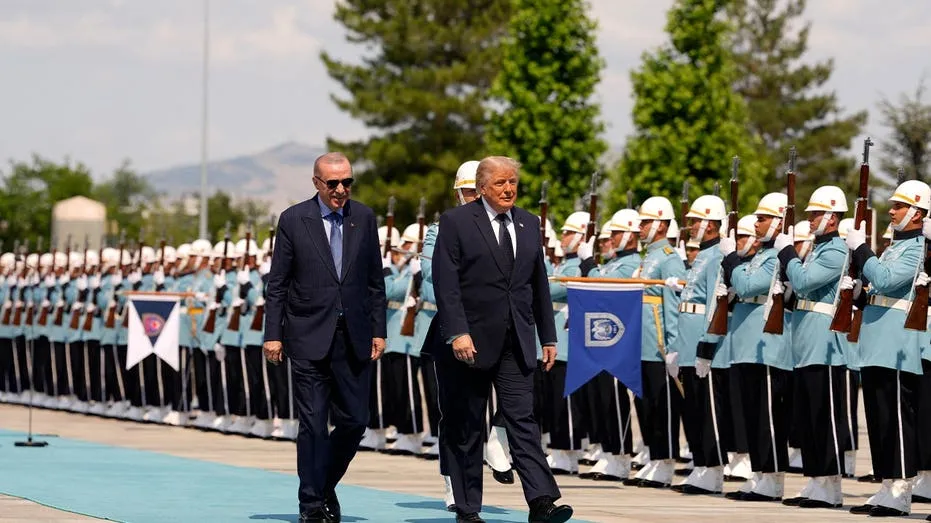
President Donald Trump concluded his participation in the NATO summit on Wednesday, with the final day dominated by discussions on bolstering support for Ukraine and increasing defense expenditures among member nations. The gathering, held in Ankara, Turkey, saw leaders grappling with the future of transatlantic security amidst ongoing geopolitical tensions.
Key Discussions on Defense and Ukraine
The summit’s concluding plenary session brought together NATO leaders to solidify their commitment to collective defense. A significant focus was placed on the ongoing implementation of higher defense spending targets by member states and coordinating continued support for Ukraine, now more than four years into Russia’s full-scale invasion. The alliance aims to ensure a united front against external threats, with particular attention paid to the evolving security landscape in Eastern Europe.
A highly anticipated bilateral meeting took place between President Trump and Ukrainian President Volodymyr Zelenskyy. Kyiv has been actively seeking enhanced military assistance, particularly advanced air defense systems, to counter Russian aggression. Officials from Ukraine have voiced urgent concerns about dwindling supplies of crucial interceptor missiles, such as the Patriot system, highlighting their critical role in defending against ballistic missile attacks. Reports indicated that recent large-scale Russian barrages were not fully intercepted due to these supply shortages, underscoring the immediate need for allies to provide existing stockpiles while longer-term production ramps up.
Ukrainian representatives had previously appealed to nearly 40 partner nations for immediate transfers of Patriot interceptors from their current inventories. While European nations, including Germany, have committed to financing hundreds of Patriot missiles, many of these are not expected to arrive for months or even years, intensifying Ukraine’s plea for allies to bridge the gap with readily available assets.
Shifting Alliances and Defense Commitments
The summit also featured a meeting between President Trump and Syrian President Ahmed al-Sharaa. This engagement signals a potential shift in U.S. policy towards Syria, following the collapse of the Bashar al-Assad regime. Such a realignment could reshape regional security dynamics and open new avenues for cooperation, particularly between the U.S. and Turkey.
On the eve of the summit’s final day, President Trump announced the lifting of U.S. sanctions on Turkey during a bilateral meeting with Turkish President Recep Tayyip Erdoğan. Trump stated, “We don’t sanction friends,” signaling a thaw in relations. Furthermore, he indicated a willingness to proceed with the sale of F-35 stealth fighter jets to Turkey, a move that had previously faced significant U.S. opposition due to Turkey’s acquisition of Russian S-400 air defense systems. This potential sale represents a notable development in U.S.-Turkey defense ties.
Future Defense Spending and Deterrence
Discussions on Wednesday were also geared towards translating the landmark commitment made by NATO members to spend 5% of their gross domestic product on defense and related investments by 2025 into concrete military capabilities. NATO Secretary-General Mark Rutte has emphasized the need for member nations to present “clear, concrete and credible plans” to meet this target. He stressed that accelerating the production of weapons, ammunition, and military infrastructure is essential for maintaining the alliance’s deterrent posture against potential adversaries, particularly Russia.
The summit concluded with President Trump holding a press conference to outline the administration’s priorities for NATO and detail any agreements reached during the two-day gathering. Following this, he was scheduled to depart Turkey for Washington.
Previous Criticisms and U.S. Troop Presence
The final day of the summit followed a period where President Trump had voiced criticism of European allies regarding their defense contributions. He had previously questioned whether NATO members were adequately supporting the United States and had floated the idea of withdrawing U.S. troops from Europe. Trump reiterated his stance that the U.S. bears a disproportionate financial burden for European security, suggesting that American military presence in the region could be reduced if allies increased their own spending and contributions.
“With all the money we spend to help them with Russia… we don’t have to spend any money. We could remove all of our soldiers out of Europe,” Trump had stated, expressing frustration that despite America’s significant investment in European security, allies were not perceived as sufficiently willing to reciprocate.
The summit’s proceedings underscored the ongoing challenges and strategic realignments within the NATO alliance, particularly in the face of persistent security threats and evolving defense requirements.


