




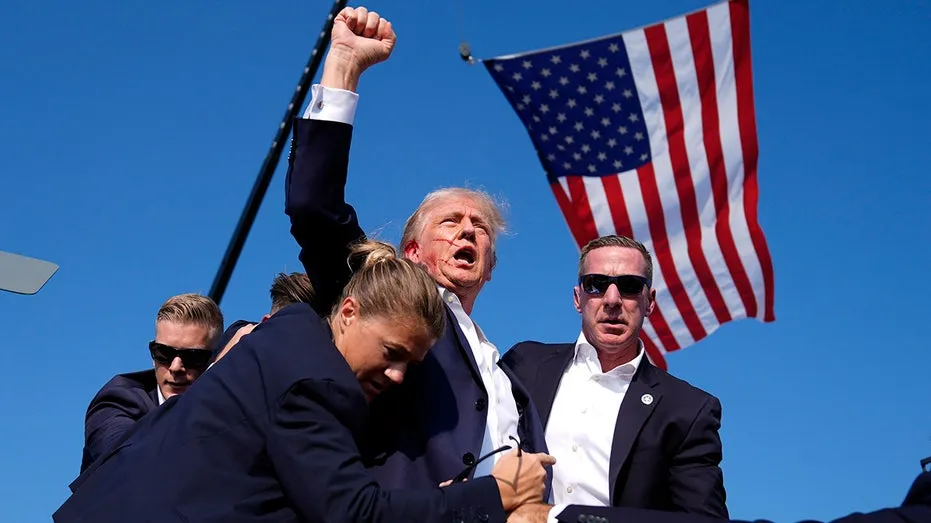
Former President Donald Trump has commented on assassination attempts against him, suggesting that such threats are a marker of significance. In a recent interview with his former personal lawyer, Michael Cohen, Trump remarked, “only consequential presidents get shot.” He added a wry request for himself, “Then do me a favor, please don’t be consequential.” Cohen, who has been a vocal critic of Trump, released the second part of his interview on Sunday, which also touched upon reports of Trump secretly using a different military jet due to a credible threat from Iran.
A History of Threats
Cohen highlighted that these threats are not new, expressing his distress over the situation. “I’m so nauseated by them,” Cohen stated, drawing a sharp distinction between political disagreement and attempts on a president’s life. “There is a huge difference between vehemently disagreeing with a policy and then trying to literally assassinate the President of the United States.”
Trump acknowledged the inherent dangers of the presidency, attributing his safety to the “great people” who protect him. He elaborated on his “consequential” comment, drawing a parallel to past leaders. “You look at the people that were shot. You look at the people, even the attempts, but non-consequential presidents lead a much nicer life. You can see that with some of our recent presidents where nothing was ever even thought about,” Trump explained. He also mused about becoming “less consequential” himself in response to Cohen’s earlier remark.
The Interview Context
The interview marked a notable public conversation between Trump and Cohen, their first in nearly a decade. Cohen, who was a key witness in several legal cases against Trump, discussed his decision to conduct the interview and the importance of forgiveness in a post on Substack. He referenced the Bible verse Colossians 3:13, stating, “Bear with each other and forgive one another if any of you has a grievance against someone. Forgive as the Lord forgave you.” Cohen emphasized that this principle was central to their interaction, describing it as the “foundation” of their renewed dialogue.
Presidential Security and Threats
The discussion touched upon the serious nature of presidential security, particularly in light of specific threats. The mention of Trump reportedly boarding a separate military jet due to an Iranian threat underscores the constant vigilance required to protect high-profile figures. While Trump downplayed the personal danger with his characteristic bravado, the underlying reality of such threats remains a significant aspect of the presidency. His comments suggest a perspective where significant historical impact, unfortunately, can attract extreme opposition, including violent attempts.
Trump’s remarks, while delivered with a degree of levity, also point to a broader historical context of leaders facing threats. Throughout history, many prominent figures, particularly presidents and heads of state, have been targets of assassination attempts. The perceived level of a leader’s impact or the controversial nature of their policies can, unfortunately, correlate with the risks they face. Trump’s assertion that “only consequential presidents get shot” frames these attempts not just as acts of violence, but as a grim testament to a president’s perceived influence or the magnitude of the political forces arrayed against them.
Cohen’s interview provides a unique, albeit complex, platform for such reflections. His past role as a loyal lawyer and subsequent transformation into a critic, now engaging in a public dialogue with Trump, adds layers to the narrative. His emphasis on forgiveness suggests a personal journey and a desire to move beyond past conflicts, framing the interview as more than just a political discussion, but also a personal reconciliation, albeit one conducted under the public spotlight.
Reflections on Leadership and Risk
The exchange highlights the unique pressures and dangers associated with the highest office in the United States. Trump’s perspective, while perhaps unconventional, touches upon the idea that significant leadership often involves navigating considerable opposition and risk. The very nature of making impactful decisions, whether popular or not, can create adversaries. His comments could be interpreted as a reflection on legacy and the often-turbulent path of those who seek to enact significant change or wield substantial power.
The interview also brings to the forefront the complex relationship between public figures, their former associates, and the media. Cohen’s platform, whether through interviews or written posts, allows for a re-examination of past events and relationships. The inclusion of a biblical reference by Cohen points to a personal dimension in his public commentary, suggesting a search for peace and resolution that extends beyond political commentary.
Ultimately, Trump’s remarks on assassination attempts, framed through the lens of consequence, offer a provocative perspective on leadership and the risks inherent in wielding significant political power. Coupled with Cohen’s reflections on forgiveness and their shared history, the interview provides a multifaceted glimpse into the dynamics of power, opposition, and personal reconciliation.


