

Trump Criticizes Supreme Court Mail-In Ballot Ruling
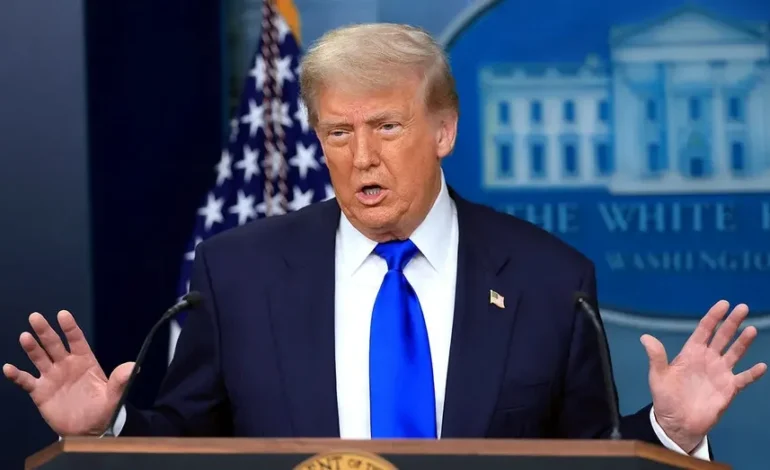

Former President Donald Trump has voiced strong disapproval of a recent Supreme Court decision that allows mail-in ballots in Mississippi to be counted if they arrive up to five days after Election Day. The ruling, stemming from the case Watson v. RNC, upheld Mississippi’s existing election laws, a move that runs counter to Trump’s broader efforts to advocate for more stringent voting regulations nationwide.
Supreme Court Upholds Mississippi’s Late Mail-In Ballot Policy
The Supreme Court’s decision affirmed Mississippi’s practice of accepting mail-in ballots that arrive within a five-day window following Election Day. This outcome places the court at odds with some of the very justices Trump appointed, delivering a setback to his campaign for stricter election rules. The ruling also drew a sharp response from a Republican senator, who, in turn, highlighted his existing support for legislation mandating ballots be received by Election Day.
Justice Amy Coney Barrett, nominated by Trump, authored an opinion that appeared to rebuff the arguments presented by Republicans in the case. She clarified that as long as Election Day is designated as the statutory date for submitting a vote, the election laws do not necessarily impose a deadline for the *receipt* of ballots. This distinction forms a key part of the legal reasoning behind the court’s decision.
Trump Advocates for SAVE America Act Following Ruling
In the hours following the court’s announcement, Trump took to his social media platform, Truth Social, to denounce the ruling. He characterized it as a “tremendous loss” for the rights of voters and urged Congress to take immediate action by passing the SAVE America Act to effectively nullify the court’s decision. This proposed legislation, championed by Representative Chip Roy (R-Texas) in the House and Senator Rick Scott (R-Fla.) in the Senate, aims to implement nationwide voter identification requirements and significantly restrict no-excuse absentee or mail-in voting.
Trump emphasized the urgency of passing the SAVE America Act, stating, “There is no excuse for a politician, or otherwise, to be against the above three requirements.” He specifically cited voter ID, proof of citizenship, and limiting mail-in ballots to military personnel, individuals who are ill or disabled, and those who will be traveling away from their home precinct on Election Day. He asserted that any opposition to these measures stems solely from a desire to facilitate “cheating.” Trump also noted that the House of Representatives had previously approved versions of the SAVE Act on three separate occasions.
In a broad indictment of opposition to his agenda, Trump declared, “In a time when there is a powerful Communist movement taking place in our country, one more dangerous than World War I, World War II, Pearl Harbor, or Sept. 11, all Dumocrats (sic) and our five Republican Senate Hold Outs, Lisa Murkowski, Susan Collins, Thom Tillis, Bill Cassidy, and Mitch McConnell must vote to save our country.”
Confusion and Support for SAVE America Act Emerge
The former president’s remarks prompted a notable reaction from Senator Bill Cassidy (R-La.). When contacted by Fox News Digital, Cassidy expressed surprise, suggesting that Trump may have been misinformed. “I don’t know which staffer misled you, but thank you for your attention to this matter,” Cassidy responded, echoing Trump’s characteristic sign-off. Cassidy clarified that he is, in fact, a co-sponsor of the SAVE Act, indicating a shared stance with Trump on the bill’s core provisions, despite their past disagreements on other matters.
However, Cassidy also voiced concern about linking the passage of the SAVE Act to other legislative priorities. He described it as “irresponsible” to delay the signing of a housing bill, which was then on hold, until the SAVE Act was passed, arguing that citizens facing high housing costs deserve prompt relief.
Offices for Senators John Thune (R-S.D.) and Mitch McConnell (R-Ky.) offered limited responses. Thune’s office declined further comment, while McConnell’s office acknowledged receipt of the inquiry, stating the former majority leader would provide comment if he had any to share.
While Trump broadly criticized Democrats, one notable figure from the minority party, Senator John Fetterman (D-Pa.), indicated a potential openness to a more focused version of election reform. Fetterman stated, “If the GOP wants real reform over a show vote––put out a clean, standalone bill and I’m AYE. Keep it basic: PHOTO ID to vote. Stop turning this into a Christmas list and attacking vote-by-mail.” This suggests a possible, albeit narrow, avenue for bipartisan agreement on certain election integrity measures.
Potential Impact of the SAVE America Act
Should the Senate pass the version of the SAVE America Act that originated in the House, it could significantly alter or even render moot aspects of the Supreme Court’s recent decision in Watson v. Watson. Calls for the act’s passage intensified in the weeks leading up to the ruling, with critics pointing to instances in California’s ballot tabulation process as examples of perceived issues with mail-in voting systems. Specific examples cited included the close race between actor Spencer Pratt and Councilwoman Nithya Raman, and the delayed declaration of winners in the gubernatorial race between Xavier Becerra and Steve Hilton.
The debate over mail-in ballots and election integrity continues to be a focal point in American politics, with the Supreme Court’s latest ruling and the ongoing legislative push for the SAVE America Act highlighting the deep divisions on the issue.