




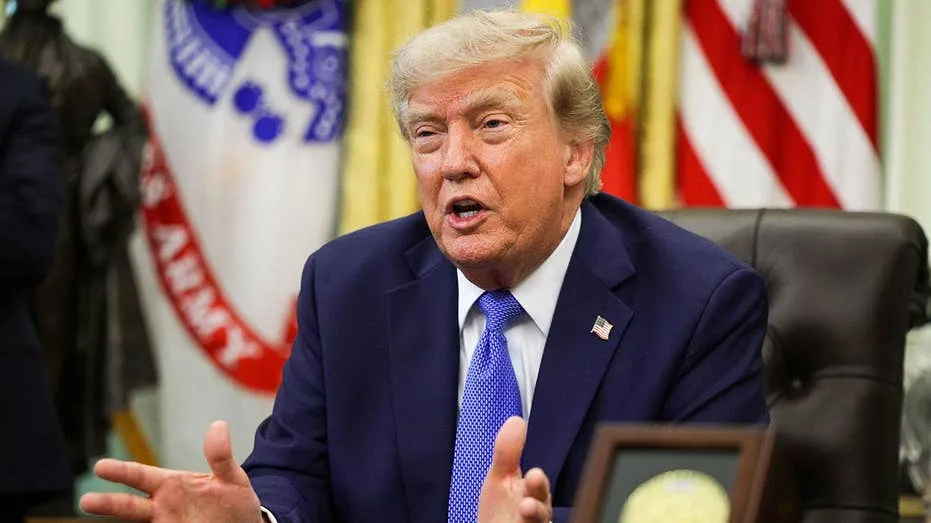
President Donald Trump has signed two executive orders aimed at curbing birthright citizenship and birth tourism, signaling a new strategy following a Supreme Court decision that hindered his previous efforts. The President stated that the administration is adjusting its approach due to what he described as an “unfortunate” Supreme Court ruling, asserting, “We’re making adjustments because it’s very unfair.” He further elaborated on his concerns, saying, “They’re building businesses around birthright citizenship. That’s not the way it was supposed to work. It’s a disgrace. They’re buying their way in, and we’re not going to let it happen.”
New Directives on Citizenship Eligibility
These new directives are designed to refine who is eligible for automatic citizenship based on birth within the United States. White House officials indicated that the orders leverage existing executive and immigration authorities to narrow the scope of automatic citizenship in specific circumstances. The administration is also intensifying its efforts to prevent foreigners from traveling to the U.S. with the primary purpose of giving birth.
Stephen Miller, White House Deputy Chief of Staff for Policy, explained that the first executive order broadens the categories of individuals deemed ineligible for birthright citizenship. This includes, according to Miller, “alien enemies of the United States, members of foreign terrorist organizations, and large categories of people who lobby and act on behalf of foreign governments.”
Crackdown on Birth Tourism
The second executive order, as described by Miller, represents a historic first in American policy by aiming to ban “birth tourism.” Under this directive, the administration intends to deny visas to individuals who plan to enter the United States specifically to give birth and secure automatic citizenship for their child. Furthermore, the order targets those who facilitate or organize such trips.
Miller characterized birth tourism as “by definition, a fraud on the American system” and “a fraud against the American government,” citing Section 215(a) of the Immigration and Nationality Act. He argued that this practice exploits the nation’s immigration laws.
Enforcement and Legal Challenges
When questioned about the enforcement of these new measures, President Trump expressed confidence, stating, “We’re cracking down very big, very big, big crackdowns… this will give us the right to do it in a much more forceful manner.” Regarding the potential for legal challenges, he added, “I think it will” survive scrutiny.
White House Staff Secretary Will Scharf elaborated on the administration’s strategy, noting that the executive orders focus on organized birth tourism operations through visa revocations and enhanced law enforcement actions. Scharf emphasized that these measures are grounded in “legally validated means” and are intended to avoid conflicts with the Supreme Court’s previous ruling.
The text of the executive orders was not publicly available at the time of reporting. The White House had not provided immediate additional comment when reached for further details.
Background on Birthright Citizenship
Birthright citizenship, often referred to as jus soli (right of the soil), is a principle that grants citizenship to nearly everyone born within a country’s territory. In the United States, this concept is primarily rooted in the Citizenship Clause of the Fourteenth Amendment to the Constitution, ratified after the Civil War. The clause states that “All persons born or naturalized in the United States, and subject to the jurisdiction thereof, are citizens of the United States and of the State wherein they reside.”
For decades, the prevailing legal interpretation has been that this amendment guarantees citizenship to virtually all individuals born on U.S. soil, regardless of their parents’ immigration status. However, President Trump and some legal scholars have questioned whether the amendment fully applies to children born to parents who are not U.S. citizens and are not legally present in the country. This interpretation has been a subject of significant political debate and legal scrutiny.
The Supreme Court’s Role
The Supreme Court’s intervention previously blocked an attempt by the Trump administration to alter the interpretation of birthright citizenship through executive action. The Court’s decision, while not necessarily ruling on the merits of birthright citizenship itself, indicated that such a significant change to immigration policy might require legislative action from Congress rather than an executive order. This setback prompted the administration to seek alternative legal avenues and strategies, leading to the current set of executive orders.
The administration’s new approach appears to focus on enforcing existing immigration laws and visa regulations more stringently, particularly concerning individuals suspected of engaging in birth tourism. By targeting visa eligibility and prosecuting fraudulent activities related to international travel for childbirth, the administration hopes to achieve its objectives without directly challenging the core interpretation of the Fourteenth Amendment that the Supreme Court has previously upheld.
Broader Implications and Future Outlook
The executive orders signal the administration’s continued commitment to addressing immigration issues through executive power. The focus on birth tourism, in particular, highlights concerns about the perceived exploitation of U.S. immigration policies for personal gain. The effectiveness and legal durability of these new orders will likely be tested in the courts, continuing the ongoing debate surrounding citizenship, immigration, and the limits of executive authority.
The administration’s strategy aims to navigate the legal landscape shaped by the Supreme Court’s ruling while pursuing its policy goals. The emphasis is on utilizing existing statutory authorities to regulate entry into the United States and to deter practices deemed detrimental to national interests and immigration integrity. The coming months will reveal how these measures are implemented and whether they withstand legal challenges.


