

Trump Meets Senate GOP Amid Deepening Divisions on Key Issues
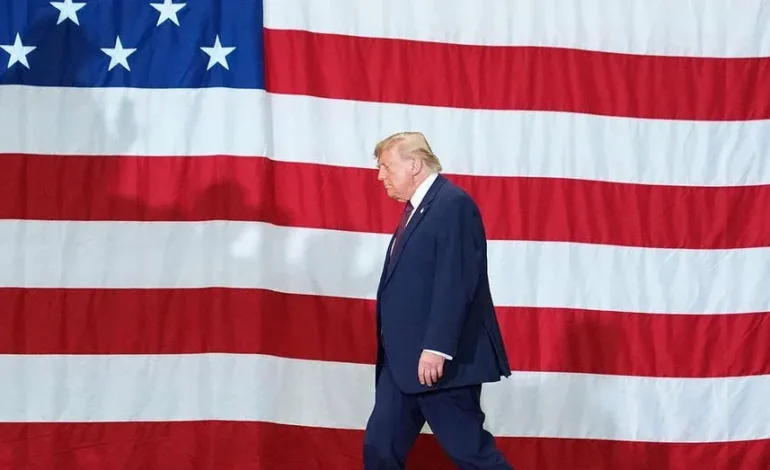

President Faces Divided Senate Republicans Ahead of Midterms
President Donald Trump is set to convene with Senate Republicans on Wednesday, a critical juncture as the party grapples with internal disagreements and seeks a unified strategy heading into the pivotal midterm elections. This marks Trump’s first visit to Capitol Hill to meet with Senate Republicans in over a year, a period that has seen significant shifts in the relationship between the president and members of the upper chamber.
Legislative Standoffs and Presidential Influence
During this time, the president has been instrumental in challenging incumbent senators, including Bill Cassidy of Louisiana and John Cornyn of Texas. His administration has also temporarily stalled progress on a $70 billion immigration enforcement package and, for the moment, has halted a bipartisan effort to reauthorize the nation’s surveillance powers under Section 702 of the Foreign Intelligence Surveillance Act (FISA).
Senator John Cornyn of Texas highlighted the urgency of unity, stating, “The question is, do we want to win the midterms? And my question is, how do we get all on the same page and get unified rather than squabbling amongst ourselves?”
Focus on Voter ID Legislation Amidst Broader Agenda
Discussions are expected to cover several key legislative items, including the memorandum of understanding with Iran and the reauthorization of Section 702 of FISA. However, President Trump’s primary objective for the meeting is reportedly the Safeguarding American Voter Eligibility (SAVE) America Act. This legislation, which mandates voter ID and proof of citizenship, has faced significant hurdles, with Senate Majority Leader John Thune of South Dakota indicating that Republicans currently lack the necessary votes for its passage.
Addressing reporters on Tuesday, Trump emphasized the importance of the SAVE America Act, saying, “We’re just going to talk about SAVE America. We have to get — we have to pass the SAVE America Act, which is voter ID, which is proof of citizenship, etc. We have to pass it. So we’re going to have to talk about that and many other things.”
When questioned about Senator Thune’s assessment of the vote count, Trump acknowledged Thune’s leadership role. “You know, he’s a leader. John is a leader. That’s what being a leader is about,” Trump commented. He further stressed the necessity of the proposed measures, adding, “Look, we have to be able to get proof of citizenship when you vote. Otherwise, we don’t have elections. We have to be able to get voter ID. So John is a leader, and hopefully he can get the votes.”
Scott’s Roadmap and Calls for Clarity
The impetus for Trump’s Senate visit stems from an invitation by Senator Rick Scott of Florida. Ahead of the meeting, Senator Scott circulated a legislative roadmap for the upcoming six months, prioritizing the passage of the SAVE America Act. In a letter to his colleagues, Scott urged for a clear distinction between political parties, writing, “We need to make a clear distinction as to who the good guys are and who the bad guys are. We have to demonstrate what Republicans stand for and what Democrats stand for through action, not rhetoric.”
Senator Thune acknowledged Scott’s proposal, suggesting that a unified approach within the GOP could yield results. “And there are things that I believe will create a record of accomplishment that our candidates can run on,” Thune stated. “And that will enable us to take an argument to the American people that will persuade them that they want to keep majorities here in Congress, in the United States Senate, and in the House that are Republican to work with this president to get good things done for this country.”
Internal GOP Disagreements Hamper Progress
The challenges in advancing legislation like the SAVE America Act are twofold: a lack of Democratic support and a failure to achieve Republican consensus. This has been evident on multiple occasions on the Senate floor. The SAVE America Act has become a contentious issue within the Republican party, particularly with some proponents, notably Senator Mike Lee of Utah, maintaining that a path forward exists, a view not shared by many within the GOP.
These internal divisions have manifested in public disputes on social media and heated exchanges during closed-door Senate GOP luncheons. It remains to be seen how these tensions will play out during the meeting with the president.
Senator John Kennedy of Louisiana offered a pragmatic outlook on the gathering, remarking, “My guess is, a lot of people will want to talk. We have a lot of people who like to talk. That’s why we have a lot of meetings that really should be emails. But I don’t know what’s gonna happen tomorrow.”
Senator Josh Hawley of Missouri anticipates a less confrontational session, describing it as a potentially “low-stakes” lunch. “I’ve never been in a meeting with any president with a group of senators that got to be combative and nasty, but maybe that’s not the right meeting,” Hawley commented.
Conversely, some of the most vocal critics of the Trump administration within the Senate GOP expressed hope for a constructive dialogue. Senator Thom Tillis of North Carolina stated, “I want us to focus on all the positives that we’re missing, because too many are focusing on our differences and not what we’ve accomplished.” He emphasized the importance of highlighting past successes and identifying future opportunities for achievement in the months leading up to the November elections.