




In a clandestine operation designed to thwart a credible Iranian threat, President Donald Trump reportedly utilized an airport catering truck and a decoy aircraft to secretly depart the NATO summit in Turkey last July. The elaborate maneuver, detailed in reports citing an official and other materials, saw the president board a smaller, less conspicuous military plane while a familiar, larger aircraft served as a diversion.
A Covert Exit from Turkey
The unusual departure unfolded at Ankara airport on July 8, shortly after Trump had arrived in the Turkish capital aboard a brand-new Boeing 747-8, a presidential aircraft gifted by Qatar. Intelligence officials had identified a specific threat from Iran targeting the president’s movements, prompting U.S. security personnel to devise a unique plan to ensure his safe exit.
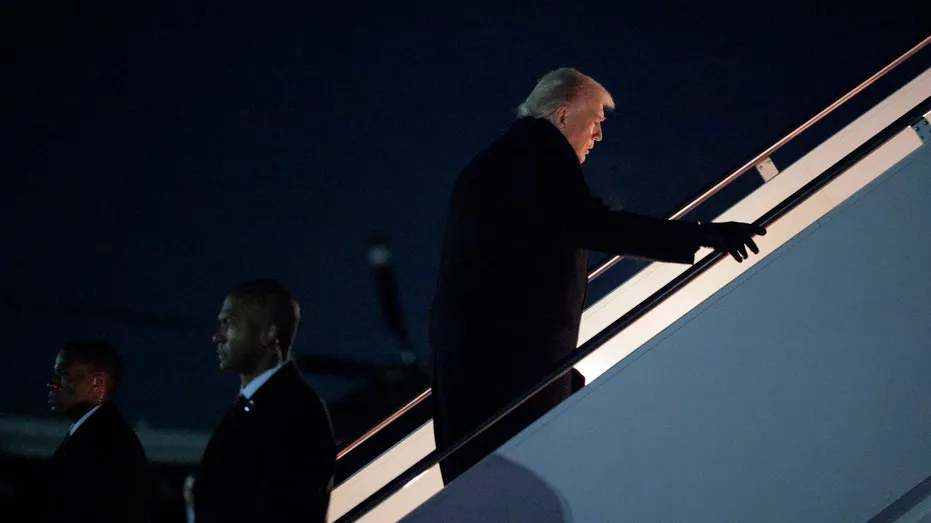
According to the account, Trump initially walked up the stairs of the older, blue-and-white Boeing 747 – the legacy Air Force One – and waved to awaiting news cameras. However, this was part of the ruse. Minutes later, Trump and a small contingent of aides are said to have slipped out of view and into an airport catering truck. This vehicle was positioned to meet an exit door on the far side of the plane, effectively shielding the president’s transfer.
Once Trump and his team were inside, the catering truck was lowered to ground level. It then drove across the tarmac to a waiting Air Force C-32A, a modified Boeing 757, which would serve as the president’s actual transport. Meanwhile, the press corps and White House staff were directed to board the older 747, under the impression that Trump was already inside.
The Decoy Takes Flight
As a further measure to obscure the president’s true departure, reporters were instructed to close their window shades before takeoff. The legacy 747 then lifted off, acting as a decoy. Flight-tracking data reportedly showed the jet initially appearing on radar without a call sign before adopting the ‘AF1’ designation mid-flight, despite the president not being aboard. This created the illusion that Air Force One was operating normally.
Trump, traveling in secrecy aboard the smaller C-32A, flew to RAF Mildenhall in England. He landed shortly before the decoy jet arrived.
Arrival in the U.K. and Return to Washington
Details of Trump’s transfer from the C-32A to the legacy Air Force One upon landing in the U.K. remain unclear. However, he eventually appeared before television cameras around 10:56 p.m. that evening, descending the external stairs of the legacy aircraft. He then boarded the new, Qatari-donated Boeing 747-8 for the return flight to Washington, D.C., with staff and reporters making the transfer from the older jet shortly thereafter.
Presidential Remarks on Security
When questioned by reporters about the unusual order to close window shades during the departure from Turkey, President Trump offered a terse explanation. He suggested the flight might have been dangerous due to “sleaze bags that we have to deal with.” The president reiterated that he faces constant threats and considers himself “Number One” on Iran’s target list.
In response to inquiries regarding the Washington Post’s reporting, White House Communications Director Steven Cheung emphasized the security features of the new Air Force One. He stated that the state-of-the-art aircraft is equipped with high-level security protocols to ensure the safety of the president and his staff. Cheung added that, as the president has noted, numerous adversaries pose a threat, and the administration employs all available measures to counter these dangers.
The U.S. Air Force also affirmed the safety and advanced technology of the new presidential aircraft. A statement indicated that the jet is secure and outfitted with the most sophisticated technologies necessary for the presidential mission. The Air Force highlighted that while security, safety, and communication capabilities were paramount, certain less frequently used mission sets were adjusted to accommodate the aircraft’s anticipated 40-year service life.
Conclusion
The reported use of a catering truck and a decoy aircraft underscores the heightened security concerns surrounding presidential travel, particularly in the face of specific threats from foreign adversaries. The incident illustrates the lengths to which security officials will go to protect the commander-in-chief, blending operational secrecy with public appearances to maintain both security and a semblance of normalcy.


