

Trump Vows Supreme Court Appeal Over White House Ballroom Construction Halt

President Donald Trump has declared his intention to appeal to the U.S. Supreme Court following a federal appeals court ruling that halted construction on a new White House ballroom. The decision, which Trump characterized as “horrendous, politically motivated, and unlawful,” was issued by a 2-1 vote from the U.S. Court of Appeals for the District of Columbia Circuit.
President’s Strong Objections to Court Ruling
In a statement shared via his Truth Social platform, Trump expressed strong disapproval of the court’s decision, particularly its stance on the legal principle of “standing.” He argued that the plaintiff in the case lacks the necessary standing to bring the lawsuit, rendering the court’s judgment invalid. Trump asserted that the ruling poses a significant threat to the safety and well-being of White House staff, future presidents and their families, visiting dignitaries, and the general public who visit the historic building.
Furthermore, Trump emphasized that the ballroom project, which he described as being ahead of schedule and under budget, is a “Gift from President Trump and Great Patriots of the United States of America.” He stated that the project incurs no cost to American taxpayers and insisted that the “unjust decision must be overturned by the Supreme Court in its entirety.”
Background of the Ballroom Project and Legal Challenge
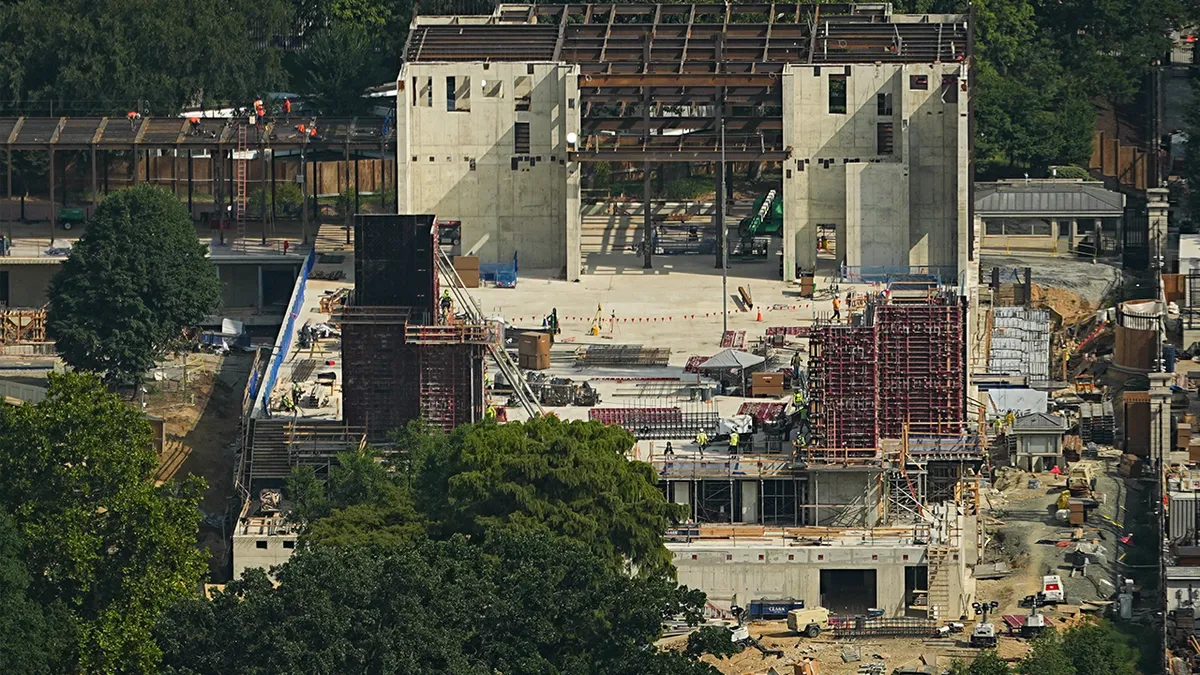
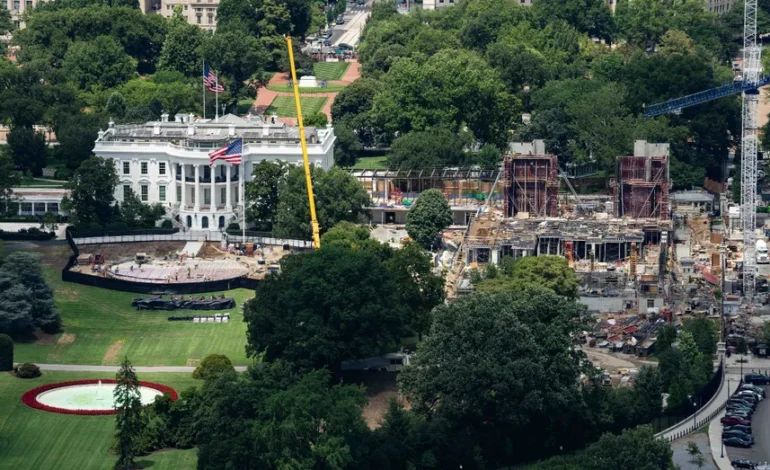
The appeals court’s decision on Friday affirmed a previous lower court ruling that paused above-ground construction for the proposed 90,000-square-foot ballroom. This project was initiated after the demolition of the East Wing. Importantly, the earlier ruling permitted ongoing work on essential underground national-security facilities and certain safety and security measures, a detail that the higher court also upheld.
The 136-page opinion from the appeals court suggested that the authority to construct such a significant addition as a “massive ballroom” rests with Congress, not the executive branch. Judges Patricia Millett and Brad Garcia, who authored the majority opinion, noted a lack of historical precedent for a president unilaterally undertaking such a project, especially one involving the demolition of substantial portions of the White House that were originally authorized and funded by Congress and American taxpayers.
The judges clarified that their ruling does not preclude the construction of the ballroom if it receives future authorization from Congress. The appeals court has issued a 14-day stay on its ruling, providing a window for the defendants to pursue a review by the Supreme Court. It remains uncertain whether the Supreme Court will agree to hear the case.
The Role of Congress and Presidential Authority
The core of the legal dispute centers on the division of power between the executive and legislative branches regarding significant alterations and construction projects at the White House. The appeals court’s majority opinion highlighted that historical practice and congressional authorization are typically required for major undertakings involving the executive mansion. Judges Millett and Garcia pointed out that there is no known instance in American history where a president has independently demolished parts of the White House authorized and funded by Congress, using privately collected funds, to initiate a new construction project.
This perspective underscores the principle that the White House, while the official residence and principal workplace of the President, is also a national historic landmark and a symbol of the United States government, subject to oversight and authorization processes involving Congress. The judges’ ruling suggests that while a president has broad executive authority, decisions involving substantial construction, demolition, and the use of funds for such purposes, particularly when they involve altering federally owned and historically significant structures, require legislative approval.
Potential Implications and Next Steps
President Trump’s assertion that the ruling jeopardizes the lives of future presidents and White House staff points to a broader concern about security infrastructure. However, the court’s majority opinion focused on the procedural and jurisdictional aspects, emphasizing that the president cannot unilaterally initiate such projects without congressional backing. The allowance for continued work on underground national-security facilities and safety measures indicates that the court recognized the importance of maintaining critical infrastructure while questioning the executive’s authority over the ballroom project itself.
The immediate next step involves the Trump administration’s legal team preparing to petition the Supreme Court. The Supreme Court has the discretion to accept or reject such petitions. If the Court agrees to hear the case, it would delve into the complex issues of presidential authority, congressional oversight, and the legal standing of the plaintiffs. The outcome could set a significant precedent for future executive actions involving federal property and construction projects, particularly those undertaken with non-appropriated funds.
A Matter of Funding and Precedent
Trump’s claim that the ballroom is a privately funded gift is a key element of his argument, suggesting that it falls outside the typical congressional appropriations process. However, the appeals court’s majority opinion directly challenged this by stating that there is no precedent for a president demolishing parts of the White House authorized and paid for by Congress and taxpayers, even if using private funds for the subsequent construction. This suggests that the act of demolition itself, on a structure with such historical and governmental significance, might be viewed as requiring a different level of authorization.
The judges’ statement, “Until now,” implies that this action represents a departure from established norms and practices. The ruling, by allowing underground work to continue while halting above-ground construction of the ballroom, attempts to balance national security needs with the legal framework governing presidential actions and congressional authority. The ultimate decision by the Supreme Court will clarify whether such unilateral actions by a president, even with private funding, are permissible when they involve alterations to iconic federal buildings.
Conclusion: Awaiting Supreme Court’s Decision
The legal battle over the White House ballroom project is now poised to reach the nation’s highest court. President Trump’s vow to appeal signifies his commitment to seeing the project through, framing it as a matter of presidential security and a gift to the nation. The appeals court, however, has emphasized the established roles of Congress in authorizing major construction and the lack of historical precedent for such unilateral executive action. The Supreme Court’s eventual decision will not only determine the fate of the ballroom but could also shape the understanding of presidential powers and congressional oversight concerning the White House and other federal properties for years to come.