



UN Budget Slashed by $1 Billion Amid Trump Administration Reform Push


The Trump administration has announced significant financial reforms at the United Nations, touting over $1 billion in budget reductions over a six-month period. Officials characterize these cuts as a testament to the organization’s newfound willingness to embrace change, moving away from its historical resistance to reform. The achievement marks a key moment in the administration’s broader strategy to streamline the international body, which it has frequently criticized for bureaucratic inefficiencies.
Unprecedented Budgetary Reductions Achieved
The latest milestone in these financial adjustments was reached on June 30, when all 193 member states of the UN ratified a peacekeeping budget totaling approximately $5.1 billion for the upcoming fiscal year. This figure represents a reduction of about $550 million, or 9.7%, compared to the previous year’s allocation. When combined with a 15% decrease to the UN’s regular operating budget that was approved in December, U.S. representatives state that these agreements collectively amount to over $1 billion in cuts to the assessed budgets. This level of reduction is being described by U.S. officials as entirely unprecedented.
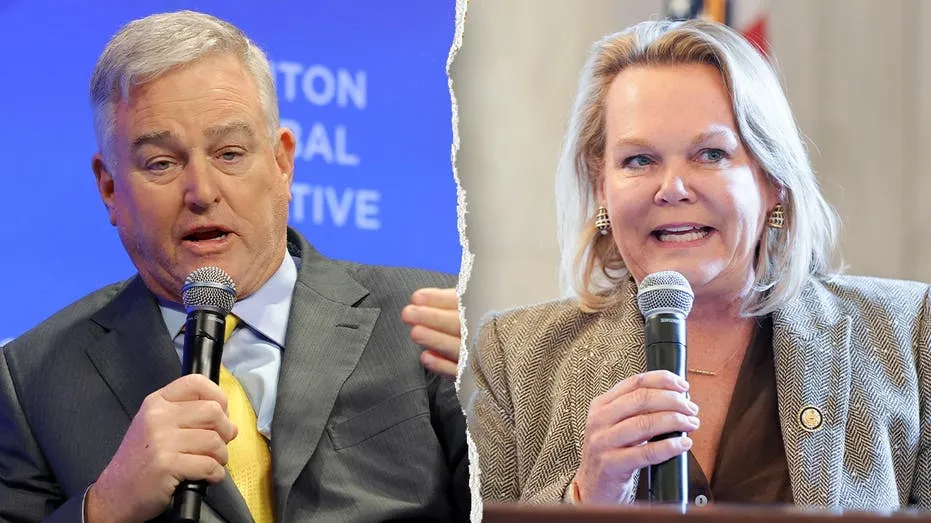
Assessed budgets are funded through mandatory contributions from member states, calculated based on economic capacity. Jeff Bartos, the U.S. Ambassador for UN Management and Reform, highlighted the collective effort involved. “On June 30th, with U.S. leadership, all 193 countries came together again for the second time in six months,” Bartos stated. “We’ve achieved over a billion dollars of savings in six months, which is unprecedented. Any one cut would be unprecedented. The totality of the reforms is monumental.”
Context of Financial Pressure and Leadership Transition
These budgetary agreements emerge at a time when the United Nations is navigating considerable financial pressures and preparing for a significant leadership transition. The current Secretary-General, António Guterres, is scheduled to conclude his second term in 2027, prompting a search for his successor. The Trump administration has consistently prioritized reform as a central element of its engagement with the UN, arguing that the organization has become bloated and ineffective.
In response to inquiries, a UN spokesman, Stéphane Dujarric, confirmed the figures, noting that both the peacekeeping budget’s reduction of roughly $550 million and the regular budget’s 15% cut were “unprecedented reductions.”
Driving Reform Through Negotiation and Policy Changes
Ambassador Bartos attributes these reforms to sustained diplomatic pressure and months of intensive negotiations spearheaded by the U.S. Mission to the UN. “The new budget, this reformed budget, the enhanced efficiency changes the culture of how the U.N. looks at peacekeeping,” Bartos explained. “Every dollar has to achieve impact on the ground.” He cited the UN Mission in South Sudan as an instance where the United States worked to refine the mission’s objectives, leading to a corresponding budget adjustment.
Overhauling Budgetary Practices for Efficiency
Another key reform championed by the administration addresses how the UN manages unspent budget allocations. Previously, UN financial regulations mandated the return of surplus funds to member states, even if those contributions had not been fully paid. Critics argued this practice exacerbated the UN’s recurring liquidity challenges. On June 30, the General Assembly approved a new methodology, to be trialed for four years, stipulating that unspent funds will only be returned if they are backed by actual cash received.
Bartos projected that this change alone could yield savings exceeding $1 billion over the next three years, a figure separate from the budget reductions already enacted. He characterized this as a “common-sense” reform, emphasizing its potential to improve the organization’s financial management.
The United Nations acknowledged the significance of this reform, with officials noting that it had been a long-standing objective for Secretary-General Guterres. “I have been pushing for this reform for almost a decade,” Guterres remarked following the vote. He described the former system as a “Kafkaesque cycle” where the organization was compelled to “give back cash that did not exist.” Dujarric added that the reform would enable the UN to manage resources more predictably and responsibly, thereby enhancing operational continuity, particularly for its peacekeeping operations.
Future Reform Priorities on the Horizon
Bartos indicated that the recent budget agreements are merely the initial phase of a broader reform agenda. Upcoming priorities for the administration include reforms related to staff compensation, employee benefits, and the UN pension system. Bartos contends that these areas represent significant resource consumption that could otherwise be directed toward humanitarian efforts and peacekeeping missions.
“We’re going to continue to see us push whether it’s on benefits, whether it’s on staff compensation, whether it’s on the pension system,” Bartos affirmed. “There’s massive numbers of additional reforms that our team is working on right now.”
He also suggested that the momentum for reform will likely influence the selection process for the next UN Secretary-General. “We’re going to select the next secretary-general,” Bartos stated. “That reform momentum that has been growing over the last 15, 18 months… you’ll see that continuing in 2027 with the new secretary-general.”