




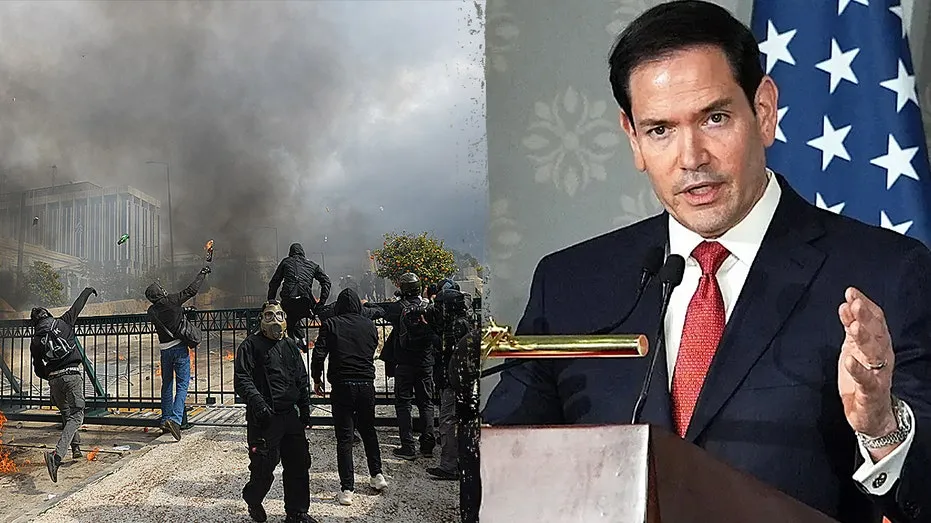
The United States is spearheading an international effort, bringing together officials from approximately 65 nations on Thursday, to forge a united front against violent far-left extremist organizations. The administration asserts these groups have escalated into a significant transnational terrorism threat, necessitating a coordinated global response. Secretary of State Marco Rubio is set to host foreign delegates for discussions aimed at bolstering intelligence sharing, law enforcement collaboration, and other international strategies to dismantle what U.S. officials describe as an increasingly interconnected network of violent far-left extremist entities.
This high-level ministerial meeting represents the culmination of an eight-month diplomatic push, during which the U.S. government worked to persuade partner nations that violent far-left extremist networks pose a growing cross-border danger that demands enhanced international cooperation. Administration officials emphasized that the initiative is strictly focused on criminal and terrorist violence, not on policing political ideologies. “We haven’t waded into trying to disambiguate people’s beliefs and ideologies,” a senior State Department official explained to reporters. “In America, you can believe anything you want. The minute that you cross the legal threshold, that changes.” The focus, they stressed, is on actions that violate laws, not on abstract beliefs.
Addressing a ‘Blind Spot’ in Counterterrorism
U.S. officials contend that for much of the past two decades, global counterterrorism efforts were heavily concentrated on jihadist threats, potentially leading to an underestimation of the resurgence of politically motivated violence from far-left extremist groups operating across international borders. “This has been a blind spot for a lot of our partners, frankly. They have not seen these trends… since the 1970s,” the senior State Department official remarked. “Our partners have talked to us about the rise of assassinations or assassination plots.”
To underscore the urgency and the need for international collaboration, administration officials pointed to a series of recent incidents in Europe. For instance, on July 1, coordinated firebomb attacks struck the residences of members of Greece’s ruling New Democracy party in Thessaloniki. Tragically, the mother of parliamentary candidate Afroditi Nestora lost her life in the attack, and four other individuals were injured. Greek anti-terrorism police subsequently apprehended three suspects in connection with the incident.
Another event cited was an arson attack in Berlin, Germany, in January. This incident targeted a power transmission facility, resulting in a widespread power outage that affected tens of thousands of homes and businesses. German authorities later escalated the investigation, transferring it to the federal prosecutor due to suspicions of involvement by a terrorist organization.
Building on Previous Actions
The current meeting builds upon a series of measures initiated by the U.S. government since late 2025. These actions included designating four foreign far-left organizations as Foreign Terrorist Organizations and Specially Designated Global Terrorists. Furthermore, the U.S. has offered substantial rewards, up to $10 million, for information leading to the disruption of the financial networks of these groups.
Secretary Rubio is expected to articulate the argument that violent far-left extremist groups are increasingly operating in a transnational manner. This includes sharing tactics, coordinating attacks, and exploiting international conflicts as fertile ground for recruitment. He will likely emphasize that enhanced cooperation among governments is crucial to effectively disrupt these evolving threats.
The ministerial agenda includes discussions on the broader global threat landscape, methods of terrorist financing, intelligence sharing protocols, and strategies for protecting critical infrastructure. Treasury Secretary Scott Bessent and White House Deputy Chief of Staff Stephen Miller are also slated to address the gathering.
Dispelling Reluctance Concerns
Administration officials also sought to counter any suggestions of reluctance among foreign partners to engage in this initiative. They stated that, contrary to such reports, several governments proactively reached out to the United States, expressing a desire to join the coalition after observing similar trends within their own countries. “We’ve had countries who have reached out to us that want to be part of this,” the senior State Department official confirmed.
The four organizations formally designated by the administration in November were identified as Antifa Ost, the Informal Anarchist Federation/International Revolutionary Front (FAI/FRI), Armed Proletarian Justice, and Revolutionary Class Self-Defense. According to U.S. officials, these groups, which have been active in countries like Germany, Italy, and Greece, have been implicated in coordinating violent attacks across national borders, underscoring the transnational nature of the threat they pose.
The convening of these international partners signifies a concerted effort to shift focus and resources towards a threat that, while perhaps less visible than other forms of extremism in recent years, is seen by U.S. officials as a growing and dangerous challenge requiring immediate, collective action.


